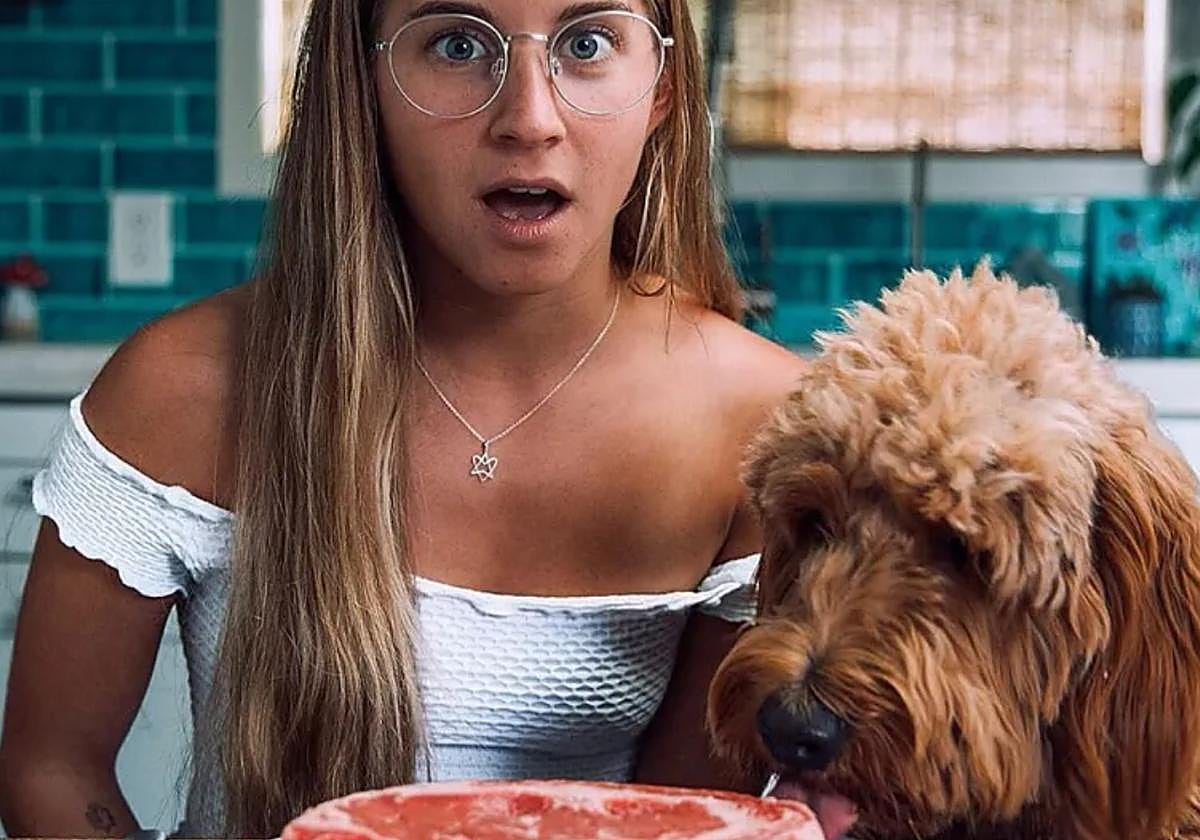
A new anti-science trend spreading online, dubbed "dark nutrition," encourages people to eat raw animal products, including raw lean meat, offal, bone marrow and even meat collected from animals killed on the road.
Followers believe that cooking destroys vital nutrients, enzymes and the "vital force" of animal tissue. Health experts say the reality is the opposite: this kind of diet carries a high risk of serious bacterial and parasitic infections, while cooking actually increases the bioavailability of proteins and nutrients in meat.
Commentators draw a parallel with the flat-earth movement, which went briefly viral years ago thanks to its rejection of physics and astronomy. Believing the Earth is round does little harm beyond feeding a sense of intellectual superiority, but that episode may have helped pave the way for a wider growth in denialism that now touches more everyday areas of life.
Unlike climate denialism, where the damage so far correlates mainly with specific climate disasters, the harm from anti-science nutrition trends can be direct, and irreversible.

What drives people to "dark nutrition"
One follower of the trend, interviewed by The New York Times under the pseudonym Kelly Pi, said people think her diet is extreme, but that those who eat processed food and drink alcohol are essentially poisoning themselves, adding that she would call that the truly extreme choice. She defended a diet built around raw meat, unpasteurized dairy and fruit.
The aim, often, is to escape the standard American diet, which believers blame for pesticides, preservatives, colorants and unspecified harmful chemicals. For others, the goal is simply to escape the uncertainty created by contradictory nutritional advice.
Social media and the "healthy diet carousel"
A constant stream of conflicting diet advice, with recommendations to do one thing and then its opposite, pushes some people toward radical positions that offer a certainty the wider media environment does not provide. This is not only down to social media's need to shock with ever more outlandish content, but also to an accelerating cycle of trends that drive consumption. Applied to food, this is especially damaging, particularly through the endless carousel of recommended healthy diets.
"Health halos" and "sciencesploitation"
A further problem comes from fashionable labels that claim to identify foods or ingredients linked to greater wellbeing. Timothy Caulfield, author of the book The Certainty Illusion, calls these "health halos." He points to labels such as organic, all-natural, clean, non-GMO and locally grown, which convey legitimacy without offering any scientific evidence.
Caulfield also warns of what he calls "sciencesploitation," in which sellers take advantage of consumer ignorance by invoking real scientific advances, such as stem cell research, the microbiome or epigenetics, to market their products.
Why diet advice keeps changing
Part of the confusion stems from the fact that nutrition is a very young science, subject to the same rapid innovation seen elsewhere today. That helps explain why guidance on certain foods has shifted within a relatively short span of time. The same generation that grew up believing eggs or oily fish should be limited now defends eating them regularly, even daily. That kind of reversal can breed distrust.
Whether the result of shifting nutritional rules, the misuse of scientific advances, or the spread of denialism more broadly, consumers can end up reassuring themselves with harmful beliefs. Sometimes people simply reach for the simplest answer when overwhelmed by the feeling that they understand nothing, and it is in that anxiety that the extreme diets behind dark nutrition take root.
Experts call for better information
Experts point to a single solution: better information. They particularly warn about the tendency of social media and news outlets to present complex issues solely through personal testimonials, since one person's experience can never be generalized.
Such stories do draw readers in, but readers are better served when complicated subjects are made understandable through data and expert sources instead. The takeaway: if a food recommendation rests solely on the testimony of an influencer or a random user, it is better to question it than to buy into it.
Test yourself
What does the "dark nutrition" trend encourage people to eat?
According to health experts, what does cooking actually do to meat?
What term does Timothy Caulfield use for labels like 'organic' or 'clean'?