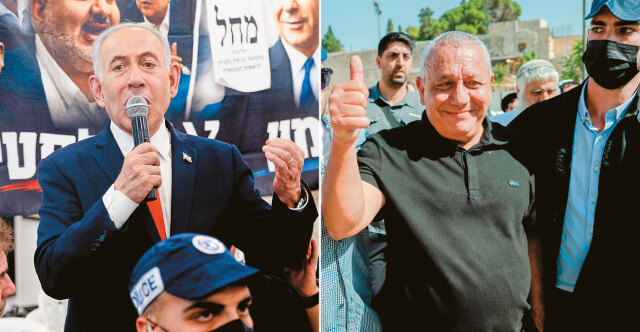
Israel marked three years since the October 7 Hamas attacks on Wednesday as politicians campaigned for elections voters consider the most decisive in national history.
The 2023 assault by Hamas militants against communities in southern Israel left 1,200 people dead and 251 taken hostage. The hostage crisis caused widespread anguish across the population for two years until surviving captives and the bodies of those killed were returned. The resulting war in the Gaza Strip has killed more than 70,000 people according to Palestinian authorities in Gaza, a total also acknowledged by Israeli officials.
As memorial ceremonies honoring the fallen took place across the country, political candidates repeatedly invoked the events of October 7 during campaign appearances. A poll by the Israel Democracy Institute found that 68 percent of Jewish Israelis consider the October 7 attacks a central factor when deciding how to vote in the upcoming general election, scheduled in three weeks.

The survey showed that more than two-thirds of Jewish respondents view the attack as very central or fairly central to their voting decision, compared to one-third of Arab Israeli respondents. Majorities across the Jewish political spectrum, including right-wing, centrist, and left-wing voters, identified October 7 as a key consideration, though left-wing and centrist voters attached greater importance to the issue than conservative voters.
Opposition demands state commission of inquiry
Criticism of security failures surrounding the 2023 attacks and Prime Minister Benjamin Netanyahu's management of security threats have formed the primary divide between the government and the opposition throughout the campaign. Netanyahu's main political opponents include the centrist party Yashar, led by former army chief of staff Gadi Eisenkot; the center-right alliance Together, led by former prime minister Naftali Bennett and Yair Lapid; the ultranationalist party Israel Our Home, led by Avigdor Lieberman; and the left-wing party The Democrats, led by Yair Golan.
Promising to launch a formal state commission of inquiry into government failures before and during the attack has become the primary unifying issue for the opposition bloc. Eisenkot launched his political campaign on June 30 with a platform centered on creating the investigative commission. Eisenkot holds significant personal standing on the issue after losing his son Gal and two nephews during fighting in the Gaza war.
One week ago, Eisenkot, Bennett, Lieberman, and Golan established joint working groups to coordinate campaign operations, placing the investigative commission and universal military service at the top of their priorities. Their platform reflects broader public sentiment, as a poll by the Institute for National Security Studies showed 75 percent of the public supports a state inquiry, including 52 percent of voters who support Netanyahu's governing coalition.
Netanyahu rejects responsibility for security failures
Netanyahu leads a governing coalition that includes his party Likud, the ultra-Orthodox parties Shas and United Torah Judaism, the religious nationalist groups Jewish Power and Religious Zionism, the ultra-conservative Noam party, and New Hope.
Netanyahu and his coalition partners have rejected accusations of government negligence regarding the October 7 attack. The Prime Minister stated that primary responsibility for security failures rests with military leadership and intelligence services, arguing that commanders misread warnings and failed to wake him while deliberating on the threat. Netanyahu stated that if military officials had woken him, he would have issued immediate orders to confront the danger and prevent the tragedy.
Polling numbers show tight race for parliament
Opinion polls continue to project a close contest with no clear parliamentary majority for either Netanyahu's coalition or the opposing coalition of change bloc in the 120-seat Knesset. Yashar remains the single largest party in polling but has lost momentum, falling to 21 seats in survey results released this week, down four seats from last month.
The ruling coalition gained two seats this week to reach 51 seats, while the combined opposition fell to 53 seats. Parliamentary arithmetic currently provides Netanyahu with a slight advantage because opposition leaders declared they will not form a governing coalition with Arab political parties, excluding 12 to 14 Arab party seats from opposition majority calculations.
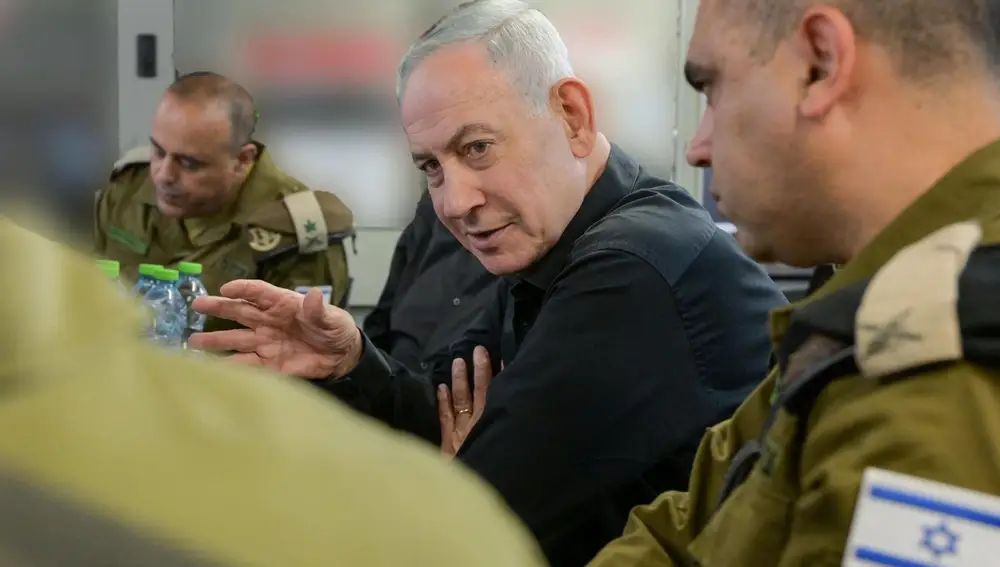
A leadership poll conducted by Israeli public broadcaster Kan showed Netanyahu with 39 percent support for prime minister compared to 38 percent for Eisenkot. The head-to-head result indicates a technical tie between the two leaders, even though Yashar leads Likud in individual party vote projections.
Prime Minister files lawsuits over media leak reports
The election campaign has been further shaped by a series of news reports asserting that Netanyahu received clear warnings about an impending Hamas attack and failed to act. Haaretz reported that United Arab Emirates President Mohamed bin Zayed warned Netanyahu of a major Hamas operation days before the attack, but Netanyahu did not inform military and security leaders. The New York Times later corroborated that report.
Subsequent reports stated that Netanyahu also received early warning information from Egyptian intelligence chief Abbas Kamel. Likud issued a statement announcing that Netanyahu is suing multiple media organizations over the reports, including Haaretz, Yedioth Ahronot, and Channel 12, as well as several individual journalists. Likud called the reports an absolute lie and stated that the allegations were published on the eve of an election by political rivals and hostile foreign elements.