A historic palace in Peñaranda de Duero, in the Ribera del Duero area of Burgos, has reopened as a high-end hotel, part of a wider push by Spanish hoteliers to bring visitors, jobs and investment back to the country's villages.
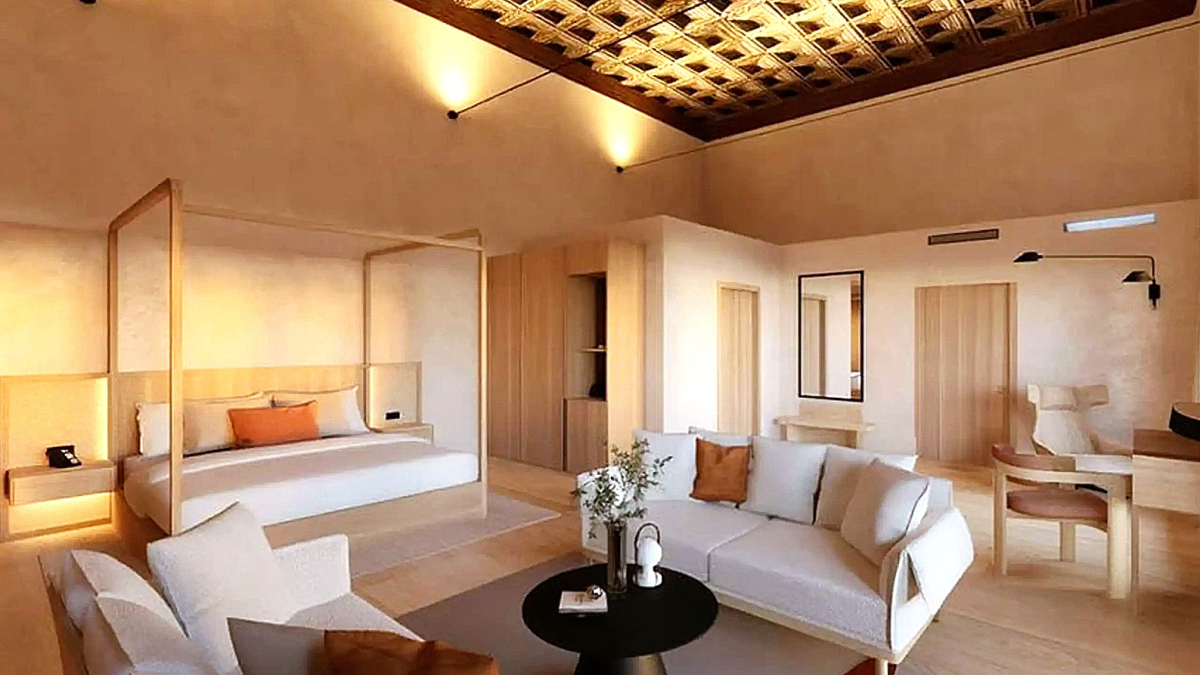
The Palacio de los Condes de Miranda, built in the 16th century and protected as a Bien de Interés Cultural, has been converted by the hotel chain Castilla Termal into the Castilla Termal Palacio de Avellaneda. The hotel has eighty rooms and suites and a wellness centre built around mineral-medicinal thermal water, with a contrast circuit, an outdoor thermal pool and twelve treatment cabins.
Roberto García, owner of Castilla Termal, said a hotel can act as a driving force for a local economy. He said its activity does not stop at the front door, since it needs professionals, suppliers, local producers, craftspeople and service companies, while guests visit the area, buy local products, eat in local restaurants and get to know the local heritage. García said that if the chain generates stable employment and economic activity, it helps people build a life in these places, adding that the company wants to be profitable but also wants that growth to create wealth around it.
Rural Spain's December travel boom
December is one of the months with the most travel to Spanish villages. According to the Instituto Nacional de Estadística, more than fifteen million trips are made in the month, and almost four in ten are to meet family or friends.
García said rural Spain offers authenticity, space, heritage, nature, calm and a way of relating to people and time that is increasingly scarce elsewhere, and that this may be the sector's great opportunity. He said villages do not need to become something else, but rather need to be valued and cared for so they create opportunities for the people who live there. García, who comes from the town of Olmedo, said he wants to build an ambitious, competitive and international project from Spain's villages.
The challenge of restoring historic buildings
García said restoring a historic building takes major investment, long execution times and far greater difficulty finding qualified professionals. He said that when working with heritage, you do not start from a blank page, since the building itself dictates the terms, with architectural, administrative and technical constraints that still have to produce a contemporary, high-end hotel. He said that building standard hotels would probably be much simpler, but that would lose what makes them different, since history provides a value that cannot be manufactured.
Smaller hotels betting on rural tourism
Isabel Olivares left Becerril de Campos, in Palencia, when she was young to study and work, saying the village was not seen as an option at the time. She now owns Sanmartina Hotel, which has operated since 2018 in an old Castilian house that took two years to renovate. Olivares said the rural world is now a genuine lifestyle alternative for many young people, helped by technology that has allowed new businesses to develop, and by institutions working to put rural areas on the map for quieter tourism. She encouraged Spaniards to return to the villages, calling them their roots.
History as part of the experience
García said that in a hotel of this kind, history cannot simply be decoration, but has to be part of the experience. He said that when a guest walks in, the hotel wants them to understand where they are, what happened there and what makes the place different, while still resting well and enjoying good food, excellent service and top-level wellness facilities. Asked whether that amounts to luxury, he said it has a lot to do with enjoying something authentic and hard to reproduce, since an extraordinary room can be built almost anywhere, but centuries of history cannot be replicated.
Celebrating local crafts and traditions
Josu Goikoetxea, director of Hotel Nafarrola, in the rural Artike neighbourhood of Bermeo, housed in a farmhouse dating back to the 13th century a few kilometres from Bilbao and its Christmas markets, encourages guests to visit the house of Olentzero, the Basque Father Christmas figure, take mountain walks and visit txacoli wineries and potteries. He said that on Christmas Eve or New Year's Eve it is typical to climb peaks such as Sollube, Burgoa and Gorbea.
García said success comes when a hotel stops being an isolated island and becomes part of the economic and social life around it, adding that building a destination takes a long time, which is exactly what villages have in abundance.
Other historic hotels reviving rural Spain
Fernando Artime, owner of Gran Hotel Brillante in San Esteban de Pravia, Asturias, a former meeting place for figures including Rubén Darío, Joaquín Sorolla and Mariano Fortuny, encouraged travel to villages at Christmas. He said it means returning to one's origins, to memories and to a way of life in which time and relationships take on a different meaning, adding that the challenge is making sure future generations also have a place to return to, or even a place to start a new story.
José Manuel Otero, chief executive of Aldea (C)alma, a hotel in Sanxenxo that belongs to the Club Rusticae group, said the holidays are too often marked by rushing, consumption, travel and large celebrations. He said his hotel wants guests to reconnect with what truly matters, so on Christmas Eve guests can experience a pause of peace, connection with nature and enjoyment of small moments shared around a table without watching the clock, recovering the deepest meaning of Christmas through simplicity, compassion and respect.
In Elciego, the architect Frank O. Gehry redesigned the landscape around Marqués de Riscal, a Luxury Collection Hotel operated by Marriott International. Its general manager, Stefan Friedl, said guests can enjoy the village's calm and its winemaking tradition, with food, wine, wellness and shared small moments at the centre of the experience, resting in large rooms with views, relaxing in a spa among the vineyards or using the heated pool while looking out over a winter landscape.
In Fuentespalda, in the Matarraña area of Teruel, Relais & Châteaux Torre del Visco occupies a farmhouse built around a tower dating to 1449, set on a ninety-hectare estate of gardens, olive groves and other natural species. Its owner, Jemma Markham, encouraged guests to slow down at Christmas and rediscover the pleasure of small things, such as a lit fireplace, a good table, local wines, long walks through the winter landscape and candlelit Christmas concerts. The hotel has sixteen rooms and suites.
Test yourself
What is the Castilla Termal Palacio de Avellaneda hotel housed in?
According to the Instituto Nacional de Estadística, how many trips are made in Spain in December?
What year does the tower at Relais & Châteaux Torre del Visco in Fuentespalda date from?
Have your say
Would you consider spending a holiday at a rural hotel in a small Spanish village?
Where it happened
Peñaranda de Duero, Spain