Minsk, the capital of Belarus, is the closest foreign capital to Moscow, and travel outlet Lenta.ru reported a surge in demand from Russian travelers for trips there this autumn. The outlet mapped a walking route past ten of the city's main sights that can be covered on foot in a single day.

Why Russians are choosing Minsk
Russian citizens do not need a visa to enter Belarus. An internal Russian passport or a valid international passport is enough, and visitors can stay without a visa for up to 90 days. Children aged 0 to 14, who do not yet hold an internal passport, need an international passport to cross the border.

Russian is Belarus's second official language alongside Belarusian, so there is no language barrier. Russian "Mir" payment cards are accepted in shops, restaurants and hotels, and cash can be withdrawn from almost any machine. Many brands that left Russia still trade in Minsk shopping centres, and restaurant prices run well below Moscow's: an average bill is 25 to 150 Belarusian rubles, roughly 700 to 4,000 Russian rubles. One Belarusian ruble is worth about 27.4 Russian rubles. Minsk is home to around 2 million people, about one in five of Belarus's roughly 9 million citizens, and at about 350 square kilometres is roughly seven times smaller than Moscow, comparable in size to Belgrade or Munich.
Getting to Minsk
By car, the distance from Moscow is about 700 kilometres in a straight line, or around 720 kilometres along the M-1 "Belarus" highway, a seven-to-nine-hour drive. Buses leave from Moscow's Salaryevo, Novoyasenevskaya, Shchyolkovsky and Yuzhnye Vorota stations, taking nine to eleven hours for 2,000 to 3,200 rubles.
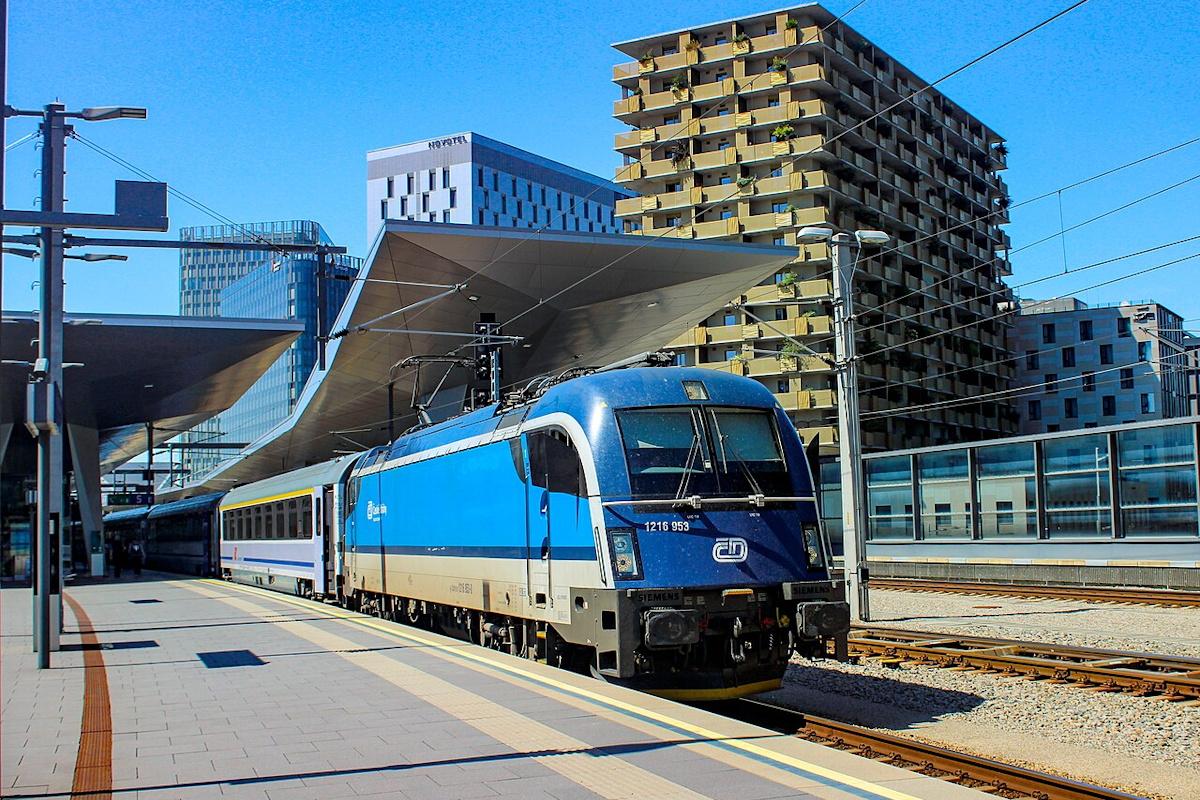
The train, the most popular option, runs from Belorussky station to Minsk-Passazhirsky in seven to eleven hours depending on the service, including high-speed Lastochka trains and the branded Belarus and Yantar trains, with tickets from 1,900 to 13,000 rubles.

Aeroflot, Belavia and Pobeda fly from Moscow's Vnukovo, Domodedovo and Sheremetyevo airports for 2,200 to 4,000 rubles one way, a flight of about ninety minutes; direct flights also run from several other Russian regions.
The Gates of the City
The route begins at Minsk-Passazhirsky station, where trains from Russia arrive, then heads to Kirov Street 1 and 2: two Stalin-era high-rises known as the Gates of the City, built in 1953 and still used as housing. Guide Alla Boyan, of the Beltours agency, said the roughly 45-metre towers are among the symbols that greet everyone arriving in Minsk. A local legend claims German prisoners of war built them, but Boyan said ordinary Soviet workers did the job in 1953; the only German element is a trophy clock 3.5 metres across on the left tower.

The Art Quarter
From the Gates, the route runs via Kirov and Lenin streets, past the Dinamo stadium, to Oktyabrskaya Street, a former industrial zone turned fashionable arts district. Old factory walls now house galleries, craft bars and coffee shops decorated with murals by Belarusian and Latin American artists, alongside food trucks. The area, formerly called Lyakhovka, had a rough reputation before the revolution, and in Soviet times carried the smell of alcohol from the Minsk-Kristall distillery, which local legend says once supplied its 1990s vodka "Vseslav the Sorcerer" to the Cannes Film Festival and the Oscars.

Minsk's public transport runs on buses, trolleybuses, trams and a metro of 36 stations on three lines; a ride costs 1.1 to 1.15 Belarusian rubles, about 30 Russian rubles. Travelcards cost the equivalent of 152 rubles for one day, 457.53 rubles for three days, or 1,805 rubles for thirty days.
Independence Avenue
The route continues to Independence Avenue, Minsk's main and longest street at about 15 kilometres, built up in Stalinist Empire, socialist classicist and modernist styles that shift along its length. Since 1801 the avenue has carried 14 different names, from Zakharyevskaya and Hauptstrasse to Stalin Avenue and Skaryna Avenue, and residents joke that every new ruler has felt obliged to rename it. At number 25, inside the Palace of Culture of Trade Unions, the "Mini Country" museum shows 1:25 scale models of Belarus's landmarks, some lit and animated, open daily 9:00 to 20:00, with tickets for Russian visitors at 770 rubles, 550 concession.

House Under the Spire
The route passes the circus, crosses the Svisloch River at Zakharyevsky Bridge, and turns at Victory Square onto Kommunisticheskaya Street, a quiet area of postwar low-rise buildings and cafes. At number 14 stands the House Under the Spire, whose tower once held a military observation post while officers' families of the Belarusian Military District lived below; it is now a protected landmark. Lee Harvey Oswald, who later killed US President John F. Kennedy, lived in a one-room flat at number 4, apartment 24, from 1960 to 1962, near the Horizont radio factory where he worked as a lathe operator after defecting from the US Marine Corps and seeking Soviet asylum; he was kept under constant KGB surveillance in Minsk.

The Svisloch River
From Kommunisticheskaya Street the route crosses Yanka Kupala Park to the Svisloch embankment, the city's main waterway, lined with cycle paths where visitors can rent a boat or catamaran, or take an hour-long river cruise from a pier opposite the Sports Palace for about 680 rubles. One persistent legend holds that crocodiles live in the Svisloch; locals say the last one was caught in 1885 in the Tatar Marsh and stuffed, though the specimen was later lost.

Trinity Suburb
Crossing the pedestrian Lavsky (Rusty) Bridge leads into Trinity Suburb, a fully restored 19th-century quarter at Starovilenskaya Street that functions as an open-air architecture museum, with cobbled lanes and colourful two- and three-storey houses holding cafes and souvenir shops. A footbridge connects it to the Island of Tears, a memorial with the statue of the Weeping Angel to Soviet soldiers who fought in Afghanistan. Legend tells of treasure hidden in tunnels below and of a market's noise still heard at night on Trinity Hill; Minsk newlyweds now visit the Weeping Angel to leave flowers and make wishes.

Viewing platform and Holy Spirit Cathedral
Crossing back over the Svisloch via the Khlusov Bridge toward Nemiga metro station, the route climbs into the Upper Town, where a platform on Kirill and Mefodiy Street gives one of Minsk's best-known views over the Svisloch, Trinity Suburb and Victory Avenue. The area below once carried the Nemiga River, now routed underground; legend tells of a "House of Suicides" supposedly built on the bones of Jews killed in the ghetto, though its exact address is unknown.

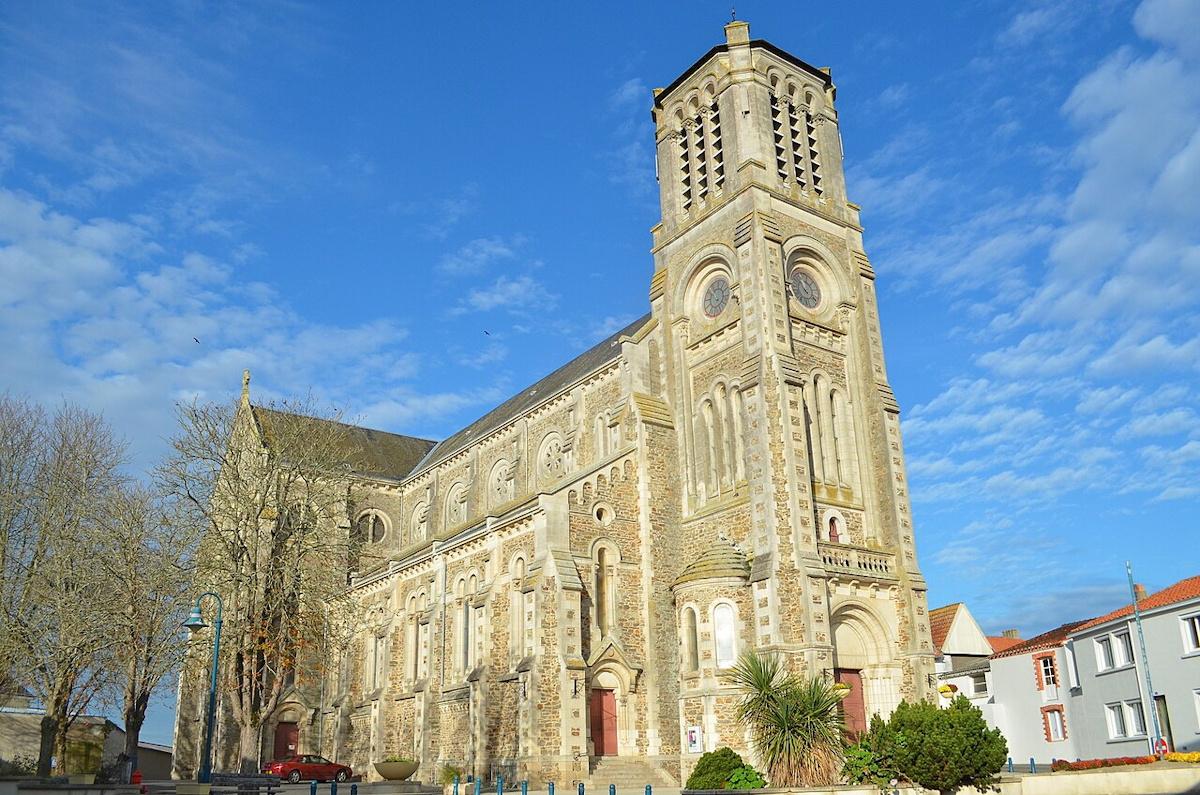
Further along stands Holy Spirit Cathedral at number 3, Minsk's main Orthodox church, rebuilt in mid-17th-century Baroque style on the site of a former Bernardine convent converted into a men's monastery in the 1860s. It holds the Minsk Icon of the Mother of God, one of Belarus's chief relics, said by tradition to have been painted by the apostle Luke and to have appeared floating against the current on the Svisloch on 13 August 1500 after Tatar raiders threw it into the Dnieper in Kyiv. The relics of St Sophia of Slutsk, regarded as the patroness of marriage, rest beside the altar.

Minsk Town Hall
Holy Spirit Cathedral stands about 200 metres from Minsk Town Hall at Svobody Square 2A, the historic seat of city government. The original building, where the magistrate once sat, was demolished on the orders of Russian imperial authorities in 1857 as a rebuke to the city's Magdeburg right of self-government, and was rebuilt from surviving drawings and engravings only in 2004; it now hosts exhibitions. Legend holds that a wealthy, hot-tempered nobleman named Michal Wolodkowicz burst into a drunken magistrate session there in 1760, was arrested and executed in the courtyard, and that his ghost still lingers near the town hall, though it may just be a patron from the Upper Town's many restaurants.

Zybitskaya Street nightlife
About 150 metres from Svobody Square lies Zybitskaya Street, Minsk's main bar and clubbing strip, lively until morning on weekends. Local legend ties it to four ghosts: a wealthy 19th-century merchant's three daughters, two his own and one adopted, all fell for a tutor he had hired, but he loved only the adopted daughter; her jealous stepsisters locked her in the cellar, which flooded during a spring rise of the Svisloch and drowned her, and the tutor then killed the sisters and himself with the same knife. Residents say the ghosts of the three girls and the young man appear near the old mansions before every spring flood.

Where to eat draniki in Minsk
Draniki, Belarus's classic potato pancakes, are served with sour cream or machanka, a thick meat sauce. Oleg Malkut, sous chef at the Slavic restaurant Razdolye, said machanka takes its name from the Belarusian word for "to dip," and is typically made from meat or chicken stock with melted milk, sour cream and flour, plus a meat base such as pork ribs, brisket, salo, homemade sausage or mushrooms.

Recommended spots include Kamyanitsa on Pervomayskaya Street, styled after medieval nobility and known for princely draniki with red caviar; Kukhmistr on Karl Marx Street, whose tasting set of draniki weighs about a kilogram and which serves a "dranburger"; Litviny on Sverdlova Street, serving draniki on a hot cast-iron skillet with sour cream, poultry or mushrooms, crispy bacon and a poached egg; the Vasilki chain on Independence Avenue; Pansky Dranik on Rakovskaya Street, known for oversized "bandit-style" draniki folded over a meat or machanka filling; the brewery-restaurant Rakovsky Brovar on Vitebskaya Street; the cafe Rebryk i Dranik on Yurovo-Zavalnaya Street; the brewery-restaurant Druzya on Kulman Street, one of Belarus's largest, serving draniki with roast beef or salmon; the cafe Moya Dorogaya on Komsomolskaya Street, praised for draniki with pig's ears; and the Lido self-service chain on Independence Avenue, praised for potato draniki with dill sauce.
A city older than Moscow
Minsk is 80 years older than Moscow. It was first mentioned, as Mensk, in the Primary Chronicle in 1067 in connection with a battle on the Nemiga River, while Moscow's first mention dates to 1147. Folklore credits the city's founding to a wizard named Menesk, who supposedly ground stones for soldiers' slings at a mill on the Menka River, but linguist Sofia Gaiduchenko said the real origin lies in an early Slavic settlement on that stream, whose name later shifted through Polish administration from "Myensk" to "Minsk," a spelling Russian officials simply transliterated once part of Belarus joined the Russian Empire; residents kept saying "Mensk" into the 20th century, and the Supreme Soviet of the Byelorussian SSR fixed the current spelling in 1939.
Minsk was capital of the independent Minsk principality from 1101, joined the Grand Duchy of Lithuania in the early 14th century, and became part of the Polish-Lithuanian Commonwealth in 1569. Peter the Great stayed in the city in 1706 while directing a Russian retreat during the Great Northern War, and Minsk passed to the Russian Empire after the second partition of the Commonwealth in 1793. Napoleon's forces held the city briefly in 1812. It was capital of the independent Belarusian People's Republic in 1918 and became capital of Soviet Belarus in 1919. During the Nazi occupation that began in 1941, 80,000 Jews were killed in three ghettos in the city; the Red Army liberated Minsk in 1944 during Operation Bagration. Minsk native and local historian Vadim Karpovich said only 70 old buildings survived the war and that everything visitors admire today was rebuilt by earlier generations of residents. The city received the honorary title "Hero City" in 1974, and its metro opened in 1984. A crush in a Nemiga metro underpass during a sudden storm killed 53 people in 1999, and a bombing at Oktyabrskaya metro station killed 15 people in 2011. Minsk became the capital of independent Belarus after the Soviet collapse in 1991.
Test yourself
How long can Russian citizens stay in Belarus without a visa?
Who lived on Kommunisticheskaya Street in Minsk from 1960 to 1962?
How much older than Moscow is Minsk, according to its first chronicle mention?
Where it happened
Minsk, Belarus