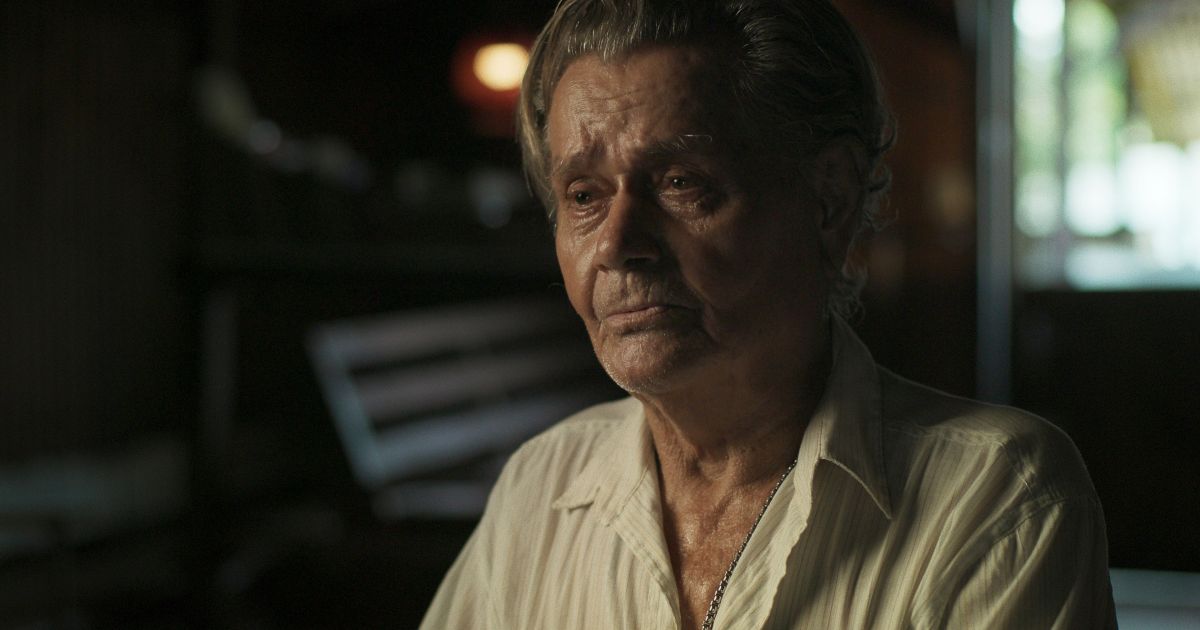
The film crew for the HBO Max documentary Death and Mystery in the Amazon fled Brazil's Upper Rio Negro at dawn following death threats.
Director Tatiana Issa revealed that the production team was forced to evacuate their location by boat after confronting the main subject of their investigation, Tatunca Nara.
The documentary series, which premiered on the HBO Max streaming platform on Thursday, September 10, 2026, examines a series of mysterious disappearances and deaths linked to accounts of a lost Amazonian city during the 1970s and 1980s.
HBO Max is an international subscription streaming service owned by Warner Bros. Discovery that produces original investigative docuseries, true-crime narratives, and non-fiction programming for global audiences.
The newly released production focuses on long-standing claims surrounding Akakor, a legendary subterranean settlement rumored to be hidden deep within the South American rainforest.
Death threats during rainforest interview
Issa told CNN Brasil reporter Nicoly Bastos that the threat emerged immediately after the production team completed a lengthy interview with Tatunca Nara in the field.
According to the director, the confrontation began when Tatunca Nara realised that the film crew intended to present him with documents, archival records, and investigative findings regarding events that occurred in the Amazon during the 1970s and 1980s.
Tatunca Nara continues to maintain to this day that an ancient lost city named Akakor exists concealed within the tropical rainforest.
Issa explained that the crew recognised a direct threat to their lives while still at the interview location, prompting an immediate emergency evacuation.
The director described how the team had to board their riverboat quickly and escape down the river in the early hours of the morning, characterising the production environment as extremely dangerous and complex.
Upper Rio Negro and river logistics
The Upper Rio Negro is a remote sub-region located in the far northwestern area of the Brazilian state of Amazonas, near the international borders with Venezuela and Colombia.
Characterised by dense tropical rainforest, intricate river systems, and minimal road infrastructure, the region is accessible primarily by river vessels, requiring specialised expedition planning for field operations.
Navigating the blackwater tributaries of the Rio Negro requires long-distance riverboats that function simultaneously as transportation, living quarters, and operational bases for researchers and film crews.
Filming on location required an extensive commitment to field research, as crew members spent days navigating remote river routes to reach historical sites depicted in the documentary.
Confronting Tatunca Nara on camera
Issa noted that the documentary marked the first time Tatunca Nara had agreed to grant an extended interview presenting his version of the historical events.
The director stated that previous media appearances by the figure were brief or conducted by journalists who allowed him to speak without challenging his claims or questioning his account.
She emphasised that securing his participation was a central objective for the filmmakers, not to provide him with an unquestioned platform, but to directly contest his assertions using documentary evidence.
Logistical challenges of Amazon filming
Beyond the security risks encountered during interviews, the production team faced major logistical hurdles while recording on location throughout the Amazon.
Issa said the crew insisted on filming on site across almost all of the geographical locations featured in the narrative, including a multi-day expedition up the Upper Rio Negro.
She said that traveling up the river required many hours and days of continuous boat travel through difficult terrain.
According to the director, capturing the atmosphere of the specific historical period in which the story takes place required a level of immersion far beyond conventional television logistics.
Issa said the crew had to navigate diverse territories while coping with long travel distances, physical exhaustion, and operational wear in areas with restricted accessibility.
Despite the physical toll on the team, she noted that recording in authentic historical locations added a vital layer of realism that defines the final series.
Origin of the Akakor myth and missing explorers
The case central to the documentary gained widespread international notoriety throughout the 1970s and 1980s following reports about the existence of Akakor.
According to local accounts, Akakor was an ancient hidden city concealed in the heart of the Amazon rainforest, allegedly inhabited for thousands of years by an advanced civilization.
These stories attracted scores of foreign adventurers, researchers, and explorers, primarily from Europe and the United States, who traveled to the Amazon region searching for the city.
Expeditions launched into the jungle resulted in unexplained disappearances, reported deaths, and police investigations spanning several decades.
Rainforest exploration and historical context
Tales of lost civilizations hidden within the South American interior have enticed Western explorers for centuries, drawing comparisons to historical searches for El Dorado and the Lost City of Z.
Jungle expeditions during the late twentieth century carried severe risks, including tropical diseases, river hazards, unpredictable weather, and extreme physical isolation from emergency services.
Suspicions surrounding Tatunca Nara
Tatunca Nara became the central figure in the mystery after claiming to be a direct descendant of the Ugha Mongulala, an Indigenous group he described as connected to Akakor.
He claimed to know the route to the lost city and began working as a guide for foreign expeditions entering the forest in search of the site.
Over the following years, Tatunca Nara became repeatedly associated with the disappearance and death of several explorers who ventured into the rainforest with him.
Suspicion surrounding his activities led to formal law enforcement investigations, international press coverage, and numerous competing theories regarding the fate of the missing individuals.
Despite decades of searches and official investigations by authorities, the existence of Akakor has never been proven.