

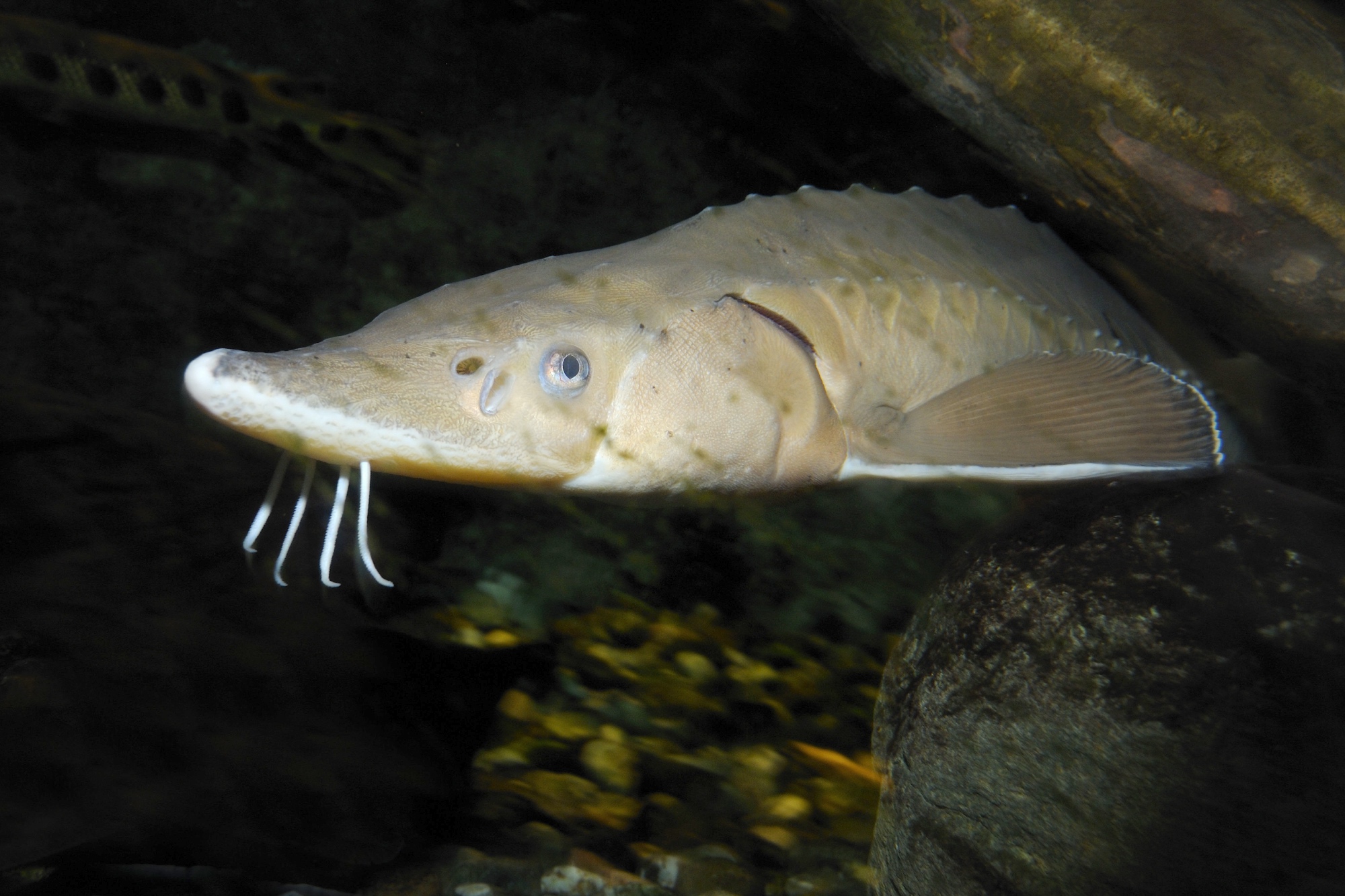
Ichthyologists in the United States have found that lake sturgeon living in the Great Lakes can live more than 400 years, making the species one of the longest-lived vertebrates on the planet. The findings were published in a study in the Journal of Fish Biology.
Researchers from the Michigan Department of Natural Resources and state universities analyzed decades of tagging data from five sturgeon populations and developed a new formula for calculating age. The traditional method of counting annual rings on fins turned out to fail for older fish, since the rings become indistinguishable and too tightly packed together with age. The new formula found that males can live between 90 and 279 years and females between 99 and 427 years, compared with a previous record for the species of 152 years.
Comparison to the Greenland shark
Under the new estimate, long-lived lake sturgeon come close to the Greenland shark, the longest-lived vertebrate on Earth, whose age is estimated at 272 to 512 years. Reaching such an age requires the population's annual survival rate to be 96 to 98 percent. That is critical given that less than one percent of the historical sturgeon population remains in the Great Lakes today, after the species was nearly wiped out in the late 19th century.
Calls for stricter fishing limits
Edward Baker, head of the research station involved in the study, said the work underscores the need for strict catch limits, since sturgeon reproduce slowly. Michigan currently runs programs that breed sturgeon in hatcheries before releasing them into rivers. Nearly 1,600 juvenile sturgeon have already been released into the Kalamazoo River under the program.


