

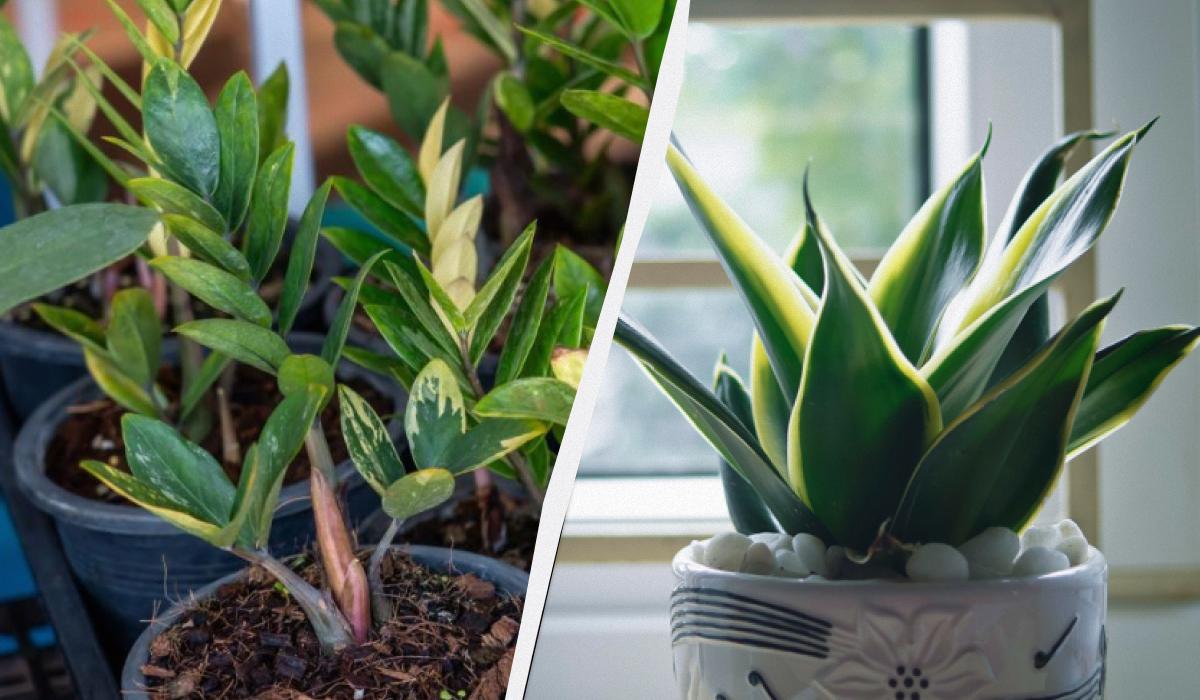
For people who love houseplants but often forget to water them, horticulturist Justin Hancock has identified five resilient varieties that can survive for weeks without a drop.
Speaking to the publication Real Simple, Hancock, the author of The New Complete Guide to Houseplants, detailed the best drought resistant options for indoor environments. He explained how these specific plants have adapted to dry conditions and outlined the best ways to care for them. Houseplants have surged in popularity in recent years, but keeping them alive remains a common challenge for busy owners.
Sansevieria
Hancock said sansevieria, also known as the snake plant or mother-in-law's tongue, is the perfect choice for people who travel frequently or simply forget their watering routine. The plant is native to regions of Africa that experience extended dry seasons, meaning it has naturally developed a strong resistance to drought. Sansevieria is highly regarded in interior design for its architectural, upright leaves, and is widely recognised for its ability to filter indoor air.
The author noted that sansevieria stores water in its thick, fleshy leaves. This biological adaptation allows the plant to survive in a home environment for about a month without being watered. While it can easily endure long periods of drought, Hancock stated that the plant grows best when watered regularly and prefers bright light.
Zamioculcas
Another highly resilient option is zamioculcas, commonly referred to as the ZZ plant or dollar tree. Hancock described this as a low maintenance plant that owners might only need to water once a month. Native to eastern Africa, the ZZ plant has become a staple in office buildings and shopping centres worldwide due to its tolerance for neglect and its striking, glossy green foliage.
According to the expert, the plant features thick, rubbery leaves that store water, along with potato-like rhizomes under the soil that provide extra protection against dry conditions. To optimise its growth, Hancock advised watering the plant regularly and giving it plenty of light, though he added it will still thrive with significantly less attention. He called zamioculcas a simple plant that does not require much care.
Nolina
For those looking for a larger indoor plant, Hancock recommended nolina, which is also known as the ponytail palm. He explained that this slow growing tree, originally from Mexico, features a thick, swollen trunk called a caudex. Despite its common name, the ponytail palm is not a true palm but a succulent closely related to the agave family, characterised by a cascade of long, leathery leaves sprouting from the top of the trunk.
Hancock pointed out that the caudex acts as a water reservoir, allowing the tree to keep growing even when rainfall stops in its natural habitat. This means owners do not need to reach for a watering can the moment the soil begins to dry. He advised letting the top half of the soil dry out entirely before the next watering, which could mean watering it just once a month or up to once a week.
Chlorophytum
The expert also highlighted chlorophytum, widely known as the spider plant. He described it as a time-tested houseplant favoured for being easy to grow, a trait he linked to its natural drought resistance. The spider plant is famous for producing small white flowers and cascading offsets, often called pups, which dangle beneath the mother plant and resemble spiders on a web.
The plant owes its resilience to its tuberous roots, which hoard water as a reserve for when the plant needs it most. Hancock said the spider plant prefers regular watering but can tolerate an infrequent schedule. He also offered a simple tip for owners unsure if the plant is thirsty, explaining that the foliage will shift from a bright green colour to a more grey-green shade when the plant requires a drink.
Aloe vera
The final recommendation is aloe vera, a popular succulent known for its soothing clear gel, which is widely cultivated for agricultural and medicinal uses and often applied to various skin complaints. Beyond its practical uses, Hancock noted that it is a very easy plant to look after. Its thick, serrated leaves hold moisture that sustains the plant during dry spells, which means it will survive if owners occasionally forget their watering duties.
Unlike the snake plant or ZZ plant, Hancock stated that aloe vera genuinely does not need to be watered every week. He mentioned that many plant enthusiasts water their aloe vera roughly once every two to three weeks, though the exact frequency depends on the specific conditions in the home. However, he warned that aloe vera requires plenty of bright light to thrive and does not cope with low light environments as well as many other houseplants.
Bedroom warnings
While selecting the right plant is important, the Ukrainian news agency UNIAN previously reported that certain houseplants are best kept out of the bedroom. The agency noted that some pots can inadvertently provide a hiding place for bedbugs. Bedbugs feed on human or animal blood rather than plant matter, but they are known to seek out complex, dark structures near beds to hide during the daytime.
Plants such as ferns, ficus, ivy, dracaena and orchids were highlighted as particular risks. The pests can conceal themselves on the leaves or stems of these indoor plants, as well as around and underneath the pots, although they do not live in the soil itself.


