

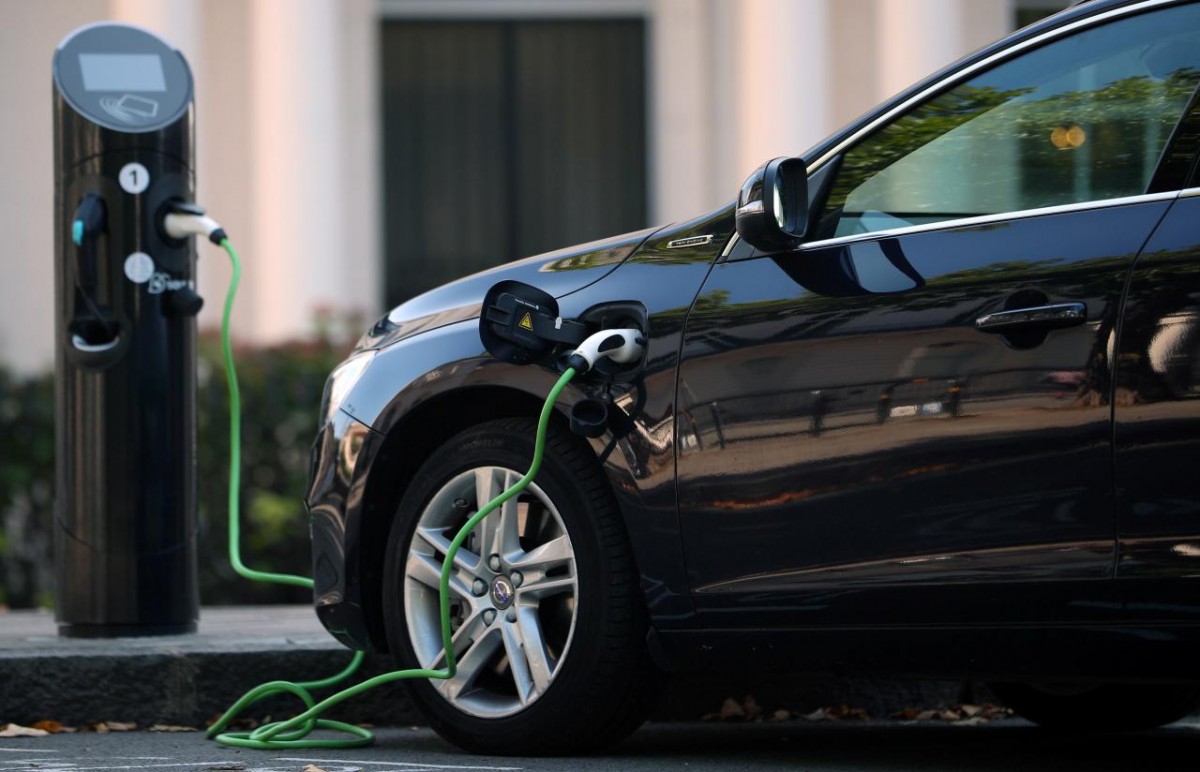
Electric vehicle drivers are losing up to nearly a quarter of the electricity they pay for during home charging, according to tests conducted by German motoring organization ADAC.
The automobile club tested five popular electric cars using three common home charging methods, revealing that energy losses vary significantly depending on the vehicle model and the power capacity of the charging equipment.
The new Mercedes-Benz CLA recorded the highest energy losses in the evaluation. When plugged into a standard domestic socket using a 2.3 kilowatt mobile charger, 24.2 percent of the electricity drawn from the grid failed to reach the traction battery.
ADAC reported that one reason for the high loss in the CLA was an internal limit in the vehicle onboard charger, which restricted current to 8 amperes during mobile charging. However, when connected to an 11 kilowatt home wallbox charging station, the energy loss for the CLA dropped to 6.9 percent.
ADAC, Europe's largest automotive club based in Germany, regularly conducts technical assessments of vehicles and consumer products. In this study, testers evaluated the Mercedes-Benz CLA, Renault 5, Tesla Model Y, Volvo EX30, and Volkswagen ID.7 across three setups: a 2.3 kilowatt mobile wall socket charger, a 4.1 kilowatt solar panel simulation system, and a dedicated 11 kilowatt or 22 kilowatt home charging station.
Tesla Model Y shows top efficiency
The Tesla Model Y achieved the best overall result among the tested vehicles, although its efficiency remained heavily tied to the charging method. At a 2.3 kilowatt power rating, the Model Y registered an energy loss of 12.7 percent, but that figure dropped to 6.1 percent when using an 11 kilowatt wallbox.
The Renault 5 recorded the lowest overall energy loss among all participating models when connected to an 11 kilowatt station. Meanwhile, the Volvo EX30 was the only car in the test group capable of supporting 22 kilowatt charging, recording a 6.7 percent loss at 22 kilowatts compared to a 7 percent loss at 11 kilowatts.
The testing demonstrated a clear broader pattern across all models: higher home charging power directly reduces energy waste. In the case of the Tesla Model Y, stepping up from a 2.3 kilowatt socket to an 11 kilowatt wallbox cut power loss by more than half.
Why energy is lost during charging
Energy loss occurs primarily because home electricity grids deliver alternating current (AC), whereas electric vehicle batteries can only store direct current (DC). An onboard converter inside the car must transform the incoming AC supply into DC, generating heat during the process that dissipates as lost electricity.
Grid-supplied alternating current flips direction continuously, making it unsuitable for battery storage without conversion. To minimize conversion heat, some car manufacturers have begun incorporating silicon carbide (SiC) semiconductors into their power electronics instead of standard silicon components. While silicon carbide modules are more expensive to produce, their superior thermal efficiency helps preserve energy during power conversion. Additional electricity may also be consumed by thermal management systems designed to heat or cool the battery pack during charging.
Best practices for home charging
Based on the test findings, ADAC advised EV owners to install a dedicated high-power stationary wallbox station for routine home charging rather than relying on standard wall outlets.
While using a household socket with a mobile charger serves as a convenient temporary or emergency option, the resulting energy losses mean drivers spend more on their electricity bills to deliver the same amount of charge to their battery.


