As Spain heads toward a general election on November 29, a quality long dismissed as campaign trivia is being taken seriously by researchers and strategists alike: the physical appeal and charisma of candidates, now studied under the label "erotic capital." What was once treated as gossip about a politician's looks is today measured, cultivated and analysed as a genuine factor in electoral success.
The idea itself is not new. Spanish electoral chronicles once noted female voters swooning over the sex appeal of Adolfo Suárez, Spain's first democratically elected prime minister after the Franco era, and Felipe González, who led the country for more than a decade as leader of the Spanish Socialist Party. At the time such remarks were treated as light anecdotes, though campaign teams were well aware of the advantage their candidates' looks gave them.
The concept of erotic capital was developed by Catherine Hakim, a professor at the London School of Economics, who describes it as an asset everyone holds to some degree and can cultivate over a lifetime. It goes beyond innate physical attractiveness to include sexual appeal, vitality, dress sense, charm and sociability, broadly any quality that helps build pleasant social relationships.
A fourth form of capital
Hakim adds erotic capital to three personal assets already identified by the French sociologist Pierre Bourdieu: economic capital, the goods a person owns; cultural capital, what they know; and social capital, who they know. This fourth form matters especially in politics, since words carry only 7% of a message. The remaining 93%, according to research by the psychologist Albert Mehrabian, comes through physical presence, which accounts for 55%, and tone and modulation of voice, which accounts for 38%.
Elisenda Estanyol i Casals, a professor of advertising and public relations at Spain's Universitat Oberta de Catalunya, said persuasion tries to convince through reasoning, while seduction moves desire and appeals to emotion and to older, more primitive structures of the brain inherited from humans' animal past. She said the power of erotic capital can sometimes be entirely unconscious and hard to control, since politicians use words and argument to convey information, but their image and body language betray them too, revealing mood and intention.
Cultivating the look
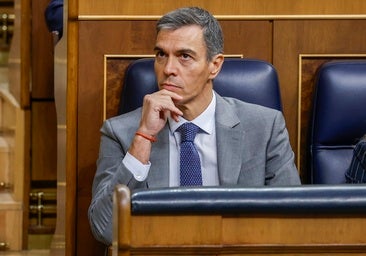
Although erotic capital can be cultivated, and the popularity of cosmetic procedures proves it, politicians are generally better off arriving in office already possessing it. Pedro Sánchez, the prime minister, admitted that "everything helps" after Manu Sánchez, a presenter on Spanish public broadcaster TVE, pointed out the advantage of his physical presence. Mariano Rajoy, a former prime minister, said on Telecinco that each person has the face they have and that his own was hard to fix, after revealing his advisers had recommended a series of aesthetic changes. More open to change, Alberto Núñez Feijóo, leader of the Popular Party, altered his image in 2024 by removing his glasses and embracing his natural grey hair.
A harsher standard for women
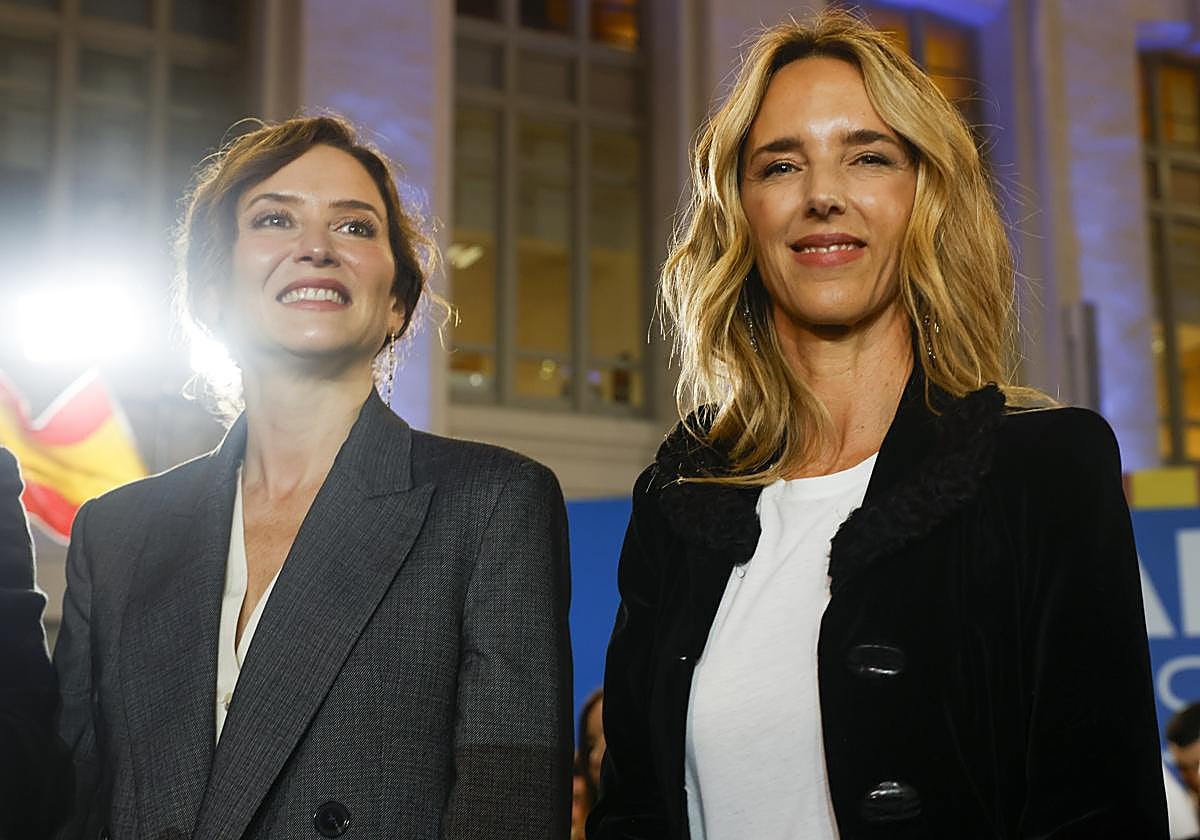
For women in politics, erotic capital can function as an obligation rather than a choice. Marta Rebolledo, a professor of political communication at the University of Navarra, said women face far greater scrutiny than men over their appearance. The need to look youthful and fashionable is visible across female candidates of every political stripe, with some, such as Yolanda Díaz and Isabel Díaz Ayuso, particularly skilled at using fashion to their advantage.
The halo effect on voters
"Presidential elections are not a beauty contest," the French politician Jean-Luc Mélenchon, then a senator, told the Socialist candidate Ségolène Royal in 2007, during the French presidential race eventually won by Nicolas Sarkozy. He had a point, yet the influence of erotic capital on voting cannot be ruled out entirely. One way it works is through the so-called halo effect, the tendency to attribute qualities such as intelligence, leadership or competence to physically attractive people. Among less informed or less politically engaged voters, that first impression can tip the balance.
Several studies have tried to measure how much erotic capital shifts the vote. A University of Ottawa study based on the 2008 United States presidential election found that attractive candidates earned a premium of between 7% and 10% more votes thanks to their looks. José Luis Casero, an electoral marketing expert, said it is undeniable that everyone wants to be represented by people who reflect what they themselves would like to be.
A separate study from 2011 found that taller candidates had won 67% of elections in the United States, and that citizens tend to imagine the ideal politician as someone taller than average. Researchers trace that preference to evolutionary psychology, the field that shows humans tend to favour being governed by whoever appears most dominant, a trait often read through physical appearance.
What happens next
Spain is scheduled to hold a general election on November 29, as previously announced by Prime Minister Pedro Sánchez.
Test yourself
Who developed the concept of 'erotic capital'?
According to the University of Ottawa study on the 2008 US election, what vote premium did attractive candidates receive?
What change did Alberto Núñez Feijóo make to his image in 2024?
Have your say
Do you think a candidate's physical appearance and charisma should influence how people vote?
Where it happened
Madrid, Spain