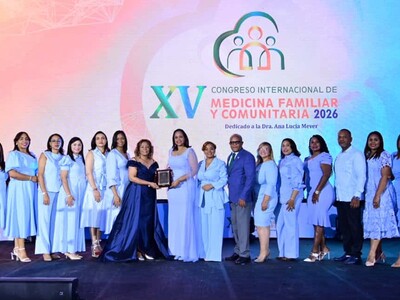
The Dominican Society of Family and Community Medicine hosted its 15th international congress in Punta Cana to boost primary healthcare resolution.
The medical gathering took place under the theme "The power of a Resolutive Primary Care: Family, Community and high-impact diseases." Delegates focused on transforming first-level clinical care across the Dominican Republic.
Dr. Wendy E. Rosario Medina, president of the organization known as SODOMEFyC, stated that a strengthened primary care level with strong diagnostic and treatment capacity could address at least 80 percent of the population's health problems.
Rosario Medina said healthcare systems must move beyond a model centered solely on referring patients. She argued that primary care physicians need the resources to evaluate, prevent, diagnose, treat, and follow up on both acute and chronic medical conditions.
Primary care serves as the initial entry point to national health networks, aiming to provide accessible, community-based care before patients require complex clinical intervention. SODOMEFyC represents general practitioners and primary healthcare specialists working across the Caribbean nation.
Primary care reform and physician role
Rosario Medina explained that solid primary care provides patients with a genuine entrance to the health system. Patients receive prevention, evaluation, and management for long-term illnesses, moving to higher care levels only when specialized procedures are necessary.
Family doctors play an essential role because their clinical training allows them to manage diverse medical issues, accompany patients through various stages of life, and coordinate care when specialized treatments are required, Rosario Medina said.
She added that expanding the resolution capacity of primary care reduces unnecessary hospital referrals, diminishes service fragmentation, and ensures a more efficient allocation of healthcare resources.
Dr. Harline Rufino, president of the congress scientific committee, agreed on the urgent need to expand professional skills at the primary level.
Rufino said effective primary care requires doctors who listen to patients, understand family contexts, identify environmental health factors, and deliver preventive care throughout a patient's lifetime.
Major health challenges and high-impact diseases cannot be managed from hospitals or specialized centers alone, Rufino noted, emphasizing that effective healthcare requires a strong, prepared, and resolutive primary care infrastructure.
Honors for Dr. Ana Lucia Meyer Lorenzo
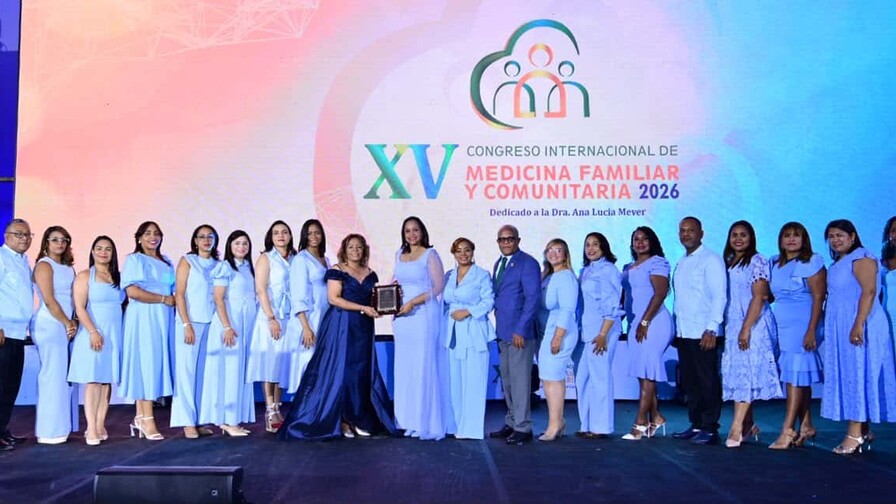
The 2026 convention was dedicated to Dr. Ana Lucía Meyer Lorenzo in recognition of her career and contributions to family and community medicine in the Dominican Republic.
Meyer, a past president of SODOMEFyC who composed the organization's official anthem, received the tribute for her professional career and her dedication to strengthening the medical society.
Meyer expressed deep gratitude for the honor, noting her satisfaction at receiving recognition from peers dedicated to community health in Punta Cana, a coastal resort city in the eastern province of La Altagracia.
During her address, Meyer advocated for a person-centered model of medicine rather than an approach focused strictly on diagnoses or diseases.
She noted that every health condition develops within a patient's personal environment, shaped by family life, employment, community, personal habits, concerns, and expectations.
Listening to patients, understanding their circumstances, and accompanying them through illness remain fundamental pillars of family medicine, Meyer said.
She added that the congress tribute provided an opportunity to reaffirm family medicine as a discipline focused on individuals, families, and communities, while inspiring future generations of medical professionals.