

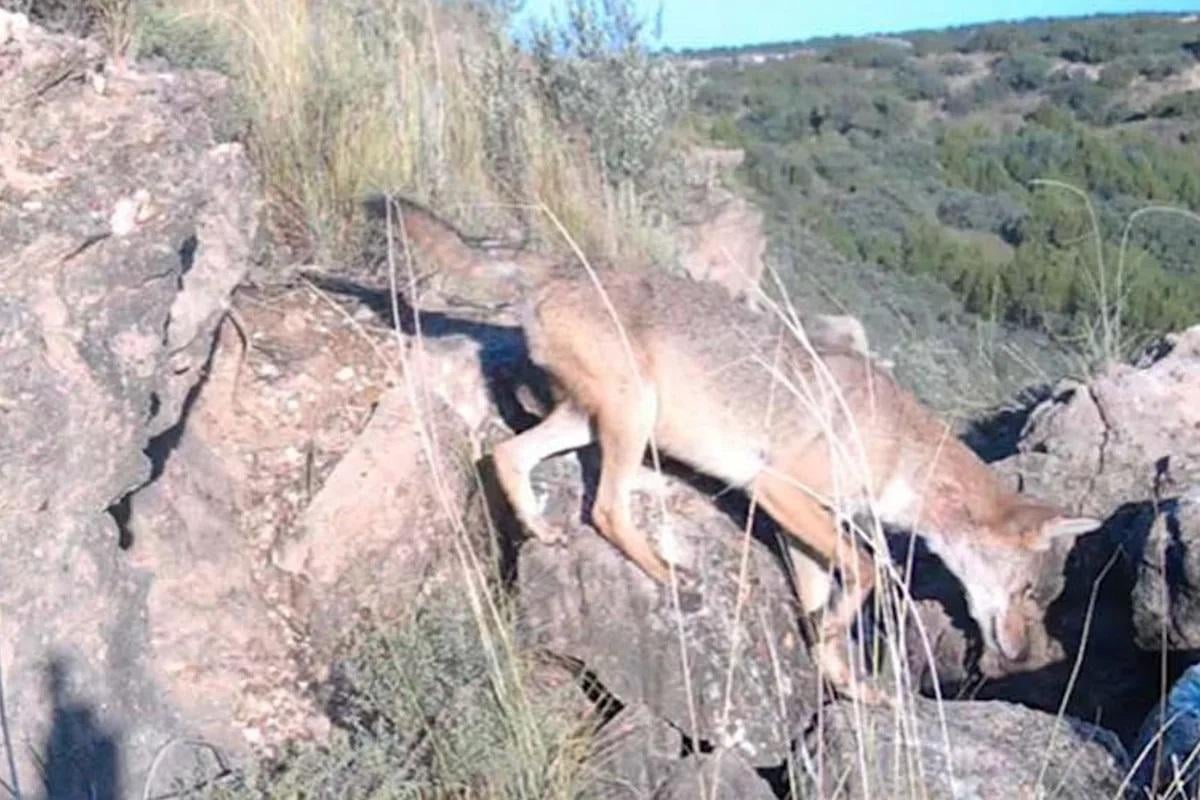
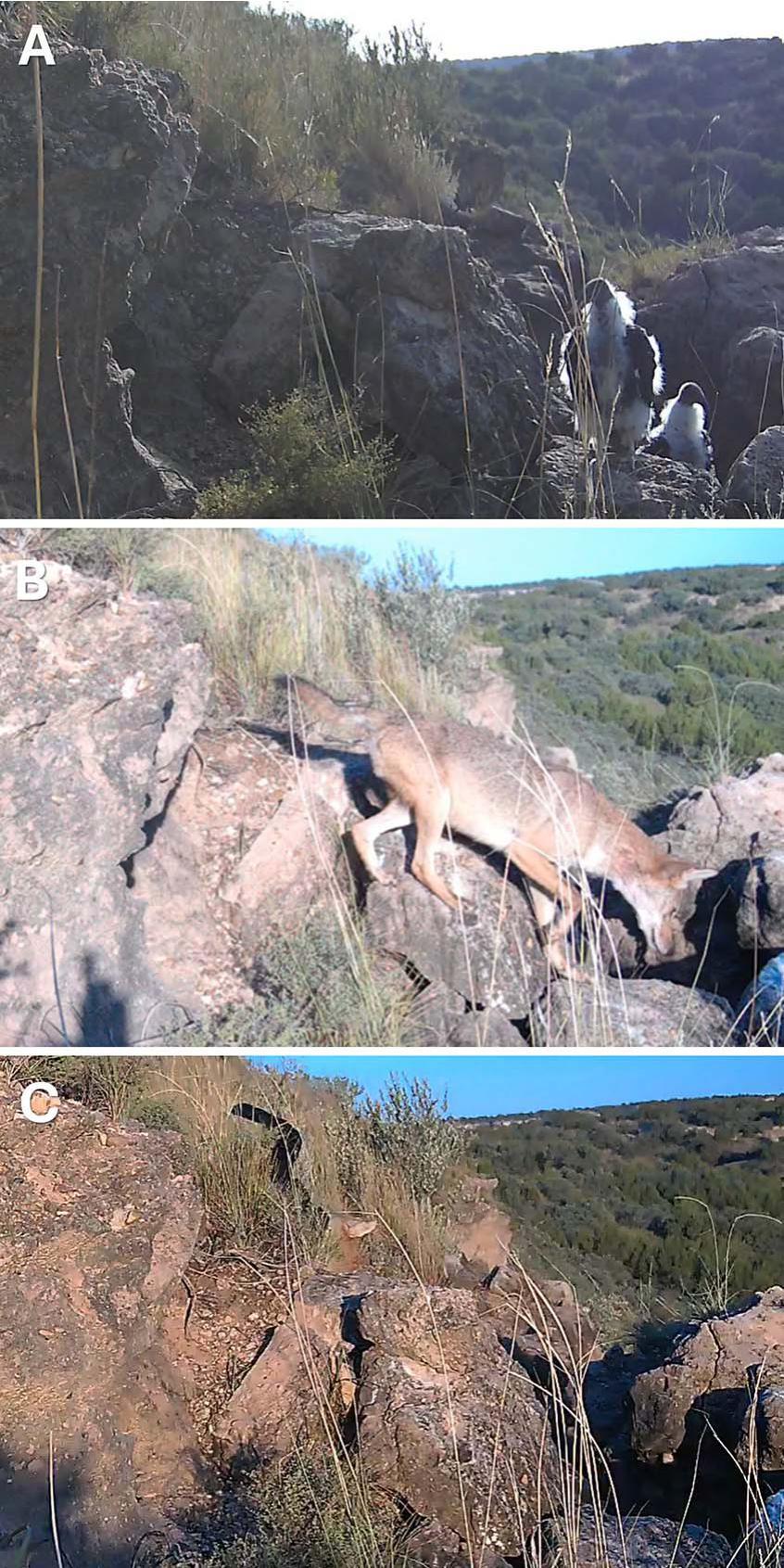
A remote camera installed on a private ranch in Armstrong County, Texas, has captured what scientists believe is the first direct visual evidence of a coyote hunting turkey vulture nestlings.
Photographs recorded by the camera show the coyote climbing down a steep cliff into a ravine where the vultures had nested. Moments later, the wild canine emerged from the ravine carrying a vulture chick in its mouth before running up the slope and out of sight.
Six minutes later, the coyote entered the ravine a second time and exited along a different path with another object in its jaws. Although the object was not clearly visible in the photograph, researchers noted that the animal shadow indicated it was likely carrying a second nestling.
The discovery was reported by Discover Wildlife following the publication of the findings by researchers James D. Ray and Susan K. Ray in the Journal of Raptor Research.
Monitoring Nest Sites in Texas Terrain
Turkey vultures are large scavenging birds of prey found throughout North and South America. Unlike many other raptors, they do not build stick nests in trees, preferring sheltered crevices, rock ledges, caves, or hollow logs on the ground to lay their eggs.
Armstrong County is situated in the Texas Panhandle, a region characterized by rugged plains, steep bluffs, and deep canyon systems. These dramatic geological formations provide isolated nesting sites for birds of prey, while also serving as foraging territory for terrestrial predators.
Wildlife biologists frequently rely on remote trail cameras to monitor sensitive nest sites. These automated devices allow scientists to observe rare animal behaviors and predator interactions without human presence altering natural activity.
First Visual Confirmation of Canine Predation
Writing in the Journal of Raptor Research, James D. Ray and Susan K. Ray noted that previous assumptions regarding canines preying on turkey vulture nestlings relied strictly on indirect evidence. Biologists had previously found tracks or droppings near nest crevices and burrows, but no published report had provided direct visual proof of an attack.
The authors observed that the nest placement at the bottom of a recess made the chicks, eggs, and potentially incubating adult birds highly vulnerable to coyotes and other ground-dwelling predators.
Coyotes are medium-sized wild canines native to North America known for their adaptability and opportunistic diet. While they primarily hunt small mammals and scavenge carrion, they are skilled climbers capable of navigating steep canyon walls to access prey.
The new observations expand the list of confirmed predators for turkey vultures and provide valuable empirical data regarding nest vulnerability in cliff environments.
Rare Records of Vulture Predators
Scientific documentation of predators attacking or attempting to attack turkey vultures is exceptionally rare. A 1991 report published in Northwestern Naturalist detailed an encounter where a golden eagle knocked an adult turkey vulture out of the sky and pinned it to the ground before releasing it.
In another documented case from a 2021 study in the Journal of Raptor Research, a Central American boa constrictor killed and consumed an adult turkey vulture in Belize.
Researchers have also suggested that American alligators, small Asian mongooses, Virginia opossums, and raccoons might prey on vultures, though those accounts remain speculative. Prior to the camera record in Armstrong County, domestic dogs and foxes were considered potential canine predators based only on indirect signs such as tracks, scat, or den locations.
The published study by Ray and Ray provides the first definitive visual evidence confirming that coyotes actively hunt turkey vulture chicks in their natural habitat.


