

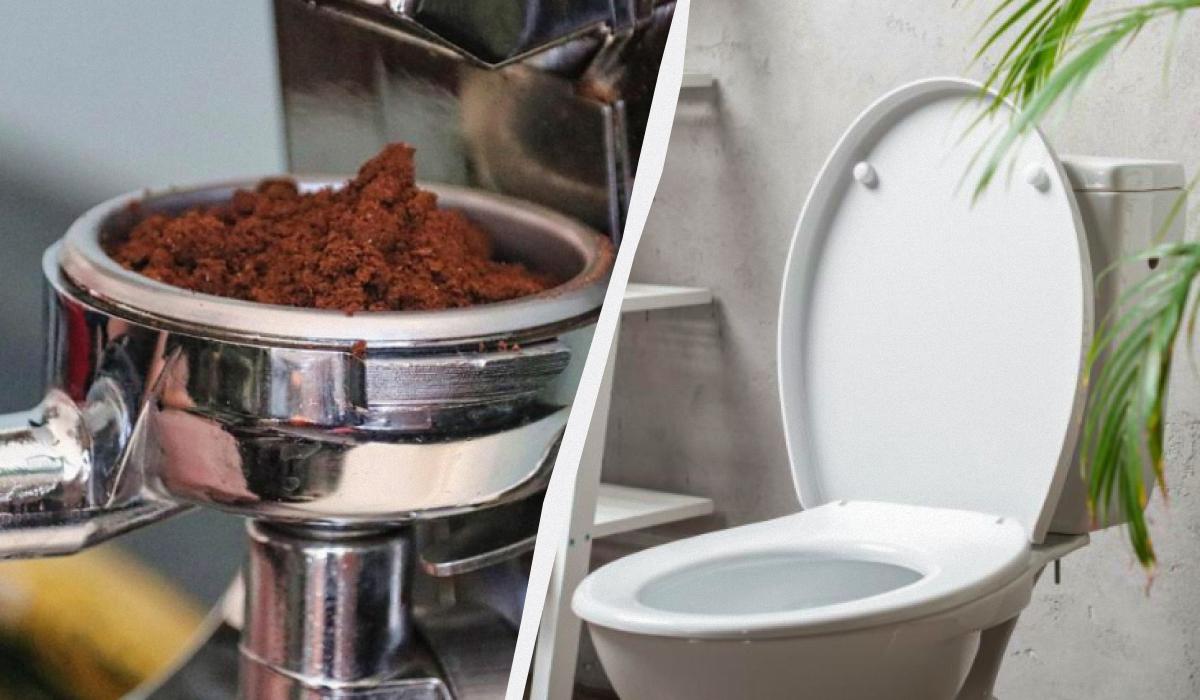
Pouring used coffee grounds directly into the toilet bowl neutralizes unpleasant bathroom odors and prevents residue build-up, according to news outlet El Cronista.
The simple cleaning technique relies on leftover brewed coffee acting as a natural absorbent for gases that rise through household plumbing when toilets remain unused.
The publication reported that throwing used coffee grounds into the toilet helps eliminate unwanted smells and prevent plumbing issues while a house remains locked. Because of its slightly grainy texture, ground coffee also helps loosen small deposits that accumulate inside the toilet bowl over time.
Unlike commercial chemical tablets or harsh cleaning agents, coffee grounds do not damage plumbing pipes or contaminate water systems. The publication noted that the method offers a natural alternative to artificial air fresheners, which often merely mask lingering odors rather than absorbing them.
The report emphasized that the process is especially effective before leaving a residence unattended for extended periods, preventing water from stagnating and odors from intensifying inside the bathroom.
How to use coffee grounds in the bathroom
Applying the cleaning method requires no additional financial cost and follows a simple step-by-step process:
- Prepare coffee using standard brewing methods and reserve the leftover grounds.
- Allow the used grounds to cool completely and drain any excess liquid.
- Pour the drained grounds directly into the toilet bowl.
- Leave the grounds in the bowl for several hours or days before flushing.
Other household applications for spent coffee
Spent coffee grounds serve as a versatile natural resource with numerous practical applications around the house beyond bathroom maintenance.
A cup of dry coffee grounds placed inside a refrigerator absorbs strong food smells. The material can also neutralize unpleasant odors in shoe cabinets and kitchen trash bins.
When rubbed directly onto hands, used coffee grounds remove stubborn residual odors left behind by cooking ingredients such as garlic or fish. In gardens, the grounds act as a natural fertilizer for plants that thrive in acidic soil.
Industrial energy research and biochar production
The household cleaning tip follows previous reporting by Ukrainian news agency UNIAN on industrial uses for recycled coffee grounds. Researchers at the Korea Institute of Geoscience and Mineral Resources developed a technology capable of converting wet coffee grounds into high-energy fuel.
In the Korean study, scientists treated moist grounds with a plasma flame at temperatures between 800 and 900 degrees Celsius. The intense heat rapidly evaporated moisture and created a popcorn effect, transforming the material into porous biochar.
Researchers confirmed that the resulting biochar possesses fuel characteristics and energy density comparable to anthracite wood charcoal, offering a sustainable alternative to traditional fossil fuels.


