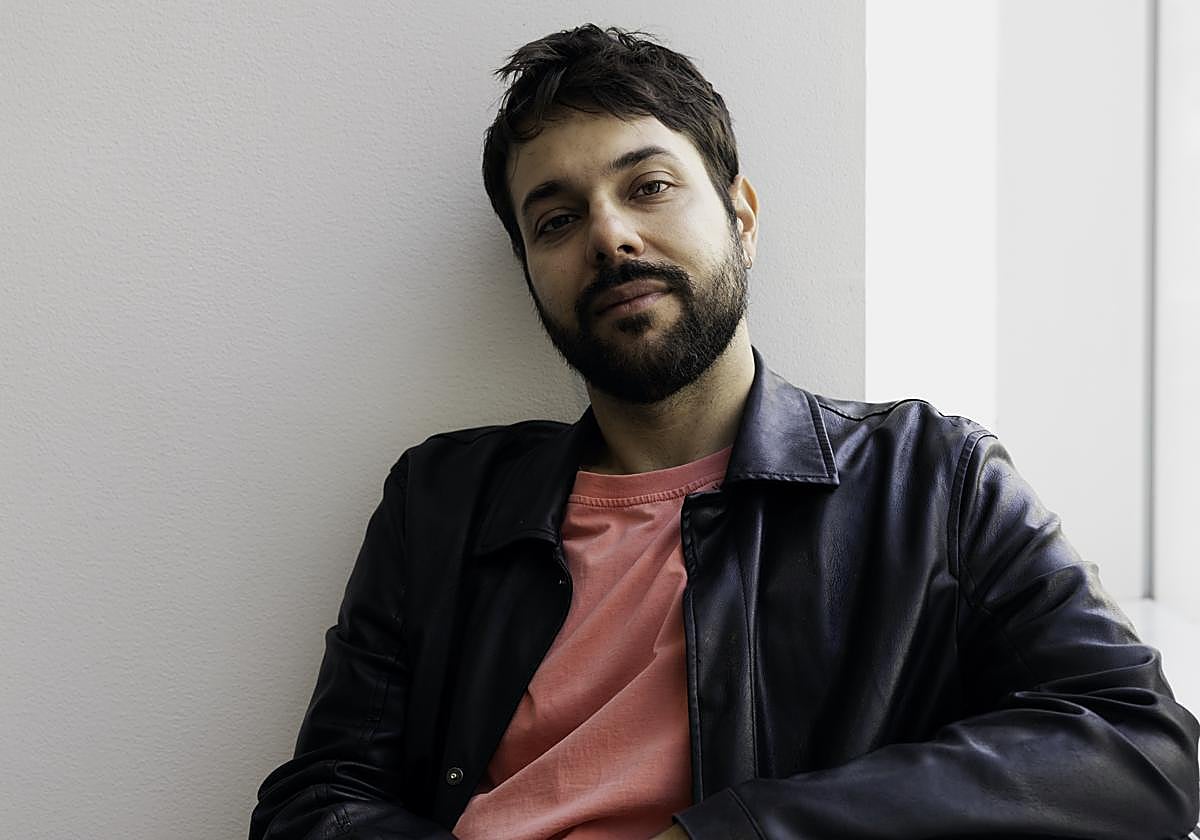
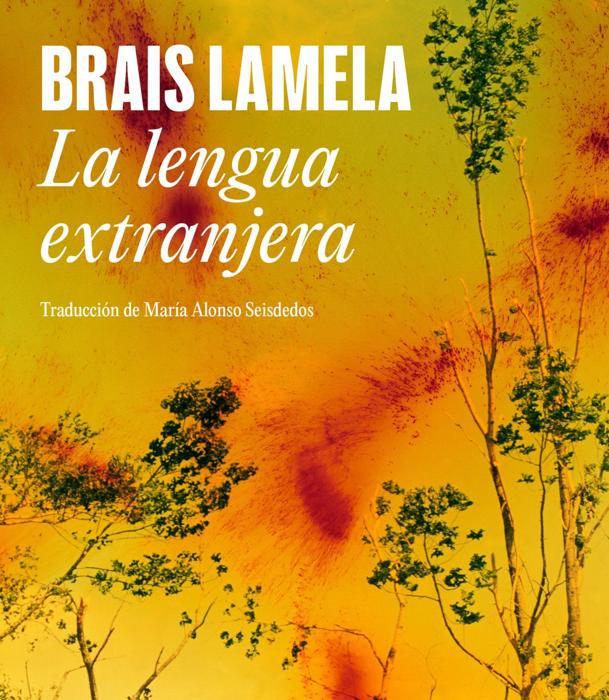
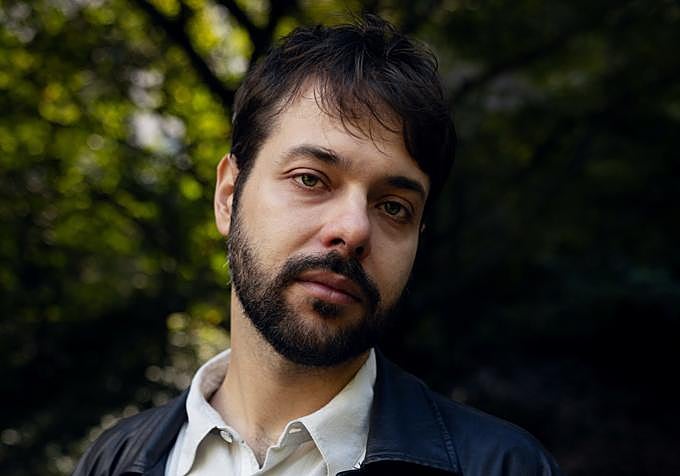
Galician novelist Brais Lamela, recently returned from the United States, has published his second novel, La lengua extranjera (The Foreign Language), a book split into three stories about the condition of being a foreigner and how it pushes people to question their own lives.
In the novel, Lamela leaves out every proper name, of people and of countries alike. He said the decision reflects partly a wish to protect privacy, and partly a reflection on colonial literature and epic prose. A proper name, he said, has a lot to do with intimacy and personal life, but also with lineage and property. Against a tradition in which names serve to identify and order the world, he chose to write from anonymity, in order to question what he called discourses of authority.
Insomnia also runs through the book, and Lamela proposes understanding it beyond the individual. Insomnia looks like a private experience, he said, but it is actually public and collective. Screens, noise and the lack of proper spaces to rest do not always come down to personal choice, he said, which is why he is interested in treating sleep as something political too, a need people are expected to meet while living in a world that makes it increasingly hard to do so.
Language as a way to question the world
Lamela recalled a line from Marcel Proust, the French novelist, who said the books we love are those that seem to be written in a foreign language. Literature, Lamela said, has the capacity to make familiar things sound new and different. For him, writing also means breaking the automatism of language, finding other ways to build sentences and allowing oneself to think outside the usual ways of naming the world.
Photography also plays a significant role in the novel, as a metaphor for what escapes control. Asked how much room he leaves for error in his writing, Lamela said a great deal. He explained that photography is understood today as a tool of control, since results can be reviewed and edited, but that its early years were marked by the uncertainty of developing film and by technical difficulties. People would try to record one thing, he said, and the photograph would end up showing something else. That lack of mastery connects with one of the book's central concerns: questioning the discourses that aim to classify and exert authority over the world.
While researching nineteenth-century colonial archives, Lamela found texts that proceeded with apparent confidence until an indigenous word or place name appeared, at which point their authors crossed it out or tried to spell it another way. He carries that gesture into the novel through crossed-out words and terms from indigenous languages, to show, in his words, the limits of classification and everything that escapes it.
Asked whether returning to archives and looted works can help heal old wounds, Lamela distanced himself from any idea of easy reconciliation. Personally, he said, it leaves him with more rubble rather than less. He believes books cannot heal wounds that do not belong to them, and that their responsibility sometimes lies precisely in showing that those wounds remain open. Colonialism, he said, is not a closed episode, as shown by current debates over the restitution of looted works and the role of museums. The responsibility of a book, he said, is not to close what is still open.
The condition of being foreign
The same tension runs through the novel's treatment of New Galicia and the dream of the peasants who crossed the Atlantic to build a different society. Lamela said he is drawn to the myth of starting from zero and the possibility of imagining other ways of organising the world, though the novel also asks what already existed in the place chosen for that utopia.
Every utopia needs a space, he said, and the question is what was there before it. He said he is particularly interested in the contradiction of building a new society on land where other forms of life already existed, which is why he avoids portraying such projects as though they began in an empty space, and instead pays attention to the remains and the worlds that were already there.
Beyond geography and language, foreignness is also personal for Lamela. Having lived for years in the United States, he has come to recognise a sense of strangeness that does not disappear when he returns to Spain either. Linguistic and behavioural differences, he said, can leave a person feeling that they never fully belong anywhere.
Even so, he finds a creative possibility in that distance. He recalled a poem by Wallace Stevens, the American poet, that reflects on how poetry can emerge from the sense that a place is neither oneself nor something that belongs to oneself. Feeling foreign, he said, can be productive. In the end, he said, everyone is a little out of place everywhere.
Test yourself
What is the title of Brais Lamela's second novel?
Why does Lamela leave proper names out of the novel?
What does Lamela say reviewing colonial archives and looted works does for him personally?
Have your say
Do you think feeling like a foreigner, even at home, can be a creative advantage?