

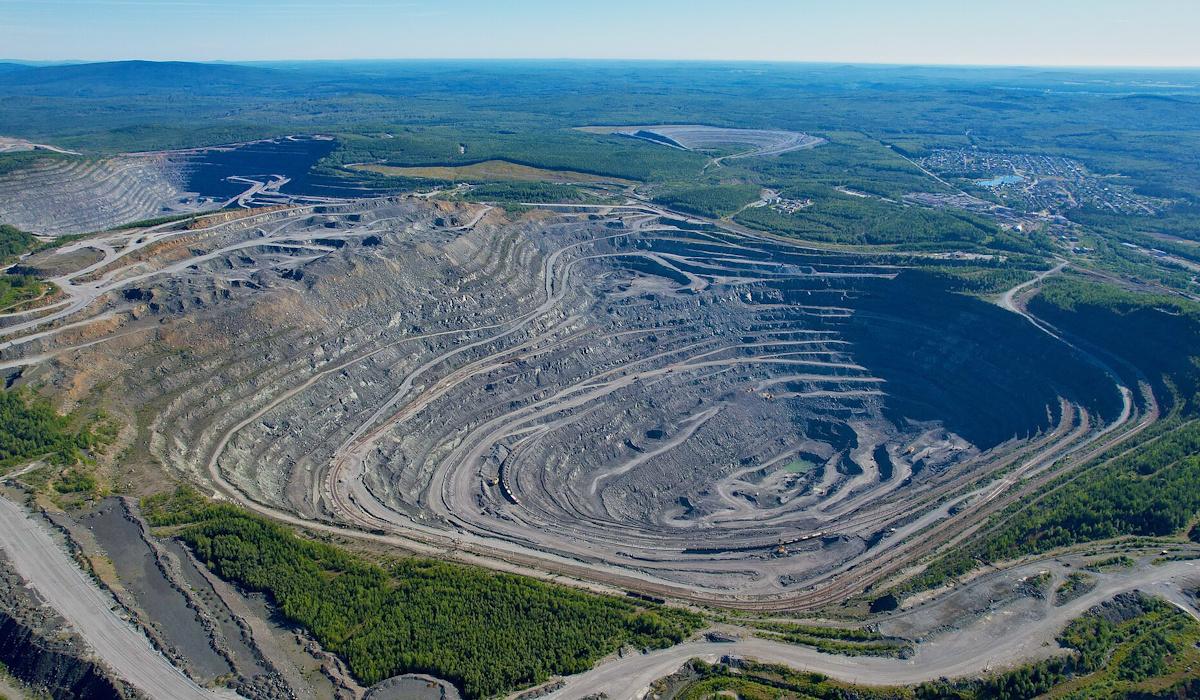
A former 300-metre deep coal pit near As Pontes in Galicia, Spain, has been transformed into a massive artificial lake after engineers flooded the site. Spanish publication Gandul reported the environmental restoration project, which remediated an industrial crater created by six decades of open-cast mining.
Engineers filled the massive depression with approximately 547 billion litres of water over four years, creating an 865-hectare body of water. The project converted what was once a deep scar on the local landscape into one of the largest artificial lakes in Spain.
As Pontes de Garcia Rodriguez is a municipality situated in the province of A Coruna in northwestern Spain. Open-cast mining operations extract minerals directly from an open pit on the surface, which can leave immense voids once mineral deposits are fully depleted.

Decades of coal mining in Galicia
Industrial activity at the site began during the 1940s when workers started extracting lignite, a soft brown coal used primarily for electricity generation. Over six decades of continuous operation, mining crews extracted roughly 260 million tonnes of coal from the earth.
The scale of the extraction created a pit reaching a depth of approximately 300 metres. The industrial site expanded over time until it covered an area equivalent to 1,600 football fields.
To process the extracted fuel, a coal-fired thermal power station was constructed adjacent to the quarry. In 1976, operators brought four coal-powered energy units online at the power plant, achieving a combined generating capacity of 1,469 megawatts.
The mining and energy complex served as a primary economic driver for the local community in Galicia. At the peak of its operations, the facility employed around 700 workers and contributed approximately 80 million euros annually to the regional economy through wages and supply purchases.
Spanish energy company Endesa operated the industrial complex throughout much of its working history. Stricter environmental standards introduced by the European Union made ongoing operations increasingly costly for fossil fuel power plants across the region. In 2019, Endesa announced plans to decommission and permanently close the power station by 2022.

Engineering the massive lake flooding
Preparations to reclaim the land began long before the power plant closed. In 2008, engineers initiated a major land restoration project focused on filling the inactive open-pit mine with water.
Flooding the pit required far more than simply directing local water flows into the cavity. Technicians performed detailed engineering calculations to determine the precise filling speed, forecast the final water level, and evaluate potential chemical changes in the submerged soil.
The filling operation concluded on April 18, 2012, exactly four years after water first began flowing into the crater. The completed lake quickly became a prominent geographical feature in northern Spain.
Local authorities subsequently developed public recreational facilities along the perimeter of the new lake. The site now features a sandy beach that has earned Blue Flag certification, confirming that the water quality meets strict international safety standards for swimming. Visitors also use the lake for water sports such as kayaking and canoeing.

Recreation and global ecological research
Gandul noted that the transformation of As Pontes holds broader significance for environmental remediation projects worldwide. Giant open-cast mines remain after mineral extraction ends in many countries, including Germany, Australia, and the United States.
Many former open-pit mines across the globe remain acidic or contaminated with heavy metals, preventing them from being converted into safe bodies of water. The successful conversion at As Pontes has drawn attention from environmental scientists studying pit lakes.
Researchers are examining the chemical and physical processes at As Pontes to design better management strategies for former mines. Understanding how to control chemical shifts and environmental risks will help engineers safely restore former mining sites in other parts of the world.


