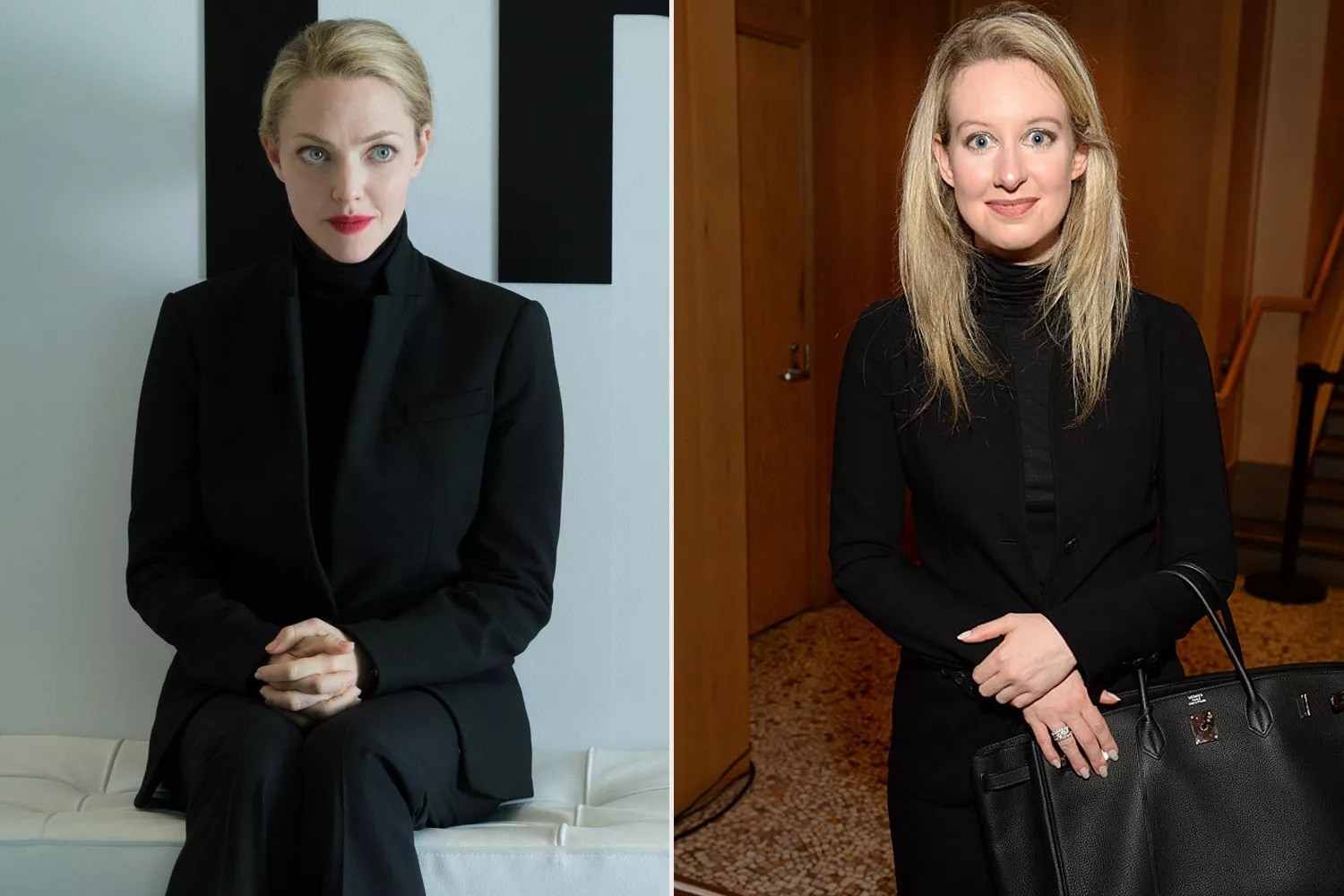
Amanda Seyfried, 40, has described a tense confrontation with Billy Evans, 34, the partner of Theranos founder Elizabeth Holmes, during filming for the documentary "You Can See Everything," and admitted she feared the encounter could damage her career.
Seyfried, who won an Emmy for playing Holmes in the 2022 Hulu series "The Dropout," returned to the role for the new film from directors Nathan Fielder and Lance Oppenheim. The documentary follows events tied to the 34 days before Holmes's imprisonment as the former Theranos chief executive.
Seyfried's involvement was kept secret during filming. She spoke about it for the first time alongside Fielder, 43, and Oppenheim, 30, in an interview with Rolling Stone magazine.
According to Fielder, the connection came through actress Emma Stone, a friend and colleague of his who passed along Seyfried's contact details. The original plan was only to get Seyfried's reaction to scenes already filmed, but her role expanded as the conversations continued.
Seyfried said she became interested in revisiting the character after learning the filmmakers needed to reconstruct moments they had not managed to capture the first time. She said it was not that she had doubts about the story, but that she now had more information because of their footage, and that the idea of joining the project in whatever capacity they needed felt worth pursuing.
No creative control over the film
Despite her experience playing Holmes, Seyfried had no say in the creative decisions behind the documentary. Fielder said she had no creative control whatsoever, and no approval over the finished film, "absolutely none."
That meant Seyfried encountered certain situations for the first time while the cameras were rolling, without knowing how events would play out. Asked by Fielder whether she had felt nervous taking on such an unpredictable project, Seyfried said yes, describing a constant undercurrent of risk and the fear that she might damage her career somehow.
She said she worried about getting pulled into controversy, particularly because of her closeness to Evans and the possible fallout from anything she said about Holmes. She said she kept asking herself whether she would get tangled up in conflict with Billy, say the wrong thing, or end up reinforcing negative views of Holmes.
Even so, she said curiosity and a wish to try something different won out. She described the experience as frightening but said she still wanted to be in the front seat, literally the passenger seat beside Fielder in the car, telling herself to go for it.
The confrontation at Billy Evans's Texas home
One of the most striking scenes in the roughly three-hour documentary takes place during a visit by Seyfried and Fielder to Evans's home in Texas. What was planned as a conversation took an unexpected turn when Holmes joined by a surprise phone call, placed while she was in prison.
Seyfried said she wanted to meet Evans in person because she considered the situation risky and wanted to understand his behavior toward Holmes. She said raw footage she had seen beforehand had raised questions in her mind about how he treated her.
She said the situation felt dangerous and that she wanted answers, adding that she had formed a strongly negative impression of him going in.
Tension rose when Seyfried pressed Evans about who was running Holmes's social media accounts, which she said was happening without Holmes's direct approval. Evans, for his part, criticized Seyfried's performance in "The Dropout" and brought up her past comments against the late conservative activist Charlie Kirk, saying he admired Kirk. The exchange escalated into an argument.
Seyfried defends her approach
Seyfried said her goal had not been to provoke a fight but to open a dialogue with Evans. She said she tried to be careful because she was in his home, where his two young children with Holmes live, and that she was sincerely trying to connect with him.
She said his attitude made the conversation increasingly difficult, and that things turned into an argument once he became aggressive, saying he disrespected her in a way she could not let pass. She said that although she was unsettled, she tried to stay composed so she could state her views without walking out, reminding herself that he was being disrespectful in his own house but that she held a firm position and intended to make her case.
She also challenged the way she believes Evans uses Holmes's public image. She said she did not like how he was treating his wife, the person he says he is building "monuments of love" for, as a tool. She said he may respect her but behaves as though he does not, and that she was trying both to protect herself and to be clear in her own defense while still keeping enough of a relationship with him that she could stay in the room rather than be asked to leave.
No regrets despite the tension
Despite the discomfort of the encounter, Seyfried said she does not regret taking part in the documentary. Asked by Fielder whether she would agree to a similar project again, she said she had no regrets at all, though she has no plans to repeat the experience. She joked that she was having a great time making the film but would not do it again, telling Fielder the same went for him.
"You Can See Everything" is currently playing in theaters, offering a look at Holmes, her relationship with Evans and the events leading up to her imprisonment, including Seyfried's unexpected role in the project.