
As pharmacy shelves fill with jars, sachets and gummies promising to support the immune system this winter, European Union food law allows only a short list of nutrients to carry the phrase "contributes to the normal function of the immune system": vitamin C, vitamin D, vitamin B6, vitamin B12, zinc, selenium and iron. A manufacturer can only use that claim if its product provides a minimum amount of the nutrient in the daily dose.
Knowing that makes choosing a winter supplement simpler. For something focused on immune support, look for those nutrients with the amount clearly stated. For a general multivitamin, check it does not fall short on any of them. And for a formula built around amino acids or probiotics, that is a different kind of product altogether, not a vitamin supplement.

- Be Levels immunity booster suits anyone who prefers a flavoured drink to swallowing pills.
- Multicentrum Plus Ginseng Ginkgo suits adults who want a single daily tablet.
- Apisérum Defensas suits anyone who wants vitamin C and zinc with the amount clearly stated.
- natural elements Premium Multi suits anyone who wants one jar to last the whole winter.
- New Leaf Complejo Inmunitario suits anyone who wants vitamin D, C, B12 and zinc in a single product.
Be Levels Immunity Booster
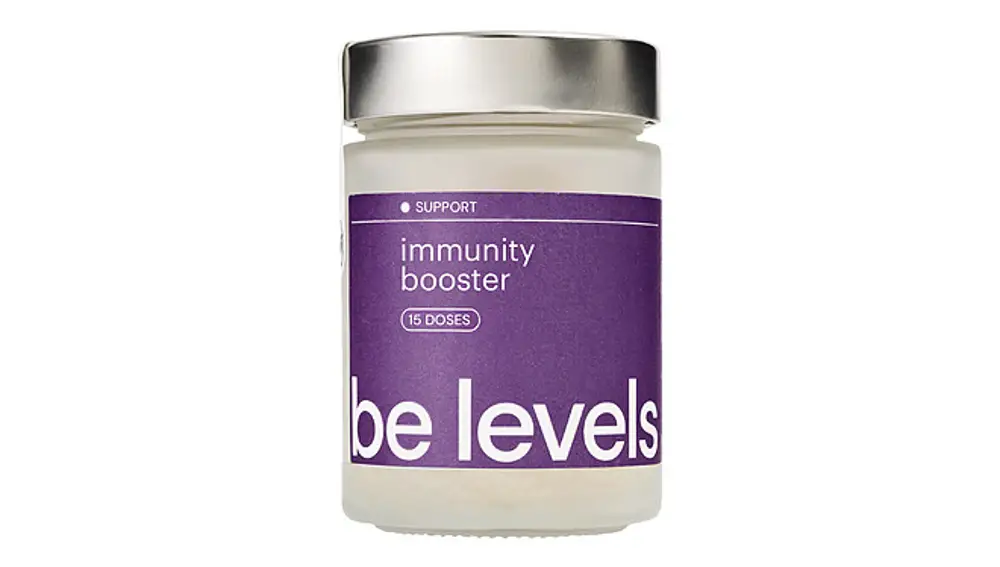
This one is drunk rather than swallowed. It comes as a forest-fruit-flavoured powder, taken as three scoops, 10 grams, dissolved in a glass of water at any time of day. The formula centres on a trio of amino acids, glutamine, glycine and lysine, with glutamine the main ingredient at 5 grams per serving, alongside oat beta-glucans, colostrum, the milk protein lactoferrin, NAC, digestive enzymes, the probiotic Lactobacillus reuteri and a touch of ginger.
None of these ingredients currently qualifies for an authorized immune-system claim; this is not a multivitamin and does not pretend to be one. It contains milk, so it has lactose and is not vegan, and its allergens include gluten and soy. According to its label it should not be taken during pregnancy or breastfeeding, and children aged 3 to 12 take half the dose, 5 grams. A small jar lasts 15 days and a large bag a month; it is sold on the brand's website, where readers of the Spanish newspaper La Razón can use the code LARAZON5%OFF.
Multicentrum Plus Ginseng Ginkgo
This is one tablet a day for adults, with a jar of 30 lasting a month. It is a classic pharmacy multivitamin containing B-group vitamins, vitamin C, zinc and iron. Of those, vitamin C, zinc and iron carry an authorized immune-system claim, with the exact amount of each listed on the box. The ginseng and ginkgo that give the product its name carry no authorized claim, since the EU has had plant-based health claims on hold for years, so they appear in the formula without any promise attached. It should be stored in a cool place, with the jar kept closed inside its box.
Apisérum Defensas
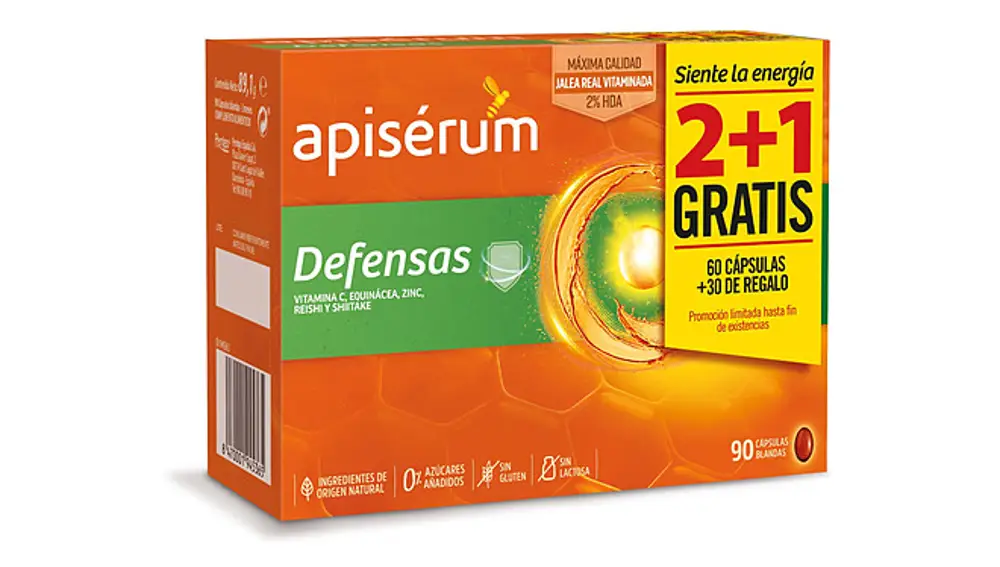
Each capsule supplies 40 milligrams of vitamin C, half the standard daily reference, and 7.5 milligrams of zinc, about three-quarters of that reference. Both amounts clear the legal minimum, so the claim applies in full: vitamin C and zinc contribute to the normal function of the immune system, and vitamin C also helps reduce tiredness and fatigue. The formula also includes echinacea, freeze-dried royal jelly equivalent to 200 milligrams of fresh jelly, and reishi and shiitake mushrooms, none of which carry an authorized claim. It is taken as one capsule a day, best with breakfast, and suits adults and children over 12. A pack of 90 capsules covers an entire quarter.
natural elements Premium Multi
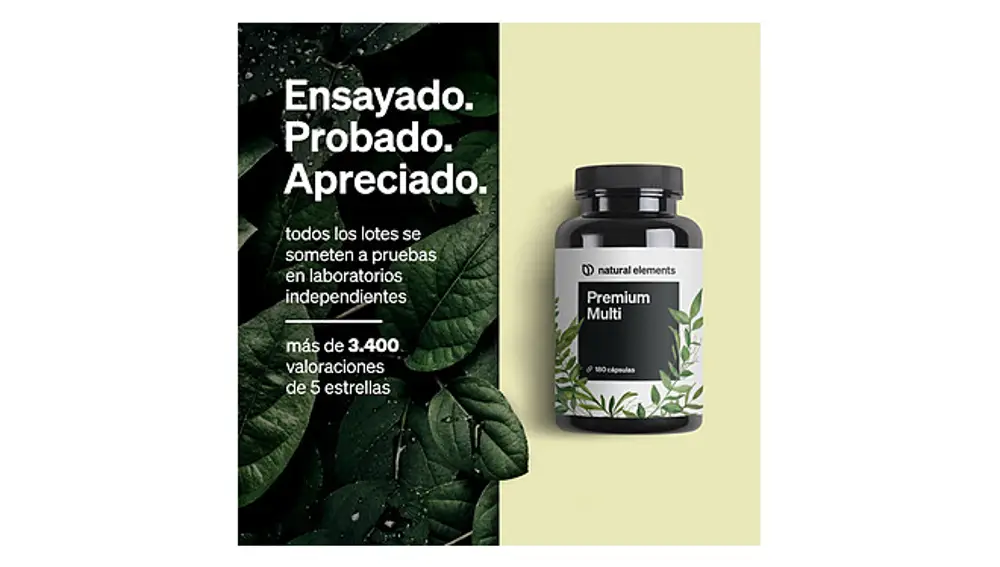
A jar of 180 capsules, taken two a day, runs from late November to late February. It contains 25 substances, including vitamins A, C, D3, E and K, several B vitamins, zinc, magnesium, selenium and coenzyme Q10, with the zinc in bisglycinate form. Vitamin C, vitamin D, zinc and selenium carry an authorized immune-system claim, with the amount per two-capsule dose shown on the label. The main drawback is consistency, since with two capsules a day the second dose is easy to forget.
New Leaf Complejo Inmunitario
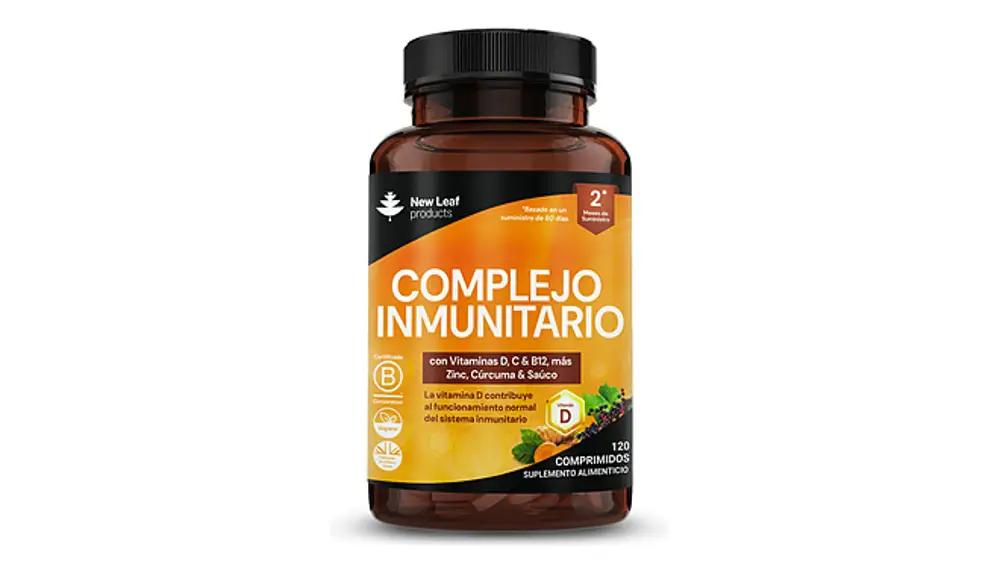
This tablet contains vitamin D3, vitamin C, vitamin B12 and zinc, all four on the official list for immune-system support, with the amount per dose given on the label. Vitamin D draws particular attention in these months because of reduced sunlight exposure. The formula also includes turmeric and elderberry, two plants with a long history of use but no authorized claim. It is taken as two tablets a day, and a pack of 120 lasts two months.
What changes in winter
Shorter days mean more time spent indoors with the heating on and less time outdoors. Skin produces vitamin D in response to sunlight, and in winter it gets much less of it, which is why a few minutes of midday light, even a short walk at lunchtime, is worth seeking out.
Food comes before any supplement. Oranges, mandarins and kiwis are in season and are the easiest way to get vitamin C, oily fish and eggs supply vitamin D, and zinc is found in meat, seafood and legumes. Habits matter more than any capsule: sleeping enough, airing the house even in the cold, washing hands after coming in from outside, and keeping up with any vaccines recommended for one's age or health, since a supplement does not replace them. A supplement comes after all of that, as support rather than a shortcut.
How to choose a supplement
The nutrition table on the label is the place to start. It should show how much of each nutrient is in the daily dose and what share that represents of the Nutrient Reference Value, the standard daily requirement. If that share falls below 15 percent, the manufacturer cannot use the authorized claim. It is also worth checking whether figures are given per capsule or per daily dose, since with two capsules a day the sums change, and noting the exact form of a nutrient, such as vitamin D3 or zinc bisglycinate.
A multivitamin spreads smaller amounts across many nutrients and suits anyone wanting general cover for the whole winter, while a targeted formula carries fewer nutrients but usually shows the amount of each more clearly. A long ingredient list in which nothing reaches the minimum threshold is not worth paying for.
Supplements can be combined, but the doses add up. A common mistake is taking a multivitamin alongside separate vitamin D and zinc products without checking for overlap, since both nutrients appear in many formulas. The combined daily amount should not exceed the maximum dose stated on either label, and a pharmacist can help settle doubts.
Echinacea, propolis, royal jelly and probiotics are common sights on winter shelves, but none currently carries an authorized immune-system claim. The EU has had health claims for plants such as echinacea, elderberry and ginseng on hold since 2010, which does not make them harmful but means no effect can be attributed to them. The best format, capsule, tablet or powder, is whichever one actually gets taken every day, ideally at the same time with a main meal.
A visit to the doctor should come before a trip to the pharmacy for anyone who falls ill every few weeks, carries a fatigue that will not lift, or has never had their vitamin D checked, since a blood test says far more than any label. Anyone pregnant or breastfeeding, buying for a child or an older person, or taking daily medication should ask a doctor or pharmacist before starting. It is usual to begin in autumn, as daylight hours fall, and continue through to spring, and zinc in particular should not be taken for months without checking in with a professional.
Test yourself
Which nutrients are legally allowed to claim they support normal immune function in the EU?
How much vitamin C and zinc does each Apisérum Defensas capsule provide?
Why do plant ingredients like echinacea and ginseng appear without an authorized immune claim?
Have your say
Do you take vitamin or mineral supplements to support your immune system in winter?