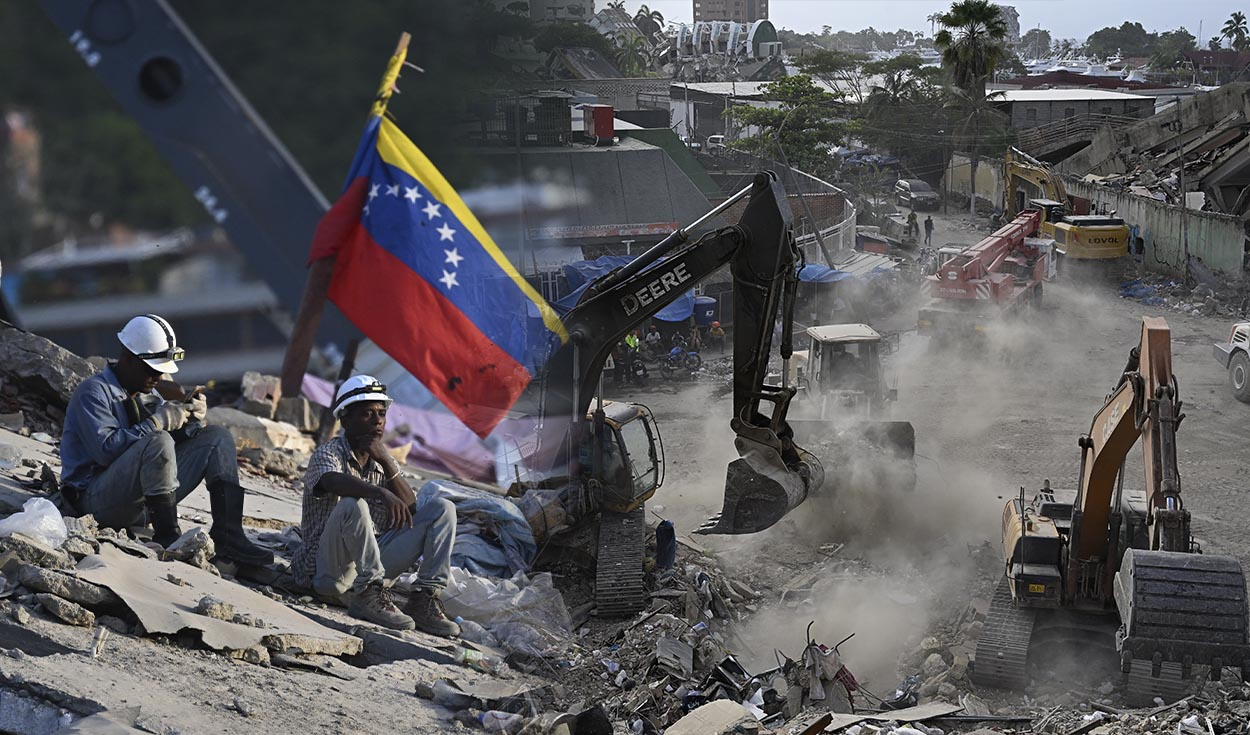
Venezuela faces a reconstruction bill of up to $19.6 billion with little financing in place, one month after twin earthquakes along the country's north-central coast killed more than 5,500 people and left nearly 17,900 without homes.
The World Bank has assessed direct physical damage from the June 24 earthquakes, which measured magnitude 7.2 and 7.5, at $19.6 billion. Economist Asdrúbal Oliveros warned the news agency EFE that restoring what was lost will require between $12 billion and $15 billion, a sum he called very significant for a nation whose gross domestic product stands at around $110 billion. He said Venezuela will struggle to meet that burden on its own, given its limited fiscal capacity and near-zero access to international credit markets.
The World Bank's rapid global assessment found that 47 percent of the damage, roughly $9.3 billion, fell on residential buildings. Public infrastructure absorbed 27 percent and non-residential construction the remaining 26 percent. La Guaira and the Distrito Capital together accounted for around half of the total impact.
A study by the consulting firm ANOVA found that 4,958 of 38,798 residential structures inspected across seven of La Guaira's eleven municipalities suffered some level of damage. Of those, 2,654 were severely compromised or destroyed, buildings that had housed 37,611 people. ANOVA chief economist Omar Zambrano placed the cost of replacing that housing alone at $2.37 billion, between 2 and 3 percent of national GDP, and noted the figure excludes public, road, commercial and services infrastructure.
The World Bank's vice president for Latin America and the Caribbean, Susana Cordeiro Guerra, said the earthquakes have disrupted people's lives, damaged critical infrastructure and created new challenges for Venezuela's recovery. She added that effective reconstruction begins with reliable data and that the institution is committed to supporting the process at every stage.
Housing shortage and a contested count
NASA satellite imagery has counted more than 58,000 buildings destroyed or damaged, a figure that dwarfs the government's own tally of 856 affected structures and 190 that collapsed.
The government has begun construction of 1,875 new dwellings, according to parliament president Jorge Rodríguez, who said the sites were evaluated by geologists, engineers and architects. The official target is to deliver 4,000 homes before the end of the year, though Rodríguez's own earlier estimates put total need at 25,000 units. The nonprofit TECHO has said it plans to build at least 200 prefabricated homes in the country.
The Venezuelan Engineers Association inspected more than 8,000 structures in Caracas alone. More than 70 percent were found habitable; roughly 25 percent were classified as requiring caution or as uninhabitable. Rafael Argotti, a member of the association's national board, said around 6,000 colleagues volunteered their services free of charge to give residents peace of mind.
A financing gap and a decade-long recovery
International pledges fall well short of what is needed. The United States announced $300 million in financial aid. Venezuela received $346 million from the International Monetary Fund, which acting president Delcy Rodríguez pledged to direct toward reconstruction. The European Commission contributed $36.5 million, the UN Central Emergency Response Fund added $17 million and Germany gave $9 million. The UN's 2026 humanitarian response plan requires $931 million but has so far covered only 39 percent of that target, leaving a deficit of nearly $566 million.
The World Bank warned that without a significant increase in public and private investment, recovery would likely take more than 10 years, with GDP potentially remaining below pre-earthquake levels until 2036.
U.S. economic sanctions add another layer of difficulty. Democratic congressman Chuy García publicly called on the Trump administration to lift the sanctions and restore Venezuela's access to frozen assets to support aid and recovery. Civil organizations have also raised concerns about a domestic law restricting nonprofit operations. Beatriz Borges, director of the Center for Justice and Peace, told a U.S. congressional committee that the earthquakes did not create Venezuela's crisis but exposed it.
Children among the most affected
UNICEF estimates that 470,000 people need direct support, including 169,000 minors. About 23,100 children remain in temporary camps across La Guaira, the Distrito Capital, Miranda and Aragua. The World Bank projects that 1.3 million people will need humanitarian assistance over the next six months and that the labor supply will fall 1 percent this year.
UNICEF representative Manuel Rodríguez Pumarol said that beyond visible damage, fear, uncertainty and disruption caused by displacement can have a lasting impact on children's wellbeing. The agency has set up child-focused spaces in shelters providing psychosocial support and recreational activities for more than 4,000 children, adolescents and caregivers.
Among the most difficult cases are children who lost parents and were taken in by relatives. A 13-year-old identified by the initials D.T. lost his mother when their building in Caraballeda collapsed and now lives in a shelter with his 10-year-old sister, M.O., under the care of their aunt, Mercedes Osuna. Osuna told CNN that the boy has not wanted to talk about what happened and spends his time playing.
Family law specialist Jeslia Vergara explained that Venezuelan child protection law prioritizes placing children with close relatives such as grandparents, aunts, uncles or older siblings before any other arrangement is considered. Institutionalization or adoption, she said, is the last resort available in Venezuela.