

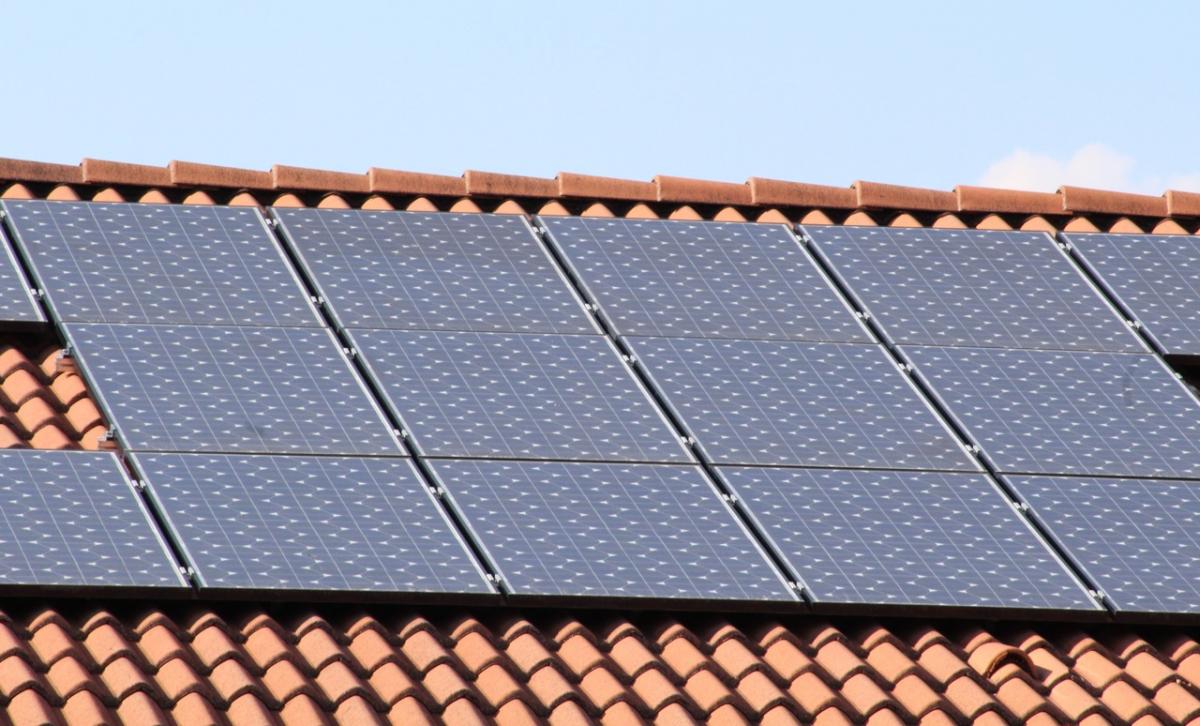
Solar panels generate electricity more efficiently in colder weather than in extreme heat, despite industry guidelines citing 25 degrees Celsius as the standard benchmark.
Tech publication Engadget reported that photovoltaic cell efficiency increases at lower temperatures because rising heat causes voltage to drop faster than electrical current increases.
Manufacturers evaluate solar panel efficiency under standard test conditions, an industry benchmark that measures photovoltaic module output at a reference temperature of 25 degrees Celsius and a solar radiation intensity of 1,000 watts per square meter. However, ambient air temperature differs from actual panel temperature, as semiconductor modules exposed to direct sunlight become significantly hotter than the surrounding air.
Understanding Power Output and Temperature Coefficients
Once cell temperatures cross the nominal 25-degree reference threshold, electrical output declines based on the specific module's temperature coefficient. Industry analysts note there is no universal power reduction rate of 0.5 percent across all systems.
Solar manufacturer REC Group, headquartered in Norway, reported that its Alpha Pure-RX model has a maximum power temperature coefficient of -0.24 percent per degree Celsius. South Korean manufacturer Qcells specified a coefficient of -0.29 percent per degree Celsius for its residential Q.TRON BLK M-G2+ series.
Efficiency and total generated electricity remain distinct metrics. A cold panel produces more electrical power from a given amount of sunlight, but stronger summer solar radiation offsets the reduced cell efficiency. Consequently, longer summer daylight hours and higher radiation intensity often increase overall electricity production.
Operating Limits and Heat Tolerance
Temperatures around 25 degrees Celsius pose no operational danger to residential solar equipment. Qcells stated that its Q.TRON series features a continuous operating range reaching up to 70 degrees Celsius, while REC Group rated the T98 operating module temperature for its Alpha Pure-RX series at 80 degrees Celsius.
The reporting follows earlier coverage by Ukrainian news agency UNIAN examining renewable energy trends, including why wind turbines remain less widely adopted than solar panel installations.


