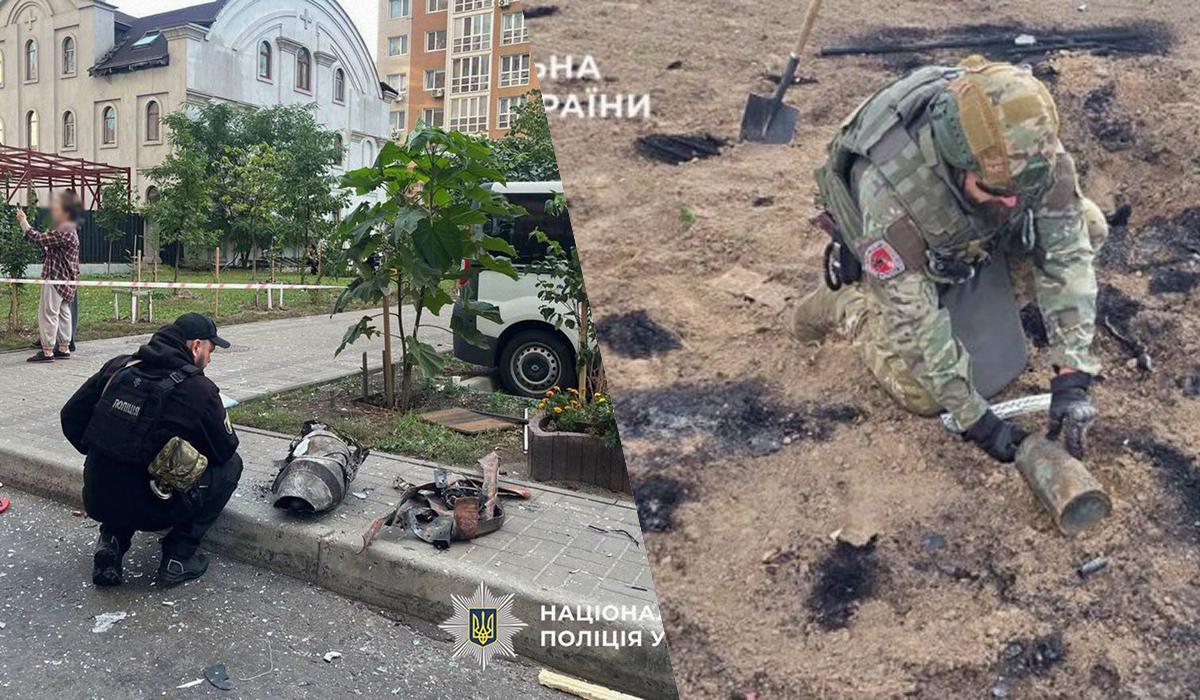
Russian forces have launched a new campaign of continuous jet-powered drone attacks against Kyiv, targeting civilian infrastructure across the Ukrainian capital to paralyze daily life.
The Atlantic Council reported that the recent escalation relies on a new generation of jet-propelled uncrewed aerial vehicles capable of bypassing Ukraine's existing air defenses and striking targets with high precision. Russian dictator Vladimir Putin aims to make Kyiv uninhabitable and break national resistance through round-the-clock bombardments.
Data provided by Ukrainian officials shows a rapid acceleration in the scale of the threat over recent months. Russian forces launched approximately 1,500 jet drones against Ukrainian targets in July 2026. That number expanded to 2,850 in August and reached roughly 3,200 jet drones during September.
Officials fear the upward trajectory will persist as the Kremlin is believed to have built up substantial stockpiles of jet drones in preparation for the coming winter months.
Targeting Civilian Infrastructure in Kyiv
Kyiv has borne the primary brunt of the offensive. In recent weeks, the Ukrainian capital has suffered a relentless barrage of strikes on civilian locations, including schools, hospitals, residential apartment blocks, petrol stations, supermarkets, internet hubs, business centers, the National Academy of Sciences, and key bridges crossing the Dnieper River.
Kyiv, home to nearly three million residents, sits along the banks of the Dnieper River, which divides the city into eastern and western sectors. The National Academy of Sciences of Ukraine, founded in 1918, is the country's central state-funded scientific research organization, located in central Kyiv.
Unlike earlier Russian aerial bombardments that typically occurred overnight, the new jet drone attacks are deliberate operational measures structured to run continuously throughout the day. The persistent disruption forces schools, commercial businesses, retail shops, dining establishments, and public transit systems to halt operations, creating widespread chaos and anxiety.
Advanced Speed and Flight Characteristics
The new jet-powered drones travel more than twice as fast as earlier propeller-driven models and operate at significantly higher altitudes. These performance characteristics make the aircraft exceptionally difficult to detect or destroy using Ukraine's existing mobile defense teams and anti-aircraft artillery.
Equipped with updated guidance systems, the drones feature enhanced flight maneuvering capabilities that increase targeting accuracy. Conventional Iranian-designed Shahed drones previously used by Russian forces relied on slower piston engines that produced distinct acoustic signatures, enabling ground teams to track and engage them more easily.
The speed and altitude of the new weapons present severe technical challenges for Ukraine's defense technology sector. The nation currently depends on a limited variety of weapons systems capable of reaching high-speed aerial targets.
Domestic Interceptor Development and Western Support
Ukrainian engineers are working to build native jet-powered interceptors to counter the threat. Developing military-grade jet technology requires advanced aerospace engineering, a field where European partners are expected to provide technical assistance.
Reports indicate that prototype interceptors have successfully completed initial test engagements. However, the Atlantic Council noted that developing interceptor designs represents only a fraction of the challenge. Ukraine must also scale up factory manufacturing and build nationwide deployment infrastructure, a process expected to take several months while time remains critical.
Aviation expert Bohdan Dolintse told Ukrainian news agency UNIAN that if prototype interceptor systems complete military trial evaluations, operational shootdowns should begin within two to six months. Dolintse explained that defense forces require hundreds of interceptors for each individual attack vector, demanding thousands of finished units. He predicted that after six months of scaled production, Ukraine's interception success rate could reach 90 to 95 percent, matching performance against standard petrol-powered drones.
Strain on Fighter Jets and Defense Forces
While waiting for dedicated jet interceptors to enter service, Ukrainian defense forces rely heavily on crewed fighter jets armed with air-to-air missiles and internal cannons to destroy incoming drones. However, data indicates that approximately half of Ukraine's fleet of F-16 fighter aircraft is currently grounded for routine and emergency maintenance.
The F-16 Fighting Falcon is an American-designed supersonic multirole jet transferred to Ukraine by European allies to strengthen air defense networks. Continuous operational sorties by remaining aircraft force pilots and ground maintenance crews to work near-constant defensive patrols, creating acute risks of physical exhaustion and equipment breakdown.
Economic Damage and Counter-Strike Requirements
The Atlantic Council emphasized that purely defensive measures will not suffice to neutralize the drone threat, as the Kremlin intends to expand production to overwhelm Ukrainian air defenses through sheer volume. An effective response will require Kyiv to strike and disable manufacturing facilities, supply chains, and launch sites inside Russian territory.
Executing deep strikes requires additional international assistance, including direct financial funding to support domestic production of long-range strike weapons by Ukrainian defense firms. As winter approaches, Russian forces are expected to expand air operations further, targeting municipal heating grids, power stations, and water processing facilities.
A report published by British newspaper The Guardian revealed that Russian attacks have inflicted approximately 10 billion dollars in economic damage on Ukraine during 2026 alone. The strikes have targeted industrial plants, commercial warehouses, logistics hubs, and data storage centers.
Ukrainian Minister of Economy and Environment Oleksandr Kravchenko stated that the bombardment campaign represents an effort to destroy virtually the entire national economy. Kravchenko acknowledged that Ukrainian authorities had not anticipated how rapidly Russian forces would deploy jet-powered drones for broad strikes across the country.