

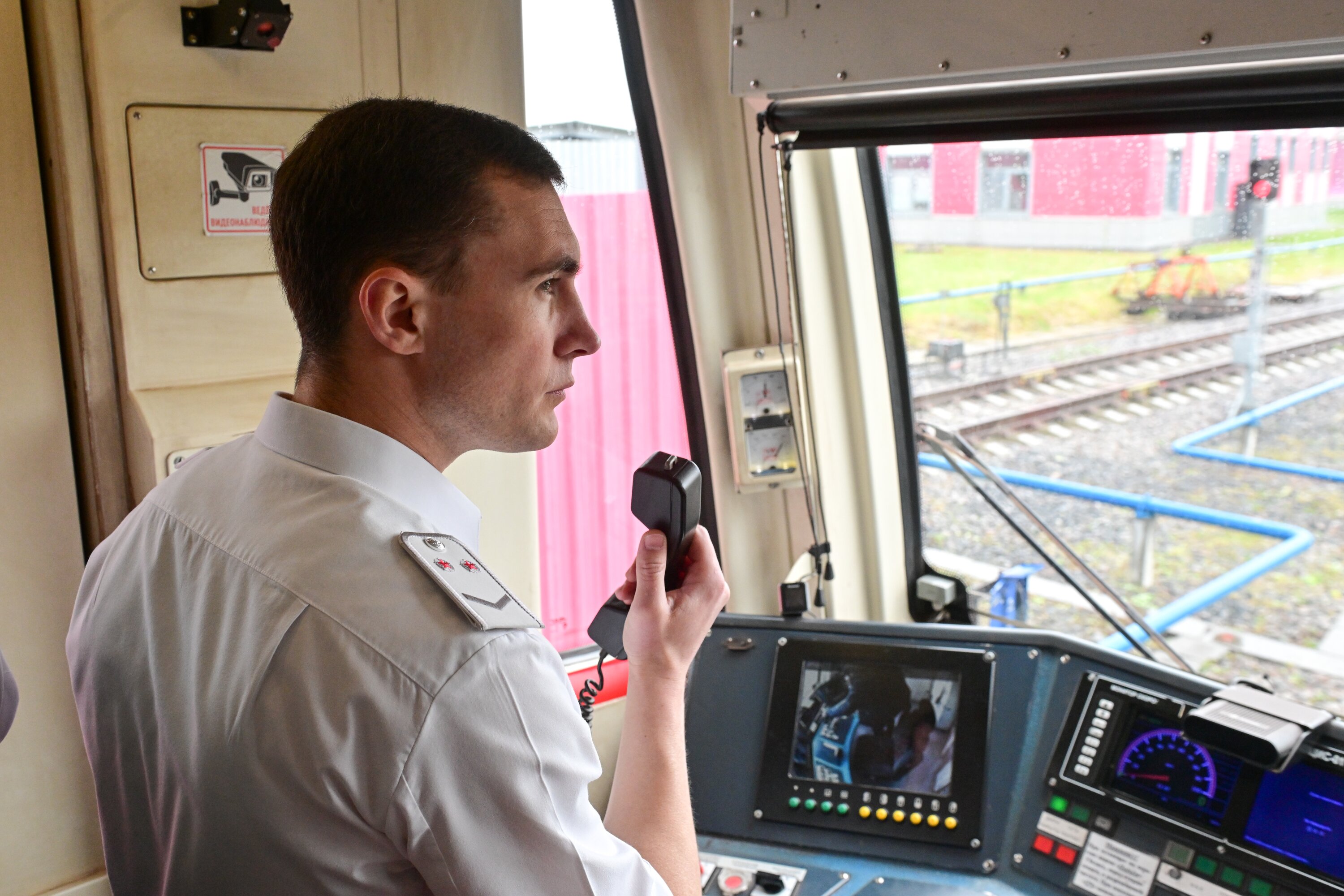
Russia observes Railway Worker's Day on the first Sunday of August, with the 2026 celebration falling on August 2. Considered one of the country's oldest professional holidays, the occasion honors workers across the entire rail sector and is typically marked with cards, messages, and gifts sent to colleagues and loved ones in the industry.
The day covers a wide range of professions. Engine drivers, conductors, ticket controllers, engineers, dispatchers, cashiers, and repair service staff are all considered appropriate recipients of congratulations.
A holiday with a long and shifting history
Railway Worker's Day was first observed on June 25, 1896, a date chosen to coincide with the birthday of Emperor Nicholas I, under whose reign Russia's first major railway construction got underway. The holiday was abolished after 1917 and did not reappear on the calendar until 1935, when it was moved to July 30, the date on which Joseph Stalin gave a speech honoring railway workers. By the 1940s the observance had shifted again, settling on the first Sunday in August. The holiday received its current official name in 1980, and both the name and the date have remained stable since.
Several post-Soviet countries observe the holiday on the same day, including Belarus and Kazakhstan. Poland holds its railway workers' day on November 25, India marks its occasion on April 16, and the United States observes National Train Day on the Saturday nearest May 10.
The tracks that tied a country together
Russia's first passenger railway opened in 1837, linking St. Petersburg and Tsarskoye Selo. Around 1,800 peasants and 1,400 soldiers laid the track. At first the service ran only on weekends and public holidays, but daily trains began rolling in 1838. Early traction was provided by horses before the line converted to steam power from April 4 of that year, calculated by the modern calendar. Ticket prices prior to the 1870s were arranged by class: first class cost 75 silver kopecks, second class 50, third class 35, and fourth class 20.
Cards for every worker on the line
Lenta.ru has assembled a collection of more than 70 greeting cards and congratulatory messages for readers to send via social media and messaging apps. The cards are intended for anyone in the rail sector, from a station cashier to a long-distance locomotive driver.
Themes running through the collection focus on precision and dependability, drawing comparisons between railway workers and the reliable tick of a clock or the strength of steel rails. Many messages acknowledge the sheer scale of the work, invoking thousands of kilometers of track and millions of passengers carried. Others take a more personal tone, noting that rail workers are the people who reunite families, carry travelers to the sea, and keep a vast country connected. Common wishes include green signals ahead, trouble-free schedules, grateful passengers, and warm homecomings at the end of a shift. A selection of verses with similar sentiments is also included in the collection.
Gift ideas for the day
Those looking to mark the occasion with a present have several options. Railway-themed souvenirs, among them mugs, T-shirts, badges, and jigsaw puzzles depicting famous trains or stations, are described as accessible starting points. Accessories with a professional nod include retro-style wristwatches, engraved timepieces, and ties or scarves carrying railway imagery.
Two books are highlighted: Transsib. The Train Departs! by Alexandra Litvina and Anya Desnitskaya, and Legendary Trains. Around the World by Oliver-Mark Nadel, described as an album of historical train photographs.
Travel kits combining a thermos, thermal mug, blanket, and a sleep mask with a train motif suit workers who spend extended time away from home. Collectors may appreciate a miniature locomotive, a LEGO set, a roombox, or a wooden or metal model of a railway station. Practical gadget options include a powerbank or noise-canceling Bluetooth headphones.
For a more experiential gift, options include certificates for a depot tour, tickets to a railway museum, or a seat on a vintage train journey. Recommended board games round out the list: Russian Railways, the internationally familiar Ticket to Ride, and Elementary! One-Way Ticket.


