

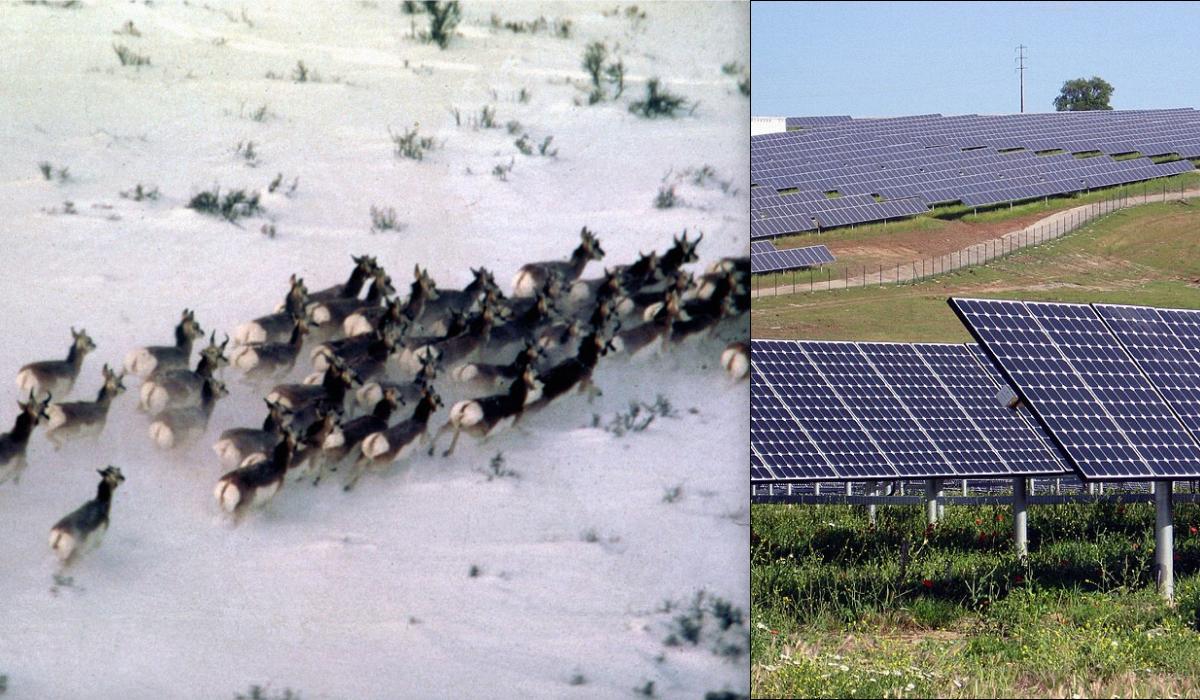
Researchers in the United States fitted 75 pronghorn antelopes in New Mexico with GPS tracking collars before solar panel construction to test how the animals adapted to energy sites. Pronghorn antelopes are the fastest animals in America and make long migrations across the western region.
According to Ecoportal, comparison of location data before and after construction showed that the antelopes adjusted their behavior near the facilities. Large solar power plants can affect traditional migration routes because they cover broad areas and feature fences about two meters high.
Researchers said gaps between fence sections often fail to line up with natural movement corridors, and the animals did not jump over the fences or run through the panels. Instead, GPS data showed the antelopes established new paths around the solar installations. Researchers noted that the findings show energy development can continue alongside wildlife protection.
Desert turtles find shelter at solar farms
Desert turtles also adapted to solar installations by taking shelter at the Gemini Solar Project near Las Vegas, the largest solar power plant in the United States. To avoid overheating, the turtles typically hide in burrows, under plants, or in shaded spots, and now use the solar panels for protection from the heat.


