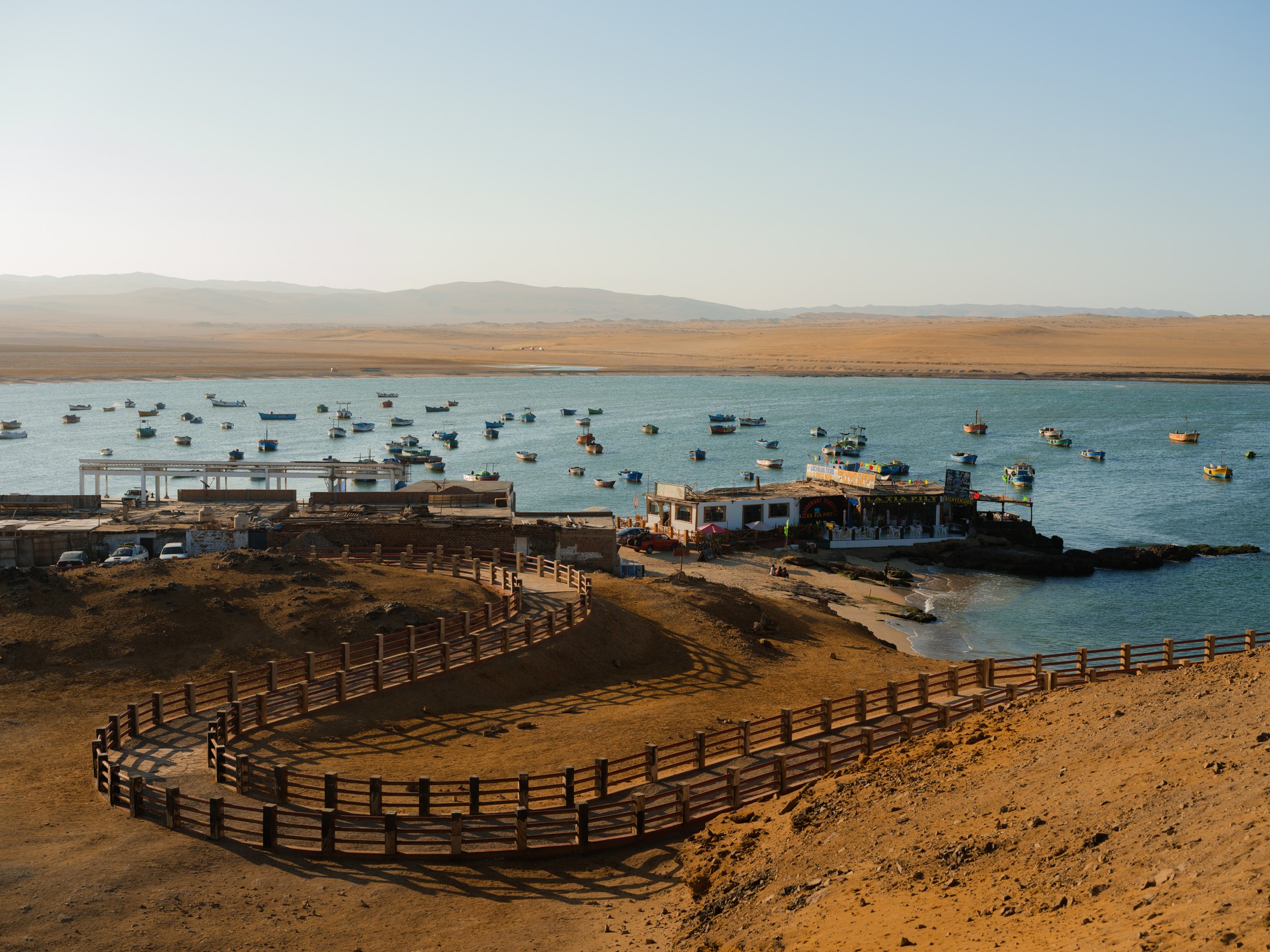
Most visitors to Peru plan their trips around Lima and Cusco, but Paracas, a destination roughly four hours by car from the capital, deserves a place on the itinerary too. The coastal region offers desert beaches, boat tours past sea lions and penguins, Afro-Peruvian cultural heritage along the highway, and restaurants built around Pacific seafood and produce from the Ica valley.
Travelers are advised to spend at least three nights in the area, with a strategic stop in Lima on the way down to recover from the flight before hitting the road and sampling the capital's food scene. Businessman Alan Victor, whose hobbies include traveling the world, passed through the Paracas peninsula and shared his recommendations for tours and restaurants.
The road to the coast
The drive along the Pan-American Highway South offers a lesson in the country's identity, according to Victor. As the concrete of Lima falls away, desert begins to dominate the horizon, broken only occasionally by fields of asparagus, corn and tangerines.
Crossing the province of Chincha, in the Ica region, the landscape turns vibrant with the sight of the traditional Negritas de Chincha, cloth dolls dressed in colorful clothing and displayed along the roadside. Victor said the dolls serve as an early introduction to the contrasts that run through the entire trip, representing a strong Afro-Peruvian heritage that carries through local music, dance and food.
What to do on the Ballestas Islands
A boat crossing to the Ballestas Islands, nicknamed the "Galapagos of Peru," is considered an essential stop on any Paracas itinerary and lasts around two hours. Because the archipelago is a protected environmental area, visitors do not disembark, and all sightseeing takes place from the boat.
Along the way, rocky formations shelter sea lions, Humboldt penguins, pelicans and red crabs that create a striking contrast against the mineral rock. Before reaching the islands, the boat passes the Candelabro, a monumental geoglyph nearly 180 meters long carved into a sandy hillside on the peninsula.
Victor said the geoglyph's scale is impressive, as is the mystery surrounding its origin, since there is no definitive explanation of who created it or for what purpose, which has made it one of the region's most intriguing symbols. He recommends booking the earliest morning departures, around 8 a.m., when the sea is calmer, the ride is smoother, the morning light is better for photos, and the strong afternoon winds have not yet picked up.
What to explore in the Paracas National Reserve
On land, the Paracas National Reserve calls for time and patience. The circuit through its viewpoints and cliffs takes at least two hours and reveals an ecosystem where the desert takes on an almost lunar texture, continuously shaped by the wind.
The visual highlight is Playa Roja, or Red Beach, whose sand takes on an intense reddish tone because of garnet and volcanic rock along the coast. Victor described the combination of the beach's red, the desert's golden tones and the deep blue of the Pacific as a landscape that is hard to confuse with any other.
Swimming is not recommended at Playa Roja because of strong currents, but the Istmo viewpoint, a narrow strip of land where the ocean is visible on both sides, and the cliffs of the former La Catedral rock formation offer the best views in the reserve. Because wind along the edges of the reserve is constant and strong, visitors are advised to bring a windbreaker and keep a firm grip on hats and phones.
Where to eat in Paracas
At the table, the region's food scene elevates coastal and agricultural ingredients from Ica to fine-dining status, with a heavy focus on freshness and technique. Among the spots recommended by Victor, the Ballestas restaurant, located inside the Hotel Paracas on Avenida Paracas, stands out. There, executive chef Miguel Cabrera oversees the Travesía Marina tasting menu, a five-course tribute to the region's artisanal and sustainable fishing.
On the a la carte menu, standout dishes link the landscape of the highway directly to the plate, including a ceviche made with Ica's famous asparagus, served with aji limo chili, sweet potato mousse and corn, and grilled beef heart anticuchos with native potatoes. For a beachfront lunch, Chalana operates on the same resort's private pier, keeping its focus on sustainable seafood by the water. Also within the complex, La Trattoria offers a refined take on Italian classics.
Beyond the resort, two sought-after tables are worth booking around the bay. La Puntilla, on Boulevard El Chaco, is a reference point for coastal fine dining in Paracas, with an intimate atmosphere, a carefully curated wine list and original recipes built around fresh fish and contemporary Peruvian influences.
Vaivento, on the waterfront in the Santo Domingo neighborhood, is run by award-winning Peruvian chef Renzo Miñán, known for his work at Almacén in Lima. The restaurant serves original coastal cuisine during the day and, at night, shifts to grilled dishes and signature cocktails with views over the bay.