

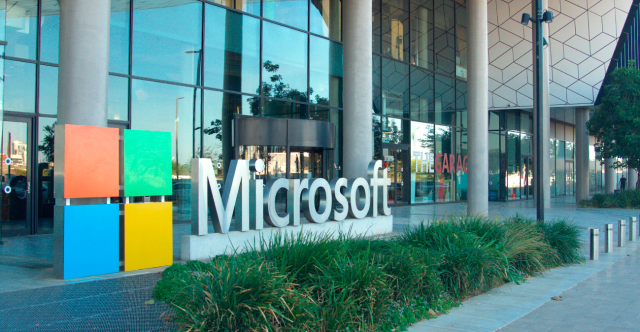
Microsoft has offered voluntary redundancy packages to approximately 60,000 employees across the United States, Canada, India and the United Kingdom.
The Redmond-based technology company confirmed the move to Agence France-Presse on Monday, six months after launching its first voluntary departure scheme. The fresh offer comes as the group reshapes its staffing structure while committing tens of billions of dollars to artificial intelligence infrastructure.

The voluntary buyout offer applies only to selected divisions within the corporation. In a message distributed to staff, Chief Human Resources Officer Amy Coleman wrote that the programme represents another way for the company to adapt its workforce to evolving needs.
Coleman did not explicitly cite the broader pivot toward artificial intelligence that has steered the company's capital allocation. Microsoft, which is headquartered in Redmond, Washington, employed 223,000 workers worldwide at the end of June.
Founded in 1975, the technology giant is one of the world's largest software and cloud computing providers, best known for the Windows operating system and its Azure enterprise platform. Like many major technology companies, the firm has been adjusting its operational costs following pandemic-era hiring surges.
Terms of the voluntary buyout programme
The new buyout offer is available to staff up to the rank of vice president. However, the company has excluded several categories of personnel from the scheme, including certain staff working in data centres, sales and marketing operations.
Employees who choose to leave will receive financial severance on terms equivalent to those provided during standard compulsory redundancies. Microsoft told AFP that it anticipates far lower employee participation in this round than in its previous departure scheme.
The company introduced its first voluntary exit scheme in April, presenting it to approximately 8,750 workers across the United States. That initial offer was open exclusively to employees whose age combined with their years of service at the firm totalled at least 70 years.
In July, Microsoft disclosed that roughly one third of eligible staff had accepted that first buyout offer. The company incurred a charge of $900 million connected to the programme and said at the time that the vacated roles were not being replaced by artificial intelligence.
Workforce reductions and computing investments
The voluntary departure scheme follows significant compulsory layoffs across the organization. Microsoft eliminated around 4,800 positions at the start of July, representing 2.1 percent of its global workforce, after cutting more than 15,000 roles during 2025.
According to the company's annual report, Microsoft's overall workforce fell by 5,000 employees over the 12-month period ending June 30. That reduction marked the first annual decline in the company's total headcount since 2016.
Despite reducing employee numbers, Microsoft has sharply increased its financial spending on technical hardware. The company allocated $41 billion for capital expenditure during the April-to-June quarter alone, with the vast majority of that capital funding data centres and the advanced microchips required for artificial intelligence computing.
Microsoft is scheduled to release its financial earnings for the July-to-September quarter on Wednesday. Ahead of those results, the company had projected that its capital investments for that three-month period would exceed $50 billion.
The rapid expansion of artificial intelligence requires hyperscale data centres equipped with thousands of specialized processors to train and run machine learning models. High infrastructure costs have prompted major cloud computing providers to reallocate financial resources from general corporate overheads toward technical facilities.