

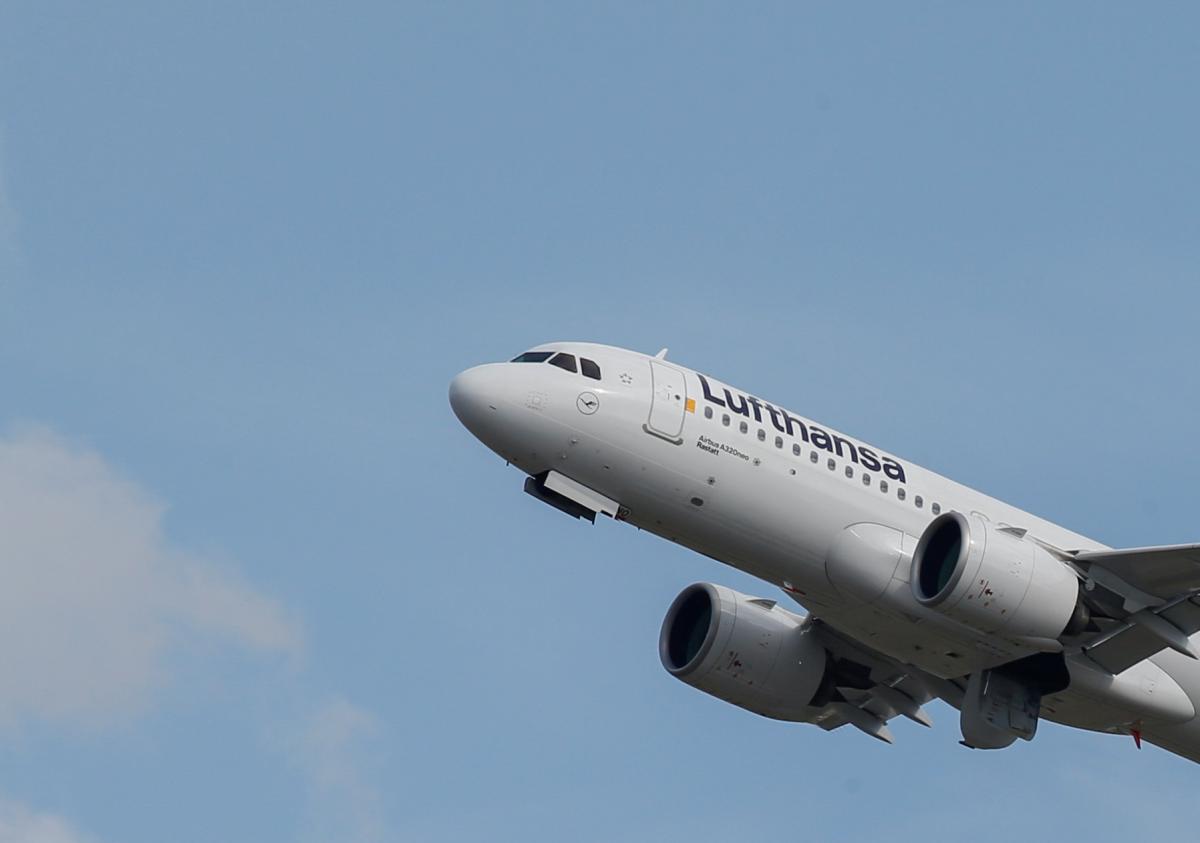
Lufthansa has retired its Airbus A340-600 long-haul fleet, ending a 23-year run that featured passenger toilets in the cargo hold.
The German carrier completed the withdrawal of the wide-body aircraft in October 2026. Lufthansa is replacing the planes with modern, more economical models as part of a fleet renewal programme.
Passengers who sit near restrooms on commercial flights often deal with foot traffic, lingering queues, and unpleasant smells. Lufthansa addressed those complaints by ordering a bespoke modification that shifted economy lavatories downstairs into the cargo deck, aviation news outlet AviaNews.com reported.
When the Airbus A340-600 first entered commercial service, it was the longest passenger aeroplane in the world at 75.27 metres. That made it only slightly shorter than the Ukrainian Antonov An-225 Mriya cargo aircraft, which measured 84 metres before its destruction.
Staircase to the cargo hold
The massive fuselage of the A340-600 carried 281 passengers across four travel classes. Lufthansa reserved a large portion of the main cabin for first class and business class travellers, which left less room for standard seating.
To fit more economy seats and clear congested cabin aisles, Lufthansa asked Airbus to move all five economy restrooms down into the cargo hold. The airline installed a wide flight of stairs in the economy cabin so travellers could walk down into a dedicated bathroom pavilion.
The layout worked because the lower cargo compartment of the Airbus A340-600 was tall enough for an adult to stand at full height. Lufthansa used this lower-deck space for around two decades, making it a rare experiment in airline cabin architecture, though rival airlines chose not to adopt the design.
Lufthansa, which is based in Germany and operates one of the largest airline fleets in Europe, was one of the few global carriers to fly the four-engine A340-600 across long intercontinental routes. The retirement of the fleet marks the end of lower-deck passenger facilities on standard commercial flights.
Electric aircraft development
As legacy four-engine aircraft leave European skies, aerospace engineers are turning their attention to cleaner propulsion technology. Dutch startup Elysian Aircraft is currently developing the E9X, a passenger plane powered by a fully electric propulsion system.
A representative for Elysian Aircraft said the scientific community and aviation sector long believed that large electric passenger planes were technically impossible. However, the company said applied design research has disproved that assumption.
Engineers at the Dutch company are now refining the aircraft design to carry 90 passengers on short and medium routes, aiming to prove that commercial battery-powered passenger flight is viable.


