
The wife of Brazilian influencer Lito Sousa has denied receiving any special privilege after securing exceptional regulatory approval to obtain an experimental drug to treat his Creutzfeldt-Jakob disease.
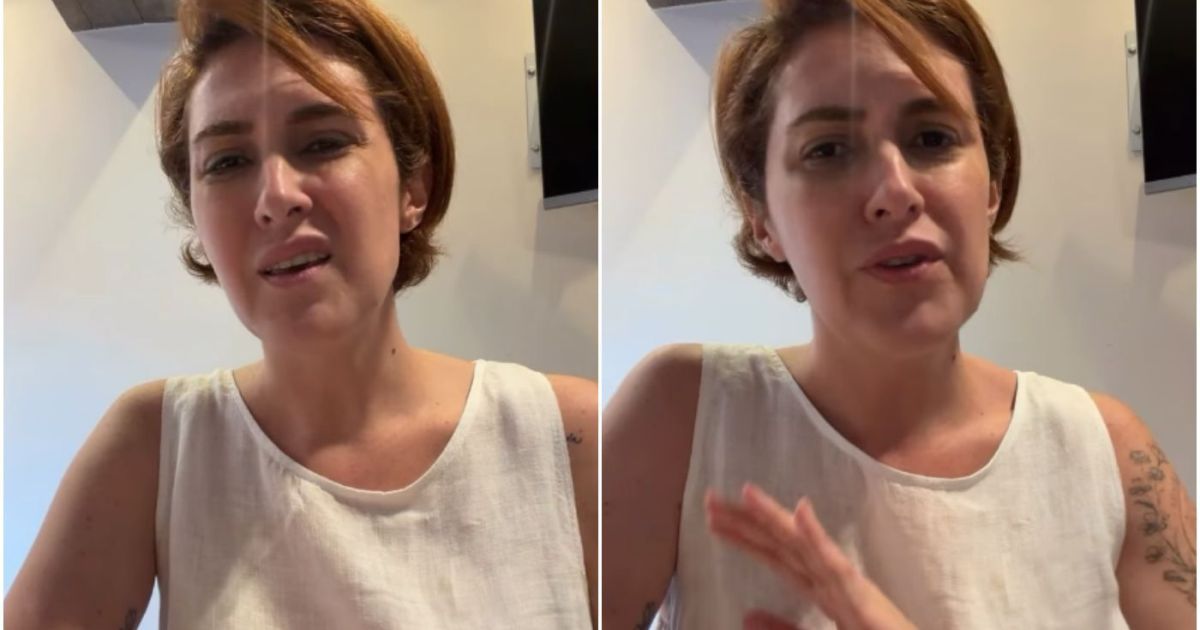
Mila Seidl, 41, addressed public speculation in videos posted to social media, insisting that the family followed established medical protocols available to any patient facing a critical illness with no alternative treatment options.
Her husband, 59, is set to become the first human being to receive ALN-6457, an experimental therapy developed by the American biotechnology company Regeneron Pharmaceuticals. Brazil's federal health regulatory agency, Anvisa, approved the exceptional import of the substance on Friday, September 4.
The drug has neither commercial registration nor a designated legal representative in Brazil. It remains in pre-clinical development for prion conditions, with no formal human clinical trials previously launched for that purpose.
Creutzfeldt-Jakob disease is a rapid, degenerative, and universally fatal neurological condition. It belongs to a group of rare disorders caused by prions, which are abnormal, misfolded proteins that induce healthy cellular proteins in the brain to fold incorrectly, destroying neural tissue.
Anvisa granted permission under compassionate use regulations, noting the swift and irreversible progression of the illness alongside the total lack of approved therapies or clinical sponsors in Brazil.
Sousa built a following of millions across Brazil as an aviation specialist, aircraft maintenance technician, and creator of the educational channel Aviões e Músicas, where he explained flight safety, aeronautical engineering, and accident investigations.
Clinical Trial Denial and Compassionate Use
Seidl recounted that the family initially sought to enroll Sousa into an active clinical trial evaluating experimental treatments. However, study organizers rejected his application because all available spaces were already occupied, rather than because he failed to meet the clinical requirements.
Faced with the lack of trial vacancies, the family pursued compassionate use, an emergency legal framework allowing critically ill patients access to unapproved investigational therapies outside of formal trials.
According to Seidl, the family took the initiative to contact another pharmaceutical company directly. After presenting Sousa's medical history and participating in a meeting with company representatives, the manufacturer agreed to release ALN-6457 because they found his clinical case compelling.
In international medical regulation, compassionate use programmes allow physicians to administer unapproved investigational compounds when a patient has exhausted all approved therapeutic avenues. The mechanism balances the unknown risks of experimental treatments against the certainty of a fatal prognosis.
Rebutting Rumours of Political Intervention
The regulatory green light sparked online speculation that powerful figures had intervened to fast-track the authorization. Seidl firmly rejected rumours suggesting that government ministers pulled strings, that wealthy entrepreneurs provided financing, or that regulatory authorities offered improper assistance.
She declared that she and her husband secured the drug themselves alongside his medical team, emphasising that she was addressing the accusations of favoritism for the final time.
Seidl also stressed that the effort has relied on neither public funding nor private donations. She noted that she had not organised any crowdfunding campaigns or public appeals to finance the acquisition.
Regeneron Pharmaceuticals, based in Tarrytown, New York, agreed to supply the substance directly under the individual compassionate use agreement. Because the drug was still in pre-clinical evaluation for prion diseases, the company had not previously initiated formal human trials for the compound.
Documentation and Regulatory Oversight
Securing authorization required an extensive bureaucratic process spanning both Brazil and the United States. The procedures involved Regeneron Pharmaceuticals, the treating hospital, Anvisa, the Brazilian Ministry of Health, and the US Food and Drug Administration.
Seidl explained that she and Sousa's doctors compiled a comprehensive dossier containing diagnostic test results, scientific documentation, and technical data provided by the pharmaceutical firm to justify the application.
Hospital Israelita Albert Einstein in São Paulo, where Sousa is undergoing treatment, formally submitted the request for exceptional individual use. The institution is one of the premier private medical centers in Latin America, equipped with specialized neurology units capable of handling rare neurodegenerative disorders.
Following Anvisa's clearance, the patient's own team will arrange the international importation of the substance into Brazil. Seidl noted that regulatory officials accelerated their review because of the severity of her husband's condition, though completing the paperwork and approvals still took roughly a week.
Advocating for Rare Disease Patients
Seidl insisted that obtaining compassionate use access is a legal right for any individual facing a comparable crisis, rather than an exclusive privilege reserved for prominent families.
She explained that the greatest obstacle for patients is that administrative information regarding experimental pathways remains unclear and difficult to access, which forced her to pursue the process relentlessly on her own.
Reflecting on the experience, Seidl expressed hope that their case would shed light on the barriers confronting patients with rare diseases. She said she hoped the situation would prompt authorities to review existing procedures and establish faster regulatory pathways for other families in urgent need.