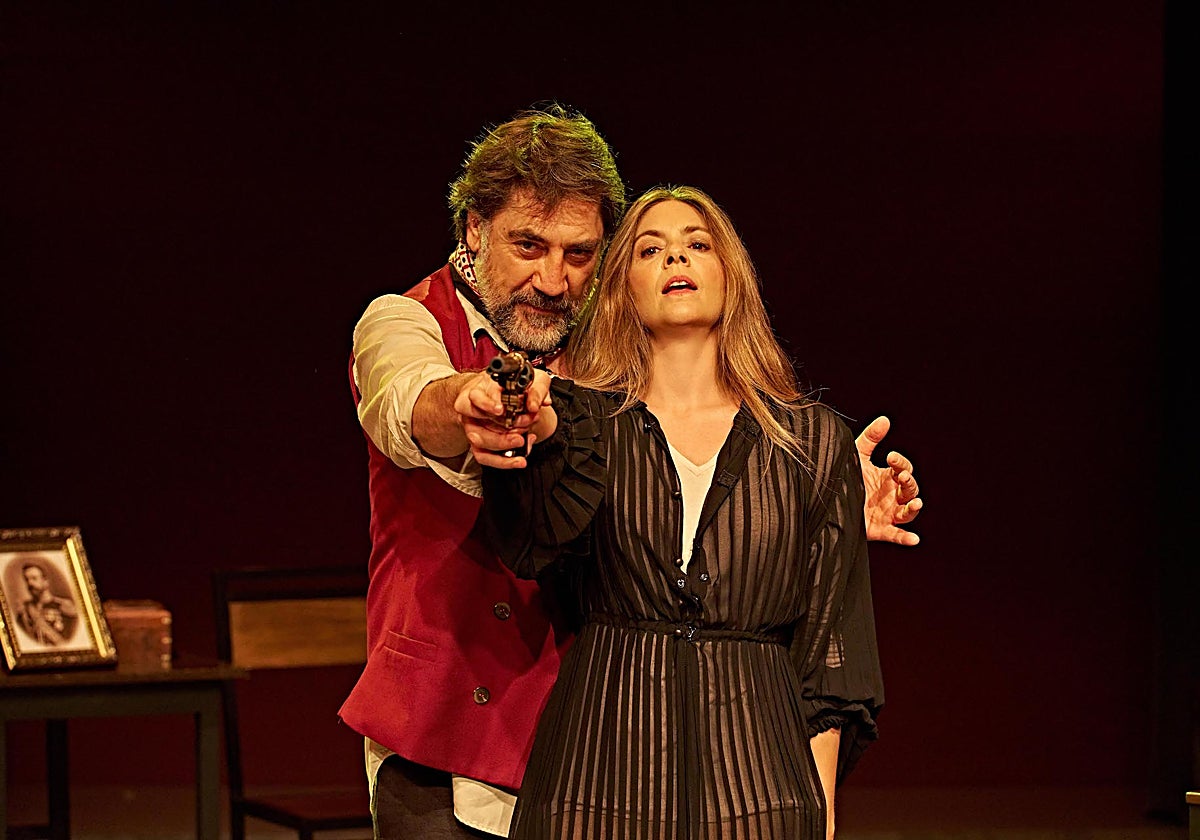
Javier Bardem, the Spanish actor known for decades of film work including "Jamón, Jamón" and the recent "El ser querido," will make his theatre debut on November 19 in Madrid. He is 57 and has worked in cinema for nearly 40 years without previously appearing on a stage.
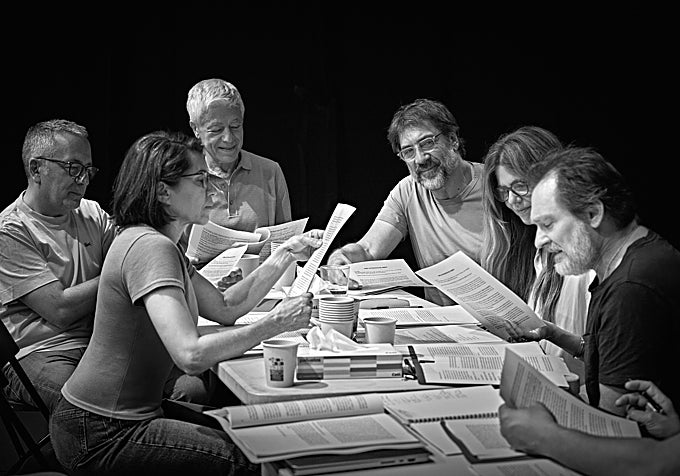
The production, titled "¡Chéjov, Chéjov!," was created by Juan Carlos Corazza, the Argentine director who trained Bardem at the Estudio Corazza para la Actuación and who has continued to coach him before major roles. Corazza built the play from a selection of five short works, stories and writings by the Russian author Anton Chekhov, who was born in Taganrog, on the Sea of Azov, in 1860.
Venue and cast
The play opens at Espacio Zafra Teatro, on Paseo del Marqués de Zafra 35 in Madrid, a venue that is itself a project started by Corazza with Bardem's backing. According to Corazza, its aim is to support the creativity of new talent as well as the work of established creators, through artistic residencies, workshops and public events alongside performances.
Alongside Bardem, the cast includes Alicia Borrachero, Rafa Castejón, Ben Temple and Manuela Velasco. The show runs until February 7, and music is provided live by Andrea Szamek on violin and Vadim Yukhnevich on bayan, guitar and vocals. All tickets for the run have already sold out.
Who was Anton Chekhov
Corazza has described Chekhov as a writer who observed human beings without judgment, with simplicity, humour and brevity, and with tenderness, depth and compassion. That description applies closely to Chekhov's best-known plays: "The Seagull," "Uncle Vanya," "Three Sisters" and "The Cherry Orchard." In all four, what is left unsaid matters more than what is spoken, and character outweighs plot as Chekhov explores the purpose of art and the meaning of life.
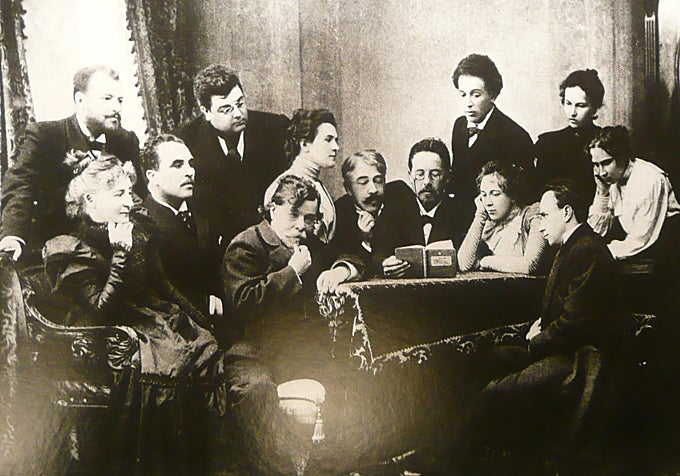
Those four plays were originally staged by the director Konstantin Stanislavski with the Moscow Art Theatre company. One of its actresses, Olga Knipper, played Arkadina in "The Seagull" and later married Chekhov.
Chekhov's short stories
Chekhov was also a master of the short story, working in the same period as Edgar Allan Poe and Guy de Maupassant. His best-known tale, "The Lady with the Dog," is often read as a literary counterpart to Tolstoy's "Anna Karenina." Chekhov said he did not set out to depict a social convention but human beings who love, weep, think and laugh, free of the moral codes of his time; he held that he could not condemn people for an act of love.
A portrait of tsarist Russia
Chekhov was the third of six children, raised by a strict father and a mother who told stories, and he left behind a vast cast of characters offering a view into tsarist Russia at the turn of the 20th century, a society in decline that foreshadowed the 1917 revolution and mirrored his own physical decline as illness advanced. His realism was plain and his observation precise, attentive to detail rather than neat endings, which drew criticism in his time for coldness, for dwelling on trivial anecdotes, and for a lack of social commitment.
His stories, which he began writing out of financial necessity, are populated by barons, counts, princes and princesses, hunters, rural doctors, drunks, young ladies and gentlemen, barbers and cooks, moving between humour and melancholy. There are orphans, grieving wives and widows, and couples given over to love, following ordinary days in the lives of characters such as Natalia Gavrílovna, Nikolái Chikildéiev and Olga Semiónovna.
The Lady with the Dog and Yalta
The title character of that best-known story, Anna Sergeyevna, is described walking alone with the same beret and the same white Pomeranian, known to everyone only by that nickname. The story follows her adulterous relationship with Dmitri Dmitrievich Gurov, a Moscow man who had studied philology but worked in a bank. It is set in Yalta, the seaside town where Chekhov himself lived on his doctor's advice after contracting tuberculosis from his patients, an illness that killed him at 44. The story later inspired the 1987 film "Dark Eyes," directed by Nikita Mikhalkov and starring Yelena Safonova and Marcello Mastroianni.
More stories to read
Chekhov left countless other stories rich in lyricism, from his first, "Letter to a Learned Neighbour," to his last, "The Bride," which closes on an unexpected note of hope as its heroine imagines a new life of vast horizons opening before her, still uncertain and full of mystery yet drawing her in. Among the essential titles in between are "Gusev," "The Kiss," "Three Years," "My Life," "Peasants" and "About Love." As the writer Eduardo Galeano put it, Chekhov wrote as though saying nothing, and said everything.