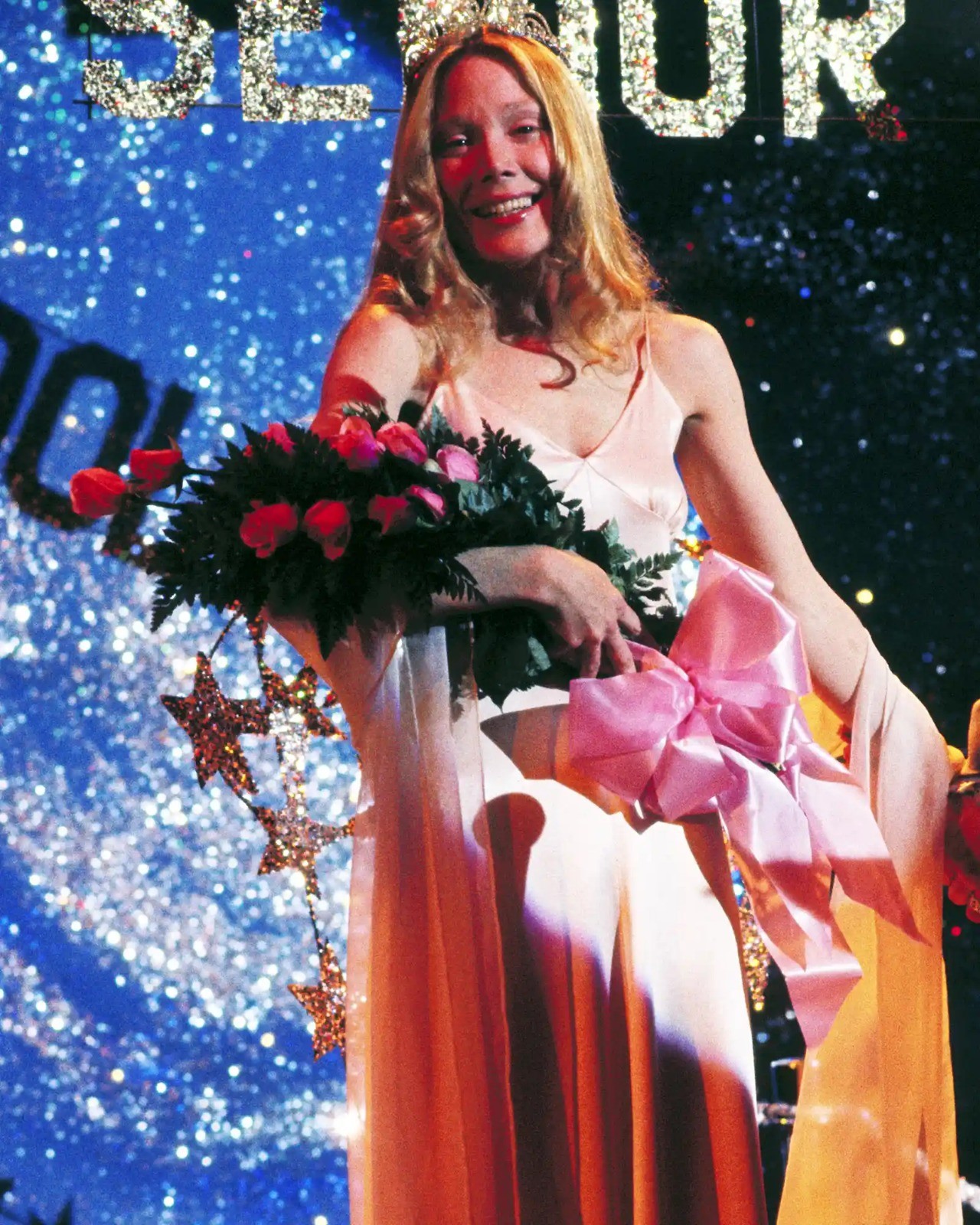
Stephen King has recalled the exact moment he realized the 1976 film adaptation of his debut novel, Carrie, was going to be a hit. In an interview with The Hollywood Reporter published Friday, the 79-year-old author described watching audience reactions at a preview screening of the horror classic.
King said he saw the film for the first time alongside his wife, fellow writer Tabitha King, at a cinema in Boston. The screening paired Carrie with the comedy Norman... Is That You? as part of a double feature.
Carrie, published in 1974, was King's first novel and introduced readers to Carrie White, a socially excluded teenage girl who discovers she has telekinetic powers. The character reached the screen two years later in a production starring Sissy Spacek that went on to become one of horror cinema's defining classics.
Audience reaction surprised King
King said he grew worried about how the film would land once he noticed the audience was made up predominantly of Black moviegoers. He said he feared the protagonist's struggles would not resonate with that crowd, recalling that he thought to himself that the audience would not care about a little white girl and her menstrual problems.
That assumption did not hold up. As the film played, King said the audience became deeply engaged, reacting strongly to its suspense and horror sequences.
The turning point came during the film's famous final scene, which drew screams and startled reactions from the crowd. King said that was when he understood the adaptation had the makings of a phenomenon, recalling that he thought to himself that they had a hit on their hands.
Novel nearly thrown in the trash
Despite being regarded today as one of horror fiction's biggest names, King said he did not always believe in Carrie's potential. Before achieving international recognition, he worked as an English teacher in Maine and struggled to develop the story that would eventually transform his career.
He originally set out to write only a short story, but began doubting his ability to portray a teenage girl's physical and emotional experiences accurately. King said he did not know whether coin-operated machines for sanitary napkins existed, and that he barely knew what sanitary napkins were in the first place.
His doubts grew so strong that he abandoned the project and threw away the pages he had written. The story survived thanks to his wife, Tabitha, who retrieved the discarded manuscript from the trash and urged him to keep writing. King recalled that she told him the pages were very good and that he should continue.
That encouragement proved decisive. King finished the novel, and it was published in 1974, laying the groundwork for his rise as one of the genre's best-known writers.
Carrie's many adaptations over the years
The success of the 1976 film kept Carrie White's story alive in popular culture for decades. Beyond the original production starring Spacek, the novel has inspired a 2013 feature film starring Chloe Grace Moretz and a stage musical.
In 2026, the story received a new television adaptation for Prime Video, developed under the direction of Mike Flanagan, a filmmaker known for his work in the horror genre. The decision to revisit such a familiar story raised questions about the need for yet another version of the tale.
Director reveals concerns over new adaptation
Speaking at a panel at San Diego Comic-Con in July, Flanagan admitted he also had doubts about turning Carrie into a television series. The director, who previously adapted King's work for 2019's Doctor Sleep, said he needed to find an approach that could justify a new version of the story.
Flanagan said the question everyone was asking was why remake Carrie at all, and why do it this way.
According to the filmmaker, the solution was to revisit the core elements of the original narrative and rearrange them to build a different interpretation without abandoning the essence of the work. Flanagan said he developed the project by breaking the original story down into its essential elements and using them to build something new, adding that this approach was what got Stephen King excited about the adaptation.
A classic that still marks generations
Five decades after its theatrical debut, Carrie remains one of Stephen King's most emblematic stories. Its mix of psychological horror, social exclusion, family conflict and supernatural power helped turn the character into a genre touchstone.
For King, the memory of that first screening in Boston continues to represent a pivotal moment in his career, the point at which he understood the power of his creation beyond the pages of a book.