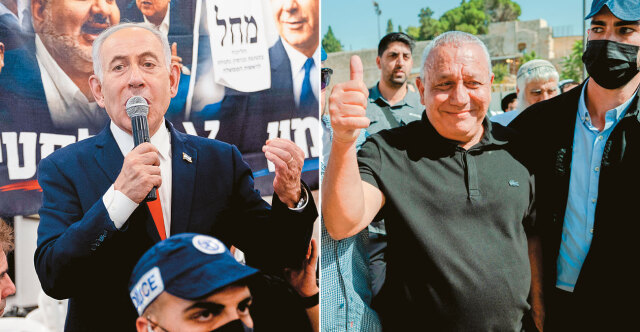
Polls opened across Israel on Tuesday, October 27, in a pivotal parliamentary election that could bring an end to Prime Minister Benjamin Netanyahu's long rule.
Israeli citizens cast their ballots following three years of war, consecutive military campaigns, and deep domestic turmoil that began with the Hamas attack on October 7, 2023.
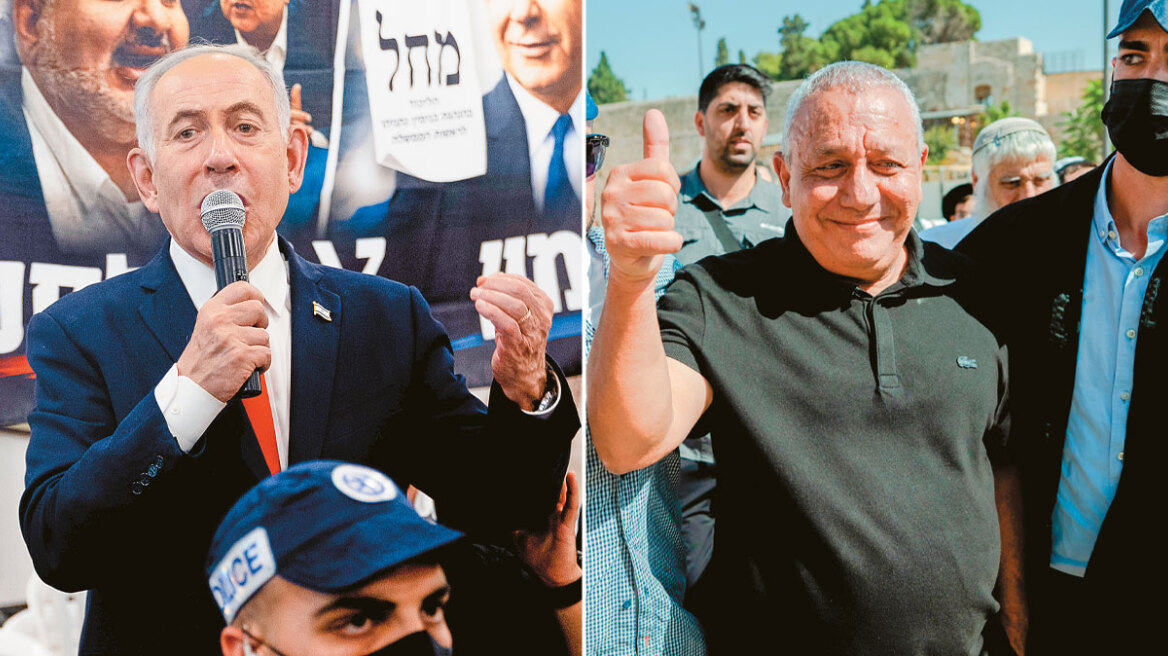
Recent opinion surveys placed former military chief Gadi Eisenkot ahead of the incumbent leader, but finishing first does not guarantee the ability to assemble a working administration. Netanyahu, despite significant political damage, retains a dedicated core of supporters and an established network of allies that could allow him to remain in office even if his Likud party falls behind.
Eisenkot has drawn backing from voters who seek a change of national leadership without a fundamental reassessment of the country's defense doctrine. His rise reflects a desire for different governance drawn from the same military and political establishment that has guided Israel for decades, rather than a broad societal shift toward the left.
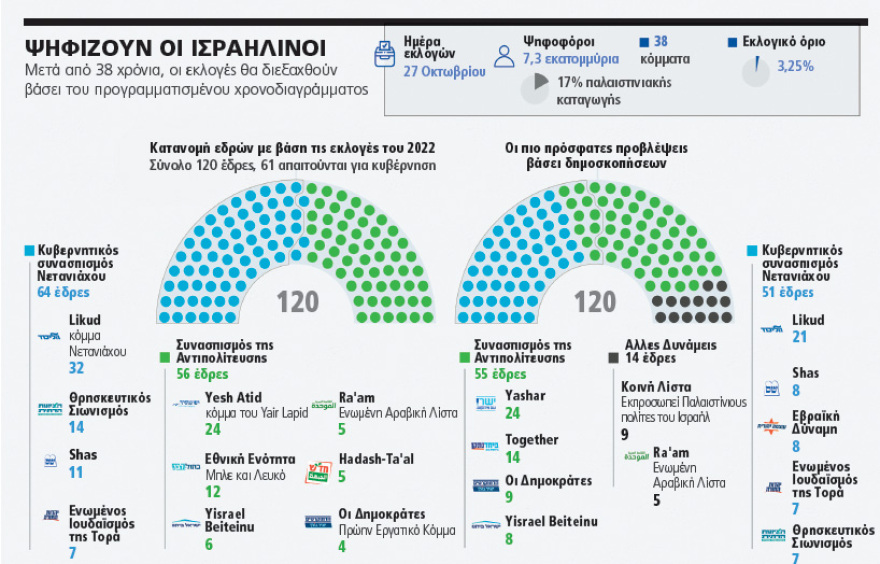
Surveys indicate that neither major political camp holds the 61 seats required for an absolute majority in the 120-seat Knesset. The deadlock threatens to plunge Israel into familiar political paralysis, this time against the backdrop of far higher regional and international stakes.
Poll Projections and Parliamentary Numbers
A poll broadcast on October 19 by Israeli Channel 12 projected Eisenkot's Yashar party to win 24 seats, ahead of Likud with 21 seats. B'Yachad, led by former prime minister Naftali Bennett, took third place with 14 seats.
The wider Zionist opposition camp secured a collective 55 seats in the survey, compared with 51 seats for parties aligned with Netanyahu. The remaining 14 seats were divided between two Arab political factions. When respondents were asked to choose the most suitable prime minister, Eisenkot led Netanyahu by 45 percent to 33 percent.
Netanyahu Campaign Strategy
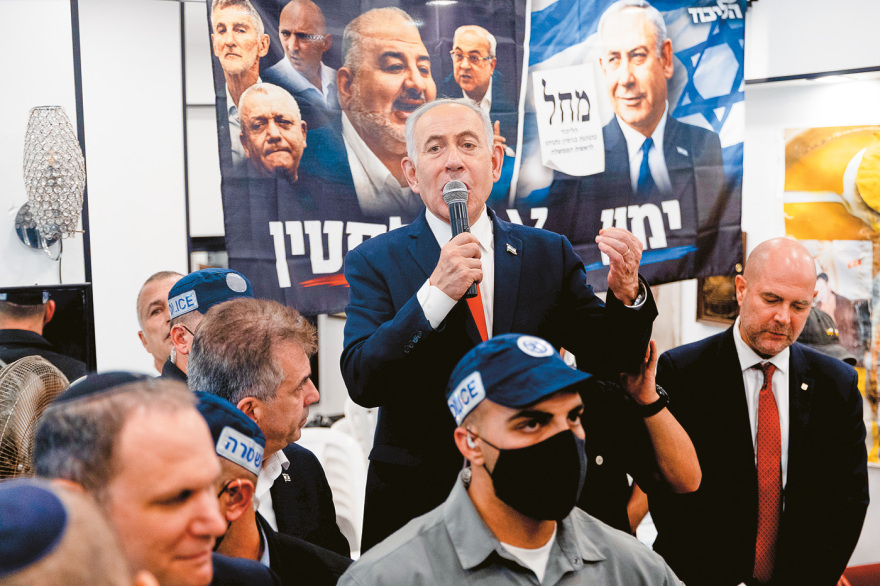
Netanyahu has demonstrated remarkable political resilience throughout decades of public life. Despite voter fatigue, intense scrutiny over the failures of October 7, ongoing legal proceedings, and constant friction within his governing coalition, the prime minister commands a formidable political mobilization apparatus.
His campaign strategy rests on two core objectives. First, Netanyahu seeks to turn the contest away from an assessment of his past governance and into a question of who can best guarantee national security. Second, he portrays any potential Eisenkot administration as an unstable coalition dependent on opposing ideologies and reliant on Arab legislators.
In an address on Thursday, October 22, Netanyahu framed the vote as a direct choice between himself and United States President Donald Trump on one side, and Eisenkot and Ra'am party chief Mansour Abbas on the other. Eisenkot has publicly ruled out including Arab parties in a government under his leadership. Netanyahu's messaging aimed to consolidate conservative voters against a prospective administration he described as hazardous to Israeli security and national identity, while leveraging support from the American president.
Opposition Dynamics and Coalition Hurdles
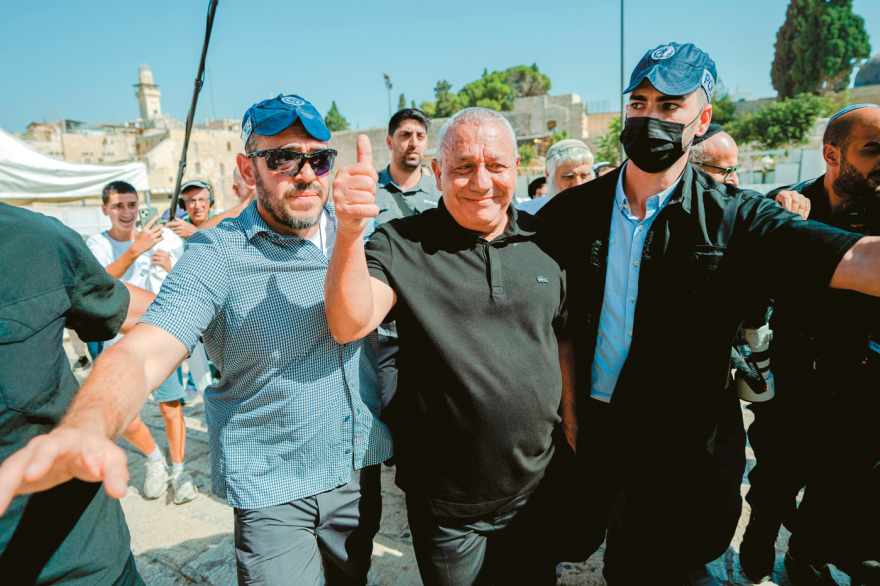
Eisenkot has centered his political appeal on his executive military command experience, personal credibility on defense, and a pledge to restore public trust in state institutions. His background in uniform allows him to challenge Netanyahu without appearing to dispute established Israeli doctrines regarding the Gaza Strip, Hamas, or Iran.
Assembling a governing majority presents severe difficulties for Eisenkot because of deep divisions within the opposition. Bennett, an essential partner, has previously served as prime minister and brings distinct ambitions. Avigdor Lieberman, who heads Yisrael Beiteinu, holds staunchly right-wing and nationalist positions, while Yair Golan, the leader of The Democrats, represents the progressive wing of Israeli politics.
Voter participation among Israel's Arab citizens, who account for roughly 21 percent of the total population, represents another decisive factor. A Reuters analysis highlighted expectations of strong Arab turnout, with pollsters estimating participation near 63 percent, an increase from the 2022 general election. While higher Arab representation could restrict right-wing seats and help block a Netanyahu majority, it would not automatically enhance Eisenkot's capacity to build a coalition.
Netanyahu's traditional ultra-Orthodox partners, Shas and United Torah Judaism, face their own volatile dispute over military conscription. Exemptions from military service for seminary students have sparked intense social friction across Israel. The issue has become a grievance for military reservists who shouldered the heaviest burden of active service after October 2023, turning unequal draft requirements into a prominent dispute over social justice.

Security Policy and Palestinian Issues
Western governments have followed the election closely, yet an Eisenkot administration would unlikely alter core security stances. A Reuters analysis published on October 22 concluded that both frontrunners share fundamental positions regarding the Palestinian issue.
Both Netanyahu and Eisenkot oppose the establishment of an independent Palestinian state under current conditions. Both men maintain that Hamas cannot be permitted to retain political or military authority in Gaza, and both insist that Israel must preserve decisive operational security control.
The clearest policy distinctions appear in the West Bank and in administrative governance. Netanyahu has authorized substantial growth in Jewish settlements, and far-right figures within his coalition openly advocate outright annexation of occupied territory. Eisenkot does not oppose settlement construction entirely, but he objects to unauthorized outposts, settler violence, and the controversial development project in the E1 corridor, which would sever the geographic contiguity of the West Bank.
Regarding Gaza, Eisenkot favors replacing Hamas administration within a specified timetable, though he does not advocate an immediate total withdrawal of Israeli forces prior to the complete disarmament of the militant group. On Iran, both candidates share the view of the broader defense establishment that countering Tehran remains an essential national security priority. An Eisenkot administration would differ primarily in its institutional conduct, its relationship with Western allies, and its exclusion of extremist factions from executive influence.
Post-Election Scenarios and October 7 Reckoning
Current polling suggests three primary outcomes for the vote. In the first scenario, Netanyahu secures another term by forming a fresh right-wing coalition. In the second, Eisenkot succeeds in negotiating an expansive alliance alongside Bennett, Lieberman, and Golan. The third scenario points to prolonged legislative gridlock, a condition that would permit Netanyahu to remain in power as caretaker prime minister while political talks drag on.
Beyond parliamentary arithmetic, the vote serves as the first nationwide electoral referendum on the events following the October 7, 2023 attacks. Netanyahu continues to confront public anger for retaining his post after the most severe national security failure in contemporary Israeli history.
Reporting by the Associated Press noted that the trauma of October 7 remains the overriding factor for voters, with survivors, relatives of victims, and mobilized soldiers occupying the center of public debate. That shared memory has produced sharply divided political conclusions, driving calls for new leadership among some voters while prompting others to rally behind uncompromising security policies.
Three years after the start of the conflict, Israeli voters face a decision that will determine not only the identity of their next prime minister, but also whether a change in political personnel can alter the trajectory of a nation gripped by persistent uncertainty.