

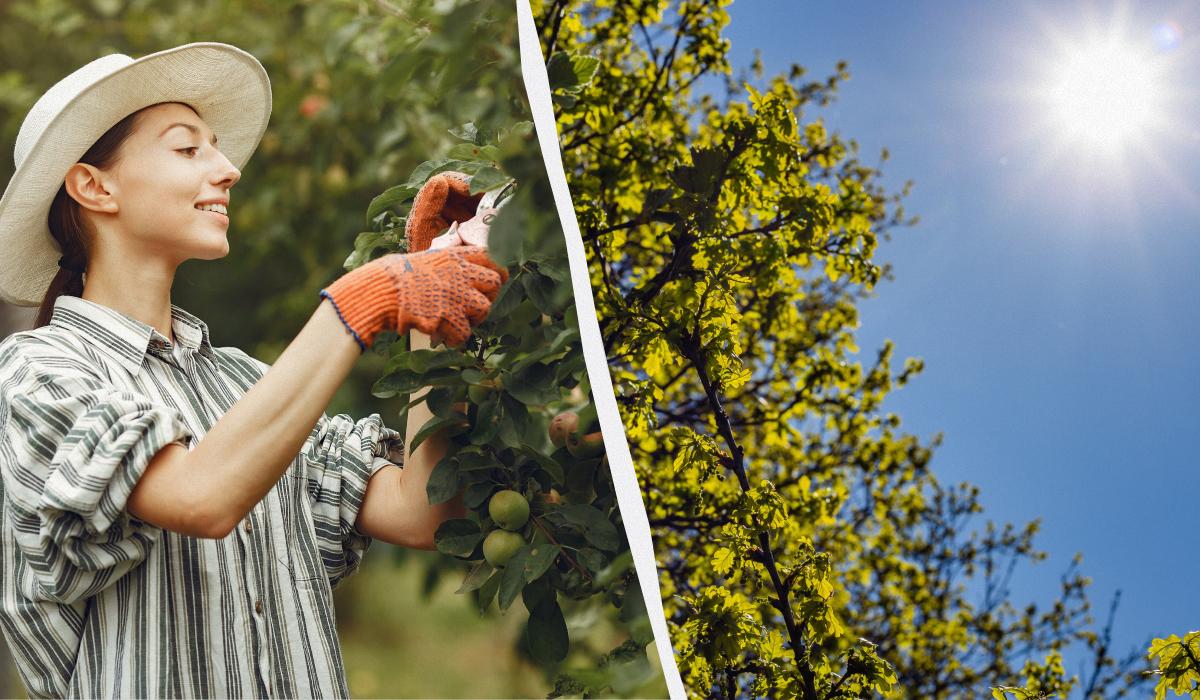
Young fruit trees are far more sensitive to summer heat than established ones, because their roots cannot yet draw moisture from deep soil layers. During extended dry spells, leaves wilt, growth slows, and developing fruit becomes vulnerable to sun damage.
The first step is watering correctly. Rather than dampening only the surface, gardeners should water infrequently but deeply so moisture reaches the roots. For the first one to two weeks after planting, daily watering is recommended; after that, every two to three days is sufficient, adjusted for weather conditions. The soil should not be allowed to dry out completely between waterings, but should not stay waterlogged either.
After watering, an 8 to 10 centimetre layer of mulch around the base of the tree helps retain moisture, protects the soil from overheating, and suppresses weeds. The mulch should not be packed directly against the trunk, however, as this can cause the bark to rot.
When forecasters predict a prolonged heat wave, a shade net stretched over a frame and kept clear of the branches offers good protection from direct sunlight. Plastic sheeting should be avoided, as it traps heat rather than reducing it.
During the hottest hours, a fine mist of water can briefly lower leaf temperature and ease heat stress. Strong jets of water aimed at the canopy in full sun are not advisable.
Experienced gardeners also recommend spraying trees with kaolin clay, which forms a light reflective coating that reduces leaf heating and slows moisture loss, while lowering the risk of sunburn on fruit.
During intense heat, nitrogen fertilisers and heavy pruning should be postponed. Only damaged or diseased branches should be removed if absolutely necessary. Regular checks for wilting, curling, pale or brown spots on leaves, halted shoot growth, or dropping fruit can signal that a tree is overheating and needs closer attention.


