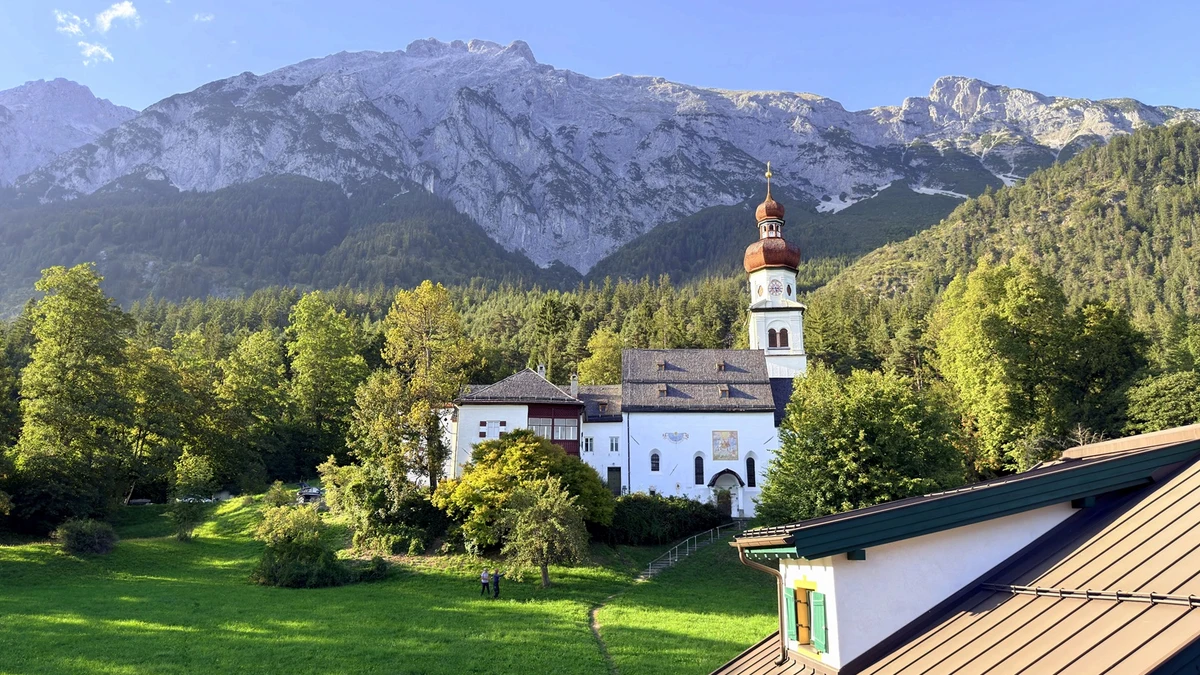
Hall-Wattens, a district in the Austrian state of Tyrol, combines medieval towns, alpine forests and Michelin-starred cooking built on centuries of salt and silver mining. Tyrol is often called the heart of the Alps, and the area around Hall and Wattens shows why, with mountains that have shaped the region's history, economy and food for centuries.
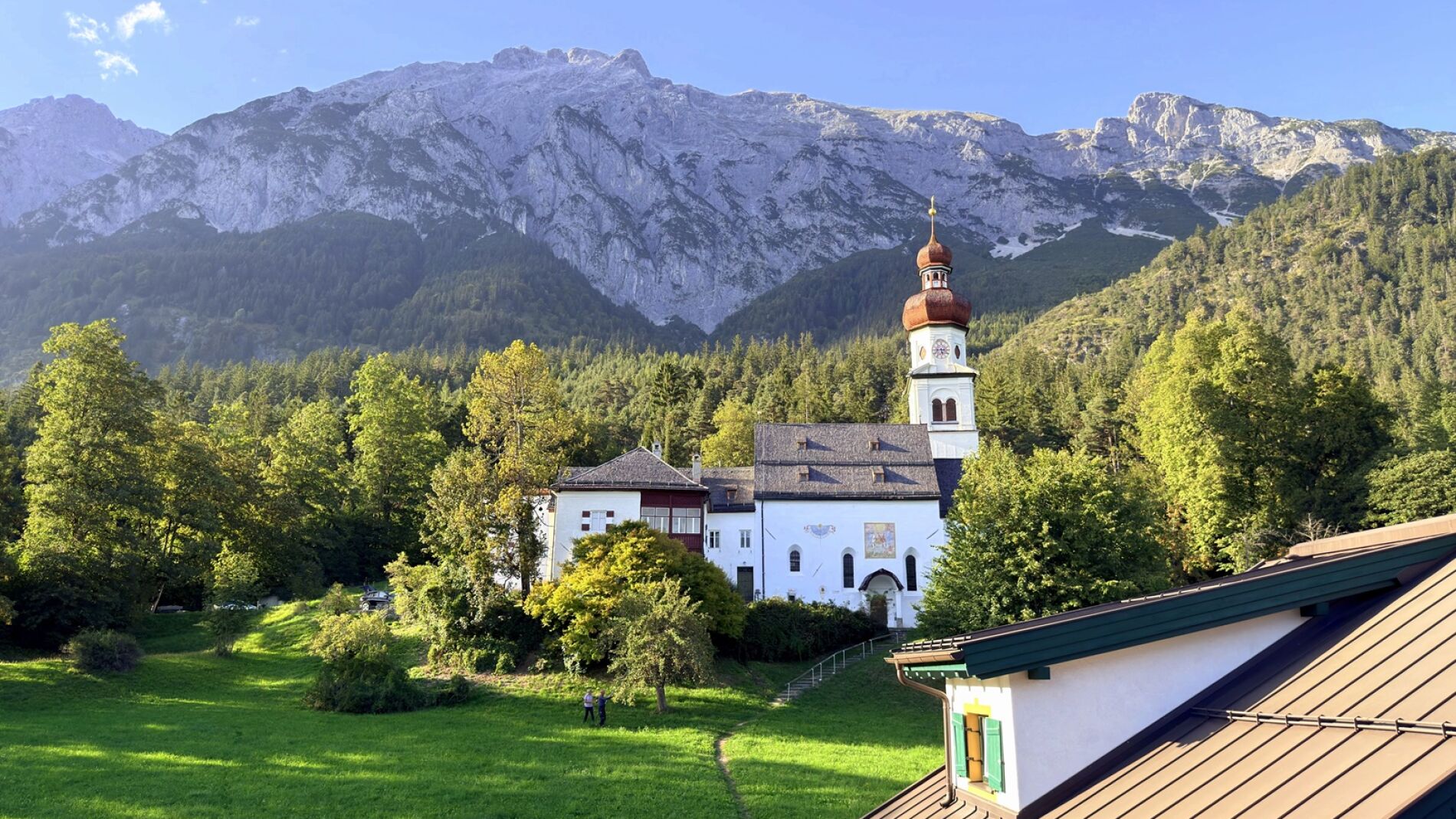
Between 200 and 300 million years ago, ancient seas covered this part of Europe and left behind large deposits of salt. Millions of years later, the movement of tectonic plates that raised the Alps pushed those deposits of salt and clay into the upper layers of the mountains, a resource that would go on to define Hall's economic fortunes for centuries.
A convenient base for exploring the region is the Speckbacher Hof hotel in Gnadenwald, set among forest and fields with large rooms, a wellness area and its own small lake. From there, visitors can easily combine mountains, heritage and gastronomy.
A city built on salt and silver
Hall in Tirol was first documented in 1256 and officially became a town in 1303. Its name comes from the medieval term "hal," used for salt works. From the 13th century, salt drawn from the Halltal valley was carried to the town along wooden pipelines and processed there before being sent on to markets across Europe.
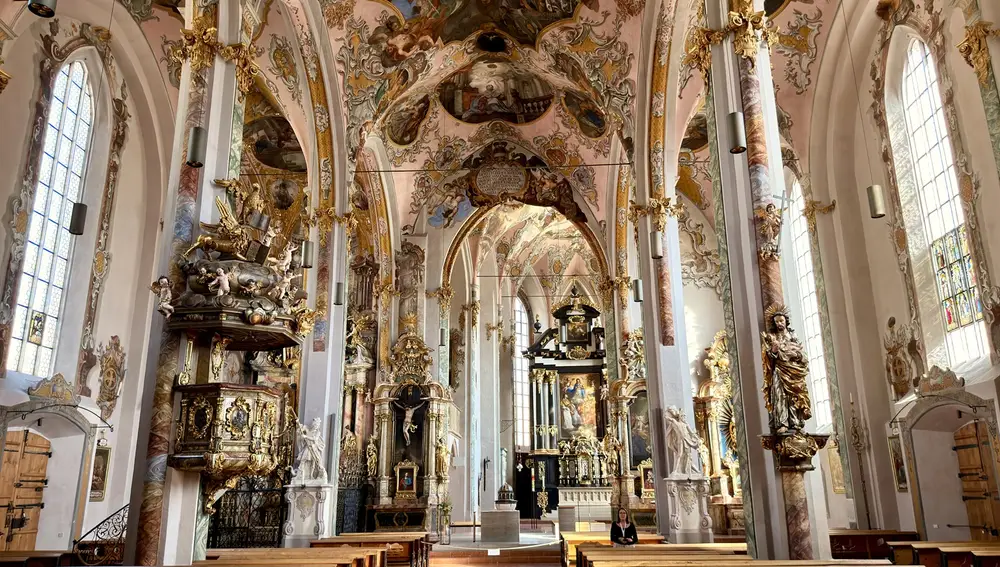
The town's position on the Inn River boosted trade and made Hall one of the main economic centres of northern Tyrol. That wealth is still visible in its old town, where historic facades and narrow streets lead to the Oberer Stadtplatz, or Upper Square, home to the town hall and St Nicholas Church.
Hall's story did not end with salt. The discovery of major silver deposits in Tyrol brought a new wave of prosperity. In 1477 the princely mint moved from Merano to Hall, and in 1486 the town struck the Guldiner, a large silver coin regarded as a forerunner of the thaler, the coin whose name eventually gave rise to the word "dollar." Silver from the nearby mines of Schwaz supplied the metal for those large issues.
That is why a visit to Hasegg Castle, the Mint Tower and the Coin Museum offers more than a look at old coins. It is a chance to see a town that was once at the forefront of European coinage and, by the 16th century, had introduced mechanical minting systems. From the top of the tower, Hall's medieval rooftops stretch out toward the Inn valley and the Karwendel mountains.
The other side of that prosperity lies underground. The Mining Museum, in the heart of the old town, recreates a Halltal gallery with tools, minerals, shafts and even a slide, giving visitors a sense of the work that sustained the salt economy for generations.
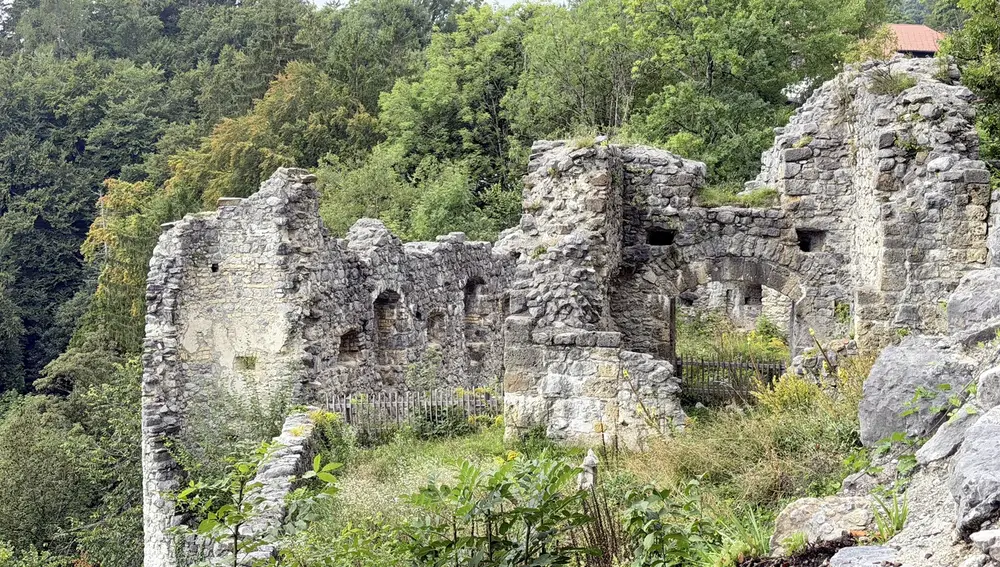
The region's religious history sits a short distance away in Absam, where the Marienbasilika became a pilgrimage site after, according to local tradition, an image of the Virgin appeared in 1797 in the window of a house. In Thaur, the ruins of a castle and the small Romedikirchl chapel look out over the Inn valley between forest and mountain.
Walking through the heart of the Alps
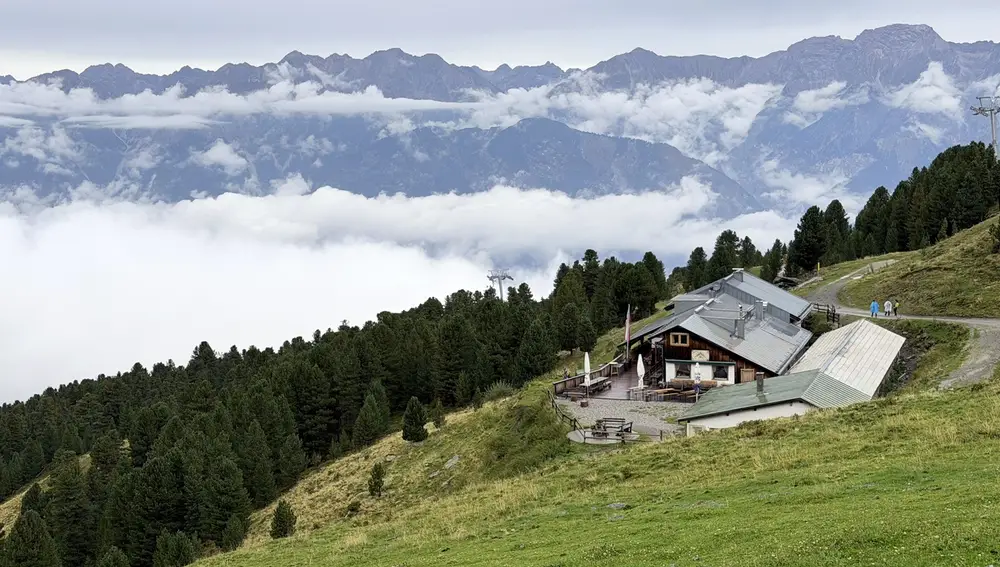
In Hall-Wattens, the best way to understand Tyrol is to put on hiking boots. From Patsch, the Patscherkofelbahn cable car runs up to the start of the Zirbenweg, the Stone Pine Trail, one of the routes that best captures Austria's alpine scenery.
The walk covers about seven kilometres and takes roughly two and a half hours, much of it above 2,000 metres. The trail crosses one of Europe's largest stone pine forests, with constant views over the Inn valley and the Karwendel range.
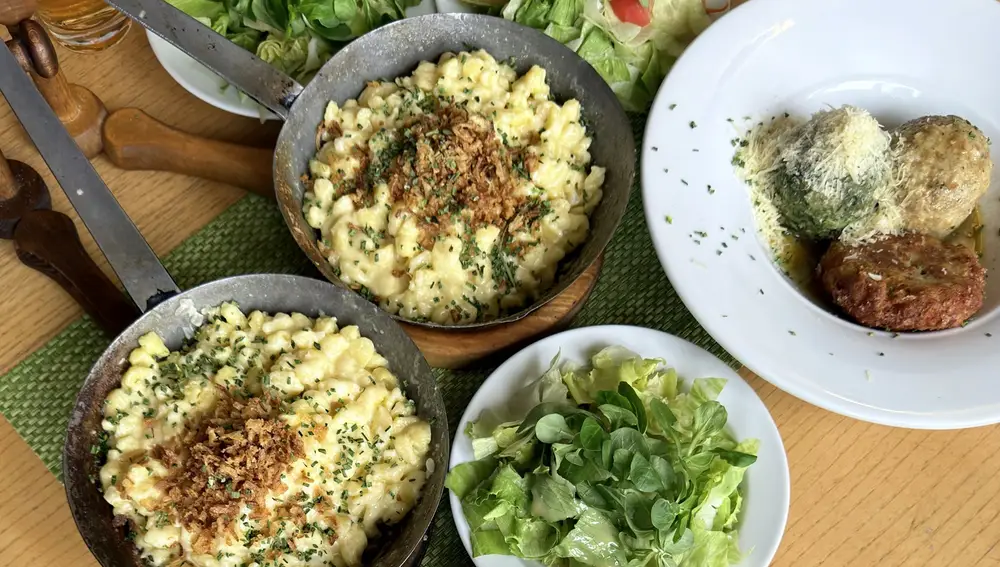
The route ends at the Tulfeinalm, where the mountain is also enjoyed around a table. At this altitude, hearty dishes such as Tiroler Käsespätzle, small pasta pieces covered in melted cheese and crispy onion, or Kaspressknödel, made from bread and cheese, make sense of the setting. Nearby lies the Zirbensee, a small lake with its own circular path.
Nature can also be explored more slowly through Nature Watch, a guided experience in the Halltal that teaches visitors to read the landscape differently, from the whistle of a marmot to a chamois spotted among the rock faces or an eagle in flight, alongside edelweiss, gentians and other alpine flowers.
A walk between Hinterhornalm and Walderalm, inside the Karwendel Nature Park, shows a quieter side of Tyrol. The Walderalm, at 1,501 metres, combines scenery, mountain cooking and a sense of isolation that has earned it a reputation as one of the region's "places of power."
In Wattens, the mountains give way for a few hours to a different world. Swarovski's Crystal Worlds bring together 18 Chambers of Wonder where crystal is turned into art, light and design. More a sensory journey than a conventional museum, the attraction continues outdoors in gardens that include installations such as the Crystal Cloud.
From alpine huts to Michelin stars
Tyrolean cooking is closely tied to the mountains and to a historic need for simple, energy-rich dishes made from local ingredients. Alongside Käsespätzle and Kaspressknödel are Schlutzkrapfen, small pasta half-moons usually filled with spinach and ricotta, and Tiroler Speck, a cured and smoked meat found on many tables in the region. For dessert, few dishes are as recognisable as Kaiserschmarrn, a thick, fluffy pancake served in pieces with powdered sugar and fruit compote.
In Wattens, the Gasthaus Goldener Adler keeps that tradition alive with cooking built mainly around regional produce. But Hall-Wattens also shows that Tyrol can reach into fine dining.
In the centre of Hall, the Schwarzer Adler serves French-based cooking with Asian influences, where ingredients, spices and texture all share the spotlight. Its two Michelin stars put the small town on the map for travellers who plan trips around notable restaurants.
The appeal of Hall-Wattens lies in those contrasts. A single trip can take in a town that made its fortune from salt and silver, a tower linked to the history of European currency, a walk above 2,000 metres, and both traditional cooking and a fine-dining table.