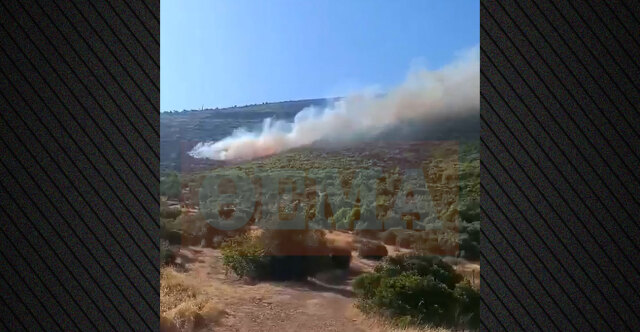
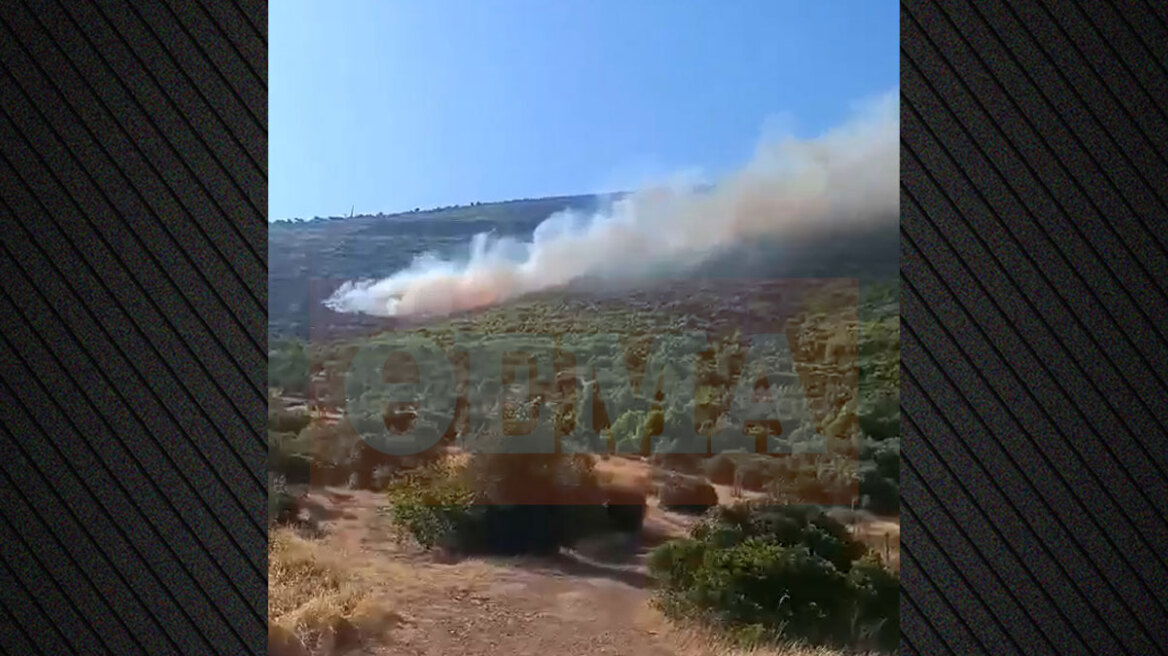
Greek fire investigators have arrested two people over the destructive wildfire that broke out in Boeotia and quickly spread out of control into Attica, after documentary video captured the blaze's first moments at its precise point of origin.
The Fire Service's Arson Investigation Directorate, known by its Greek acronym DAEE, concluded after collecting extensive evidence that the fire was started by sparks from overhead power lines carrying electricity from wind turbines to the main grid. Investigators determined that the fire was not caused by the turbines themselves but by the transmission network built by a subcontractor to move the generated power to the central electricity supply system.
Two people were arrested following the investigation, carried out under prosecutorial oversight. One, an electrical engineer, had signed the project study and held supervisory responsibility. The other, a contractor, had been responsible for constructing the power transmission network. A third person is also being sought by authorities.
All three, including the owner of the wind farm company, are named in a case file on charges of arson with possible intent, classified as a felony. The company owner was sought under the in flagrante delicto procedure but was not located.
A warning sign one month earlier
A significant detail to emerge from the investigation is that a fire had broken out at almost exactly the same location roughly a month before, on June 27, just 100 metres from the recent disaster's ground zero, in the area of Agios Vasileios and Kalamakin in Boeotia. That earlier fire was brought under control quickly because no strong winds were blowing in the area at the time.
Sources familiar with the case said there are serious indications that the overhead transmission network had been built with technical flaws, a factor now being examined as part of the preliminary inquiry. Those same sources described the line's construction as problematic and said it appears directly linked to the outbreak of the fire.
According to testimony available to the authorities, the project owner appeared deeply troubled and was complaining about events following the June incident. Investigators noted that, if confirmed, that detail could carry significant weight as the case develops.
What investigators must now determine
The inquiry must now establish whether warning signs went unheeded after the June fire, whether the required technical checks were carried out on the line before the more recent and far larger blaze, and whether the construction of the network met the required safety specifications.