Tourist numbers in Dagestan, Russia's southernmost and most ethnically diverse region, reached two million people in 2025, according to the press service of the republic's head. That is more than double the 850,000 visitors recorded in 2020.

The republic, on the Caspian Sea between the sea and the Caucasus Mountains, has become one of the most visible destinations for domestic tourism in Russia in recent years, offering visitors everything from the ancient walls of Derbent to a reservoir built over a flooded village.
Getting there and when to go
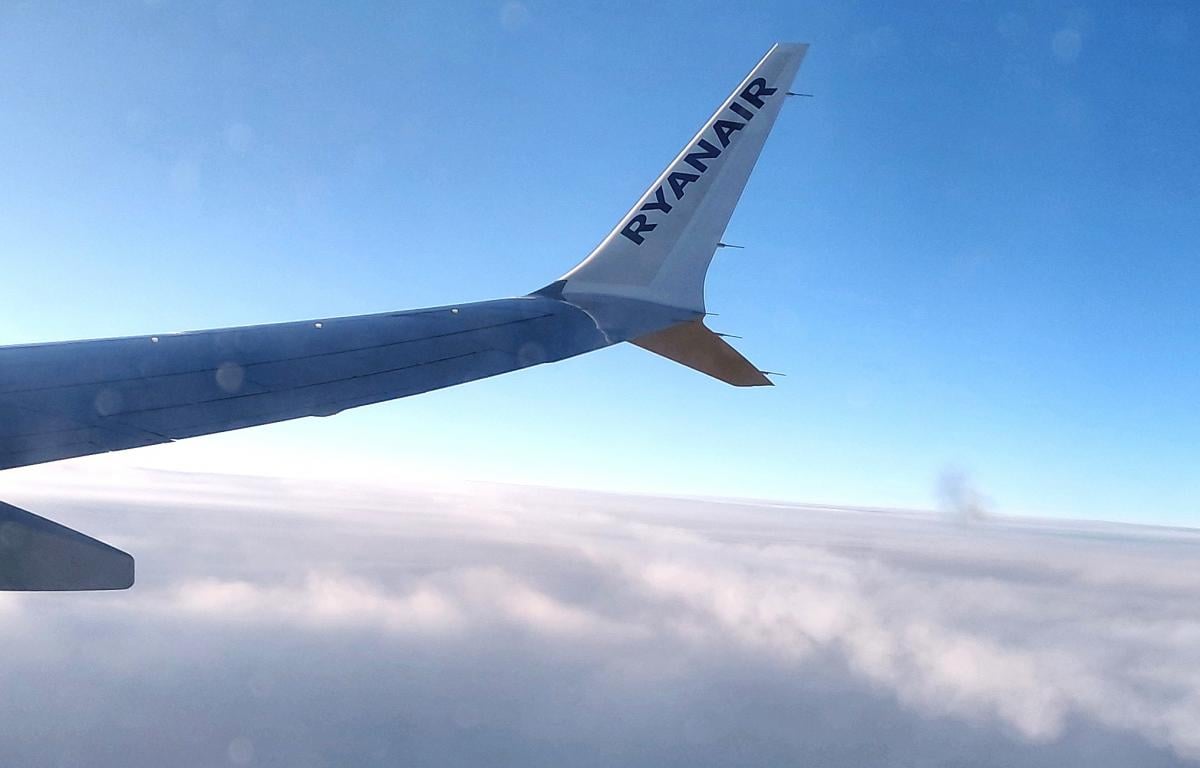
Direct flights from Moscow reach Makhachkala airport in about three hours. One-way tickets in autumn 2026 start from 3,700 rubles, with round trips available from 11,600 rubles, making the trip cheaper than flying to Turkey during its velvet season.
September brings average coastal temperatures of around 20 degrees Celsius, warming to about 23 during the day and cooling at night. Mountain areas are colder still, especially in the evening, so visitors are advised to pack a jacket.
Tourist Yulia Khazanova described feeling a sense of relaxation mixed with curiosity as she left the gray concrete and bustle of Moscow behind, saying the mountains hanging in haze over the city were the first thing that caught her eye. A Makhachkala resident named Rasul explained that unusual multi-story additions to local houses date to the 1990s, when families with nowhere else to go built extensions so their children would have a roof over their heads.
Mountain villages and hand-woven carpets

A single trip to Dagestan can combine time on the Caspian coast with visits to mountain villages, where residents still weave carpets by hand using dyes made from plants, including olive tones from wormwood and deep red from madder root.
Moscow tourist Polina named the high-mountain village of Kurush, surrounded by the Bazardyuzu, Shalbuzdag and Yarydag peaks, as the most beautiful place she visited, comparing the ridges to the Dolomites. She described approaching through fog and low clouds, with sheep grazing on green hills under dramatic sunrises and sunsets, saying she could hardly believe she was still in Russia.
Derbent and the Naryn-Kala fortress

Derbent greets visitors with winding roads, an ancient cemetery and the Naryn-Kala fortress overlooking the Caspian Sea and the narrow strip of land between the water and the mountains, a position that made the city strategically important for centuries.
The fortress dates to the sixth century under Sasanian Persia and once formed part of a huge defensive system, with two parallel walls running down to the sea, one of which survives almost intact. Inside were a ruler's palace, baths, storehouses and underground reservoirs meant to withstand a siege. Local guides say the fortress fell for the first time after enemies of a khan discovered its springs and poisoned them with sheep's blood, making the water undrinkable.
Khazanova said standing at a wall more than 1,500 years old, which Peter the Great once passed, made her want to return, noting that her guide described ongoing archaeological digs promising further discoveries. Archaeologists are still debating the purpose of a cross-domed structure emerging from the ground inside the fortress, unsure whether it was an early Christian temple or a water reservoir.
Guide Katiba Talibova said the citadel was named after a khan's favorite wife, Naryn, meaning "graceful" or "tender" in Persian. She shows visitors the old gates, walls and viewing platforms overlooking the mountains on one side and the Caspian on the other, with Derbent's dense, narrow streets in between. Naryn-Kala, together with Derbent's Old City and other fortifications, joined the UNESCO World Heritage list in 2003. Talibova jokes that spring water still flowing through channels there is safe, even rejuvenating, to drink.
Derbent was named Russia's most tolerant city in 2006, and Islam, Christianity and Judaism still coexist there peacefully. Tourist Alexandra recommended the historic center, the pedestrian Street of Happy People, Stalsky Park and the Derbent Carpet and Applied Arts Museum, where craftswomen demonstrate centuries-old weaving and pottery techniques.

Khazanova called the Street of Happy People magical, saying time seemed to slow as she walked past a fountain square flanked by a white lighthouse on one side and mountains on the other, under a spectacular sunset sky.
Sulak Canyon and a flooded village

The route north from Derbent turns toward the mountains and the Sulak River, home to one of Dagestan's most popular natural attractions, Sulak Canyon. Much of the turquoise water tourists see from boats is actually the Chirkey reservoir, an artificial lake created in the second half of the 20th century, and local caves are also man-made.
The canyon itself stretches about 53 kilometers, with a height difference of up to 1,900 meters at its deepest points. The Chirkey hydroelectric station, with an arch dam more than 230 meters high, began operating in 1974, creating the reservoir behind it.

The old village of Chirkey was flooded, and its residents were resettled higher up on a plateau. Around 3,000 hectares of homes, roads, fields and farmland remain underwater. The Chirkey station now offers organized tours, and a complex called Glavryba, with a hotel, restaurants and entertainment, has grown up near the canyon. Tourist Alexandra said visitors can cross a suspension bridge, zip-line over the gorge and ride speedboats, calling it a good spot for thrill-seekers.
Khunzakh plateau and the Tobot waterfall

Beyond Sulak, the road climbs to the Khunzakh plateau, about two kilometers above sea level, where green fields surround the calm Tobot River. At the plateau's edge, the river plunges over a 70-meter cliff, forming a waterfall.

Khunzakh was for centuries a center of the Avar world and the residence of Avar khans, and a Russian fortress built there during the 19th-century Caucasian War still stands. Mountain gorges and hard-to-reach plateaus long isolated local settlements from one another, contributing to Dagestan's cultural and linguistic diversity. Avars, Dargins, Kumyks, Lezgins, Laks, Tabasarans and other peoples live in the republic, and their languages, alongside Russian, hold official status in the Republic of Dagestan.
A table that reflects many peoples

Dagestan's diversity shows clearly at the dinner table, particularly in khinkal, a dish with no single recipe. Avar khinkal uses large, fluffy pieces of dough, while the Lak version uses much less dough. Dargin khinkal is often made from puff or yeast dough with added herbs, and Kumyks and Lezgins have their own variations. It is usually served with chudu, a thin flatbread filled with herbs or cottage cheese.
Kurze, small dumplings with a braided pinch, come in more than a hundred filling varieties, most commonly meat, cottage cheese, egg or herbs. Khazanova said she expected ordinary dumplings but instead got juicy little "boats" that tasted very good. Urbech, a thick paste made from ground seeds or nuts, is another local specialty, eaten as a sweet or added to other dishes.
Recommended stops include the Restaurant-Museum on Lermontov Street in Makhachkala, where food is prepared on an open kitchen in front of diners among valuable exhibits, and Biblioteka in Derbent, where bookshelves sit alongside dining tables and every book can be bought or read.

Near Sulak Canyon, the restaurant Ayva, named after a quince tree that once grew there, serves a modern take on fish khinkal. Khazanova said Biblioteka won on atmosphere and its caramelized eggplant, the Lermontov restaurant felt beautiful and heartfelt, and Ayva's stylish interior and presentation reminded her of a fashionable big-city restaurant.
From the mountains to the coast

The route eventually returns to the Caspian coast at Kaspiysk, a young city with a Soviet industrial history that grew in the 1930s around the Dvigatelstroy plant, later known as Dagdizel, and formally became a city under its current name in 1947.
Kaspiysk today functions mainly as a beach destination. Its city beach is a popular spot, and offshore stands one of the region's most recognizable landmarks, the abandoned Workshop No. 8 of the Dagdizel plant, sometimes compared to France's Fort Boyard because it sits directly in the water.
Growing pains and spring floods
Infrastructure has not always kept pace with the growing number of visitors, and the republic still faces basic tasks such as road repairs, improving public spaces and organizing garbage collection, which the source says means Dagestan cannot yet fully replace Turkey and Egypt as a destination.
In spring 2026, extreme rainfall in late March and early April brought severe flooding to the republic, and thousands of people were evacuated from dangerous areas. By summer, the main tourist routes had been restored and reopened, though work continues in some areas.
A new coastal resort takes shape

Dagestan's largest tourism project, the Caspian Coastal Cluster, is under construction near Derbent, covering about 228 hectares and six kilometers of coastline with dozens of planned hotels, new roads, utility networks, public spaces and a large multifunctional center. The first facilities are planned to open in 2027.
Construction head Yevgeny Kurguzov said the site retains its original pristine condition, calling the untouched shore and clean sea its main advantage and saying the water there felt cleaner to him than in Derbent or Makhachkala. The project featured as a theme at the Narma contemporary art festival in Derbent in 2026.
Khazanova called Dagestani hospitality an art in itself, praising the food and saying she hoped to learn to make the region's crisp caramelized eggplant and flatbreads, though she doubts she can replicate them without Dagestani flour and hands. She said she wants to return with her family, especially to Derbent and to Sulak Canyon, to drink coffee in a cliffside cafe and share the view with the people she loves.
Polina suggested that travelers seeking less crowded sites look into guided tours from operators such as Klub Gidov or Leki Travel, saying Leki Travel designs and personally scouts its own routes and vouching for the quality of its guides after touring with them herself.