

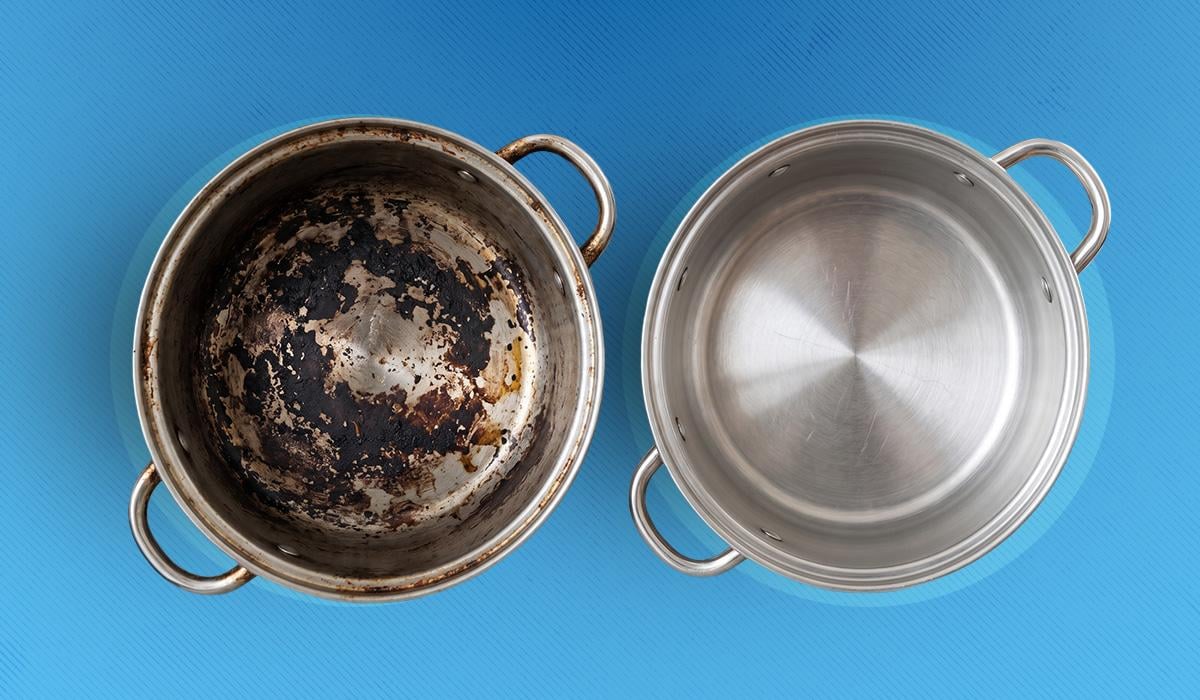
Burnt metal pots can be cleared of heavy carbon deposits by boiling baking soda and water on a stove, according to domestic cleaning guidance.
Cooks should scatter two to four tablespoons of baking soda across the base depending on pot size, add water to cover the grime, and place the cookware over medium heat. Once boiling, the solution must simmer for 30 minutes before being taken off the burner to cool to a temperature safe for hands.
The alkaline soda penetrates the charred crust and dissolves it from within through a chemical reaction. The burnt residue breaks down into loose black flakes that detach easily from the walls, allowing users to wipe the dirt away with a standard sponge before washing the vessel with dish soap.
Boiling method for stainless steel
The method works on most cookware and is especially effective for restoring scorched stainless steel pots. However, the advice warns that cooks should not use baking soda on nonstick cookware, as the abrasive powder can scratch delicate coatings.
Stainless steel is a durable alloy built to resist corrosion and high heat, allowing it to withstand boiling and alkaline treatments. Nonstick cookware relies on thin fluoropolymer layers that can degrade under abrasive friction, compromising their food release properties.
Vinegar and baking soda for stubborn stains
For older burnt deposits that resist standard simmering, the guidance recommends boiling a mixture of water and vinegar in equal parts. Cooks should boil the blend for several minutes, remove the pan from the heat, and stir in one tablespoon of baking soda.
Adding soda triggers an immediate foaming reaction, producing bubbles that help dislodge stubborn deposits. Acetic acid in vinegar reacts with alkaline sodium bicarbonate to produce carbon dioxide gas, creating an effervescent lifting action that loosens baked on grime before a final sponge wipe.
To prevent severe buildup in the future, the guidance recommends soaking scorched cookware in water immediately after cooking. Burnt deposits form when food blackens as moisture evaporates, and leaving grime on the surface makes it progressively harder to remove.


