

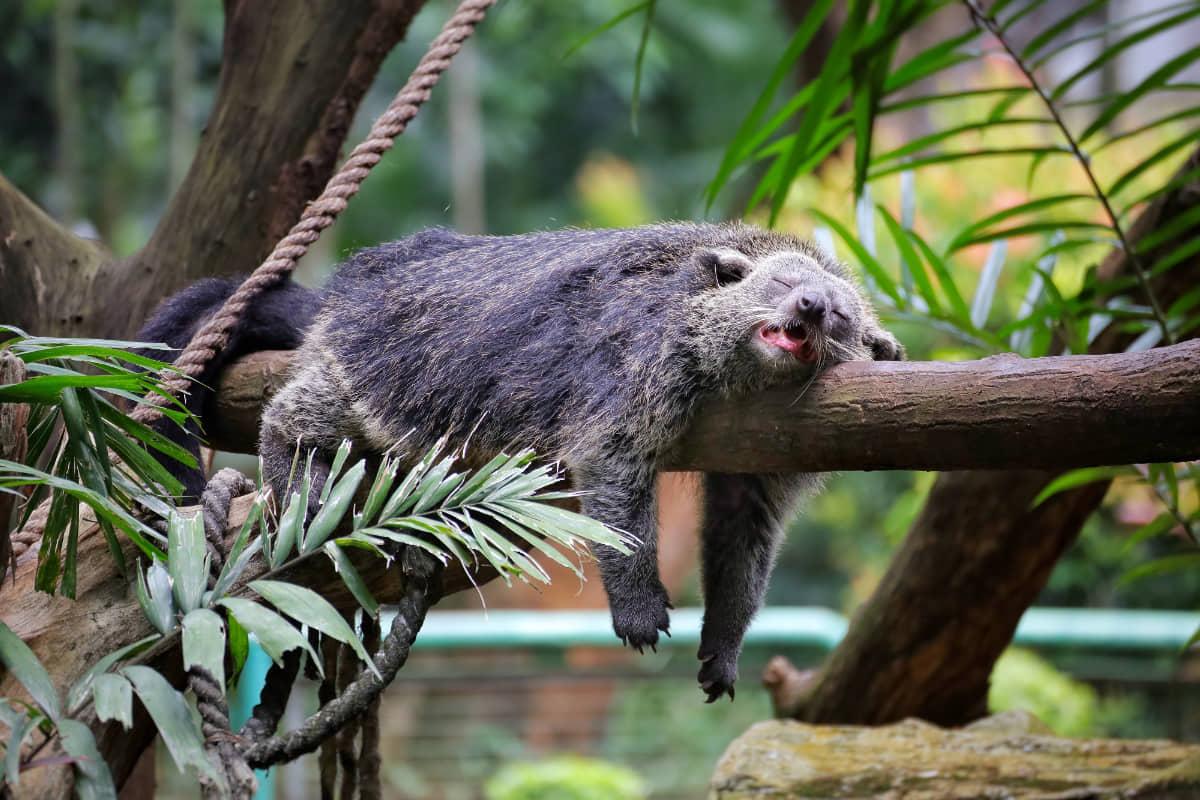
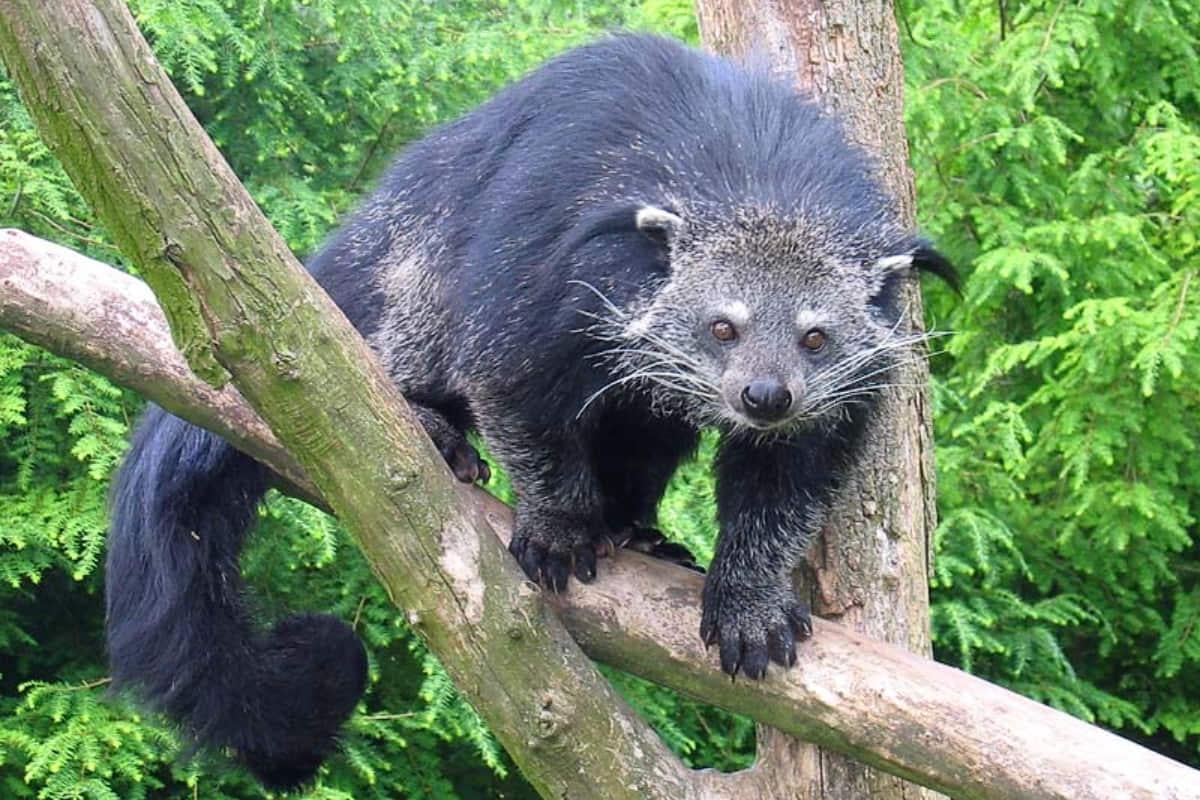
A strange-looking animal called the binturong is winning over the internet with a look often compared to a raccoon without a mask, according to the outlet Good. Despite its nickname "bearcat," the animal is not related to bears or cats and is the only member of its genus.
Binturongs have an unusual trait: females are larger than males. Females weigh about 22 kilograms on average, while males weigh only 9 kilograms. This kind of size difference is rare in nature but not unique, also seen in baleen whales, spotted hyenas and orb-weaving spiders.
Another unusual feature is the animal's prehensile tail, which it uses to grip branches like a fifth limb. Binturongs are one of only two predators in the world with such a tail, the other being the kinkajou, also known as the "honey bear."
Binturongs are best known for smelling like fresh popcorn. Scientists traced the cause to a chemical compound called 2-acetyl-1-pyrroline, found in the animal's urine and also released during popcorn cooking.
Habitat and declining numbers
Binturongs live in the tropical forests of South and Southeast Asia, including Indonesia, Malaysia and Thailand. They eat fish, rodents, birds, worms and insects, and help forests regrow by spreading plant seeds.
Over the past 30 years, however, their population has declined significantly due to hunting for the exotic animal trade. The conservation group Flora & Fauna says the binturong's unusual looks and amusing temperament make it a desirable target for poachers, who set traps directly in the forest.
To curb the trend, the organization has for decades supplied forest rangers with equipment, from new boots to raincoats and backpacks for long patrols. A similar approach previously proved effective: the International Gorilla Conservation Programme helped mountain gorilla numbers recover from a few hundred to more than a thousand in the 1990s.
Twin births in San Diego
In March, San Diego Zoo welcomed new arrivals for the first time in 26 years: two binturong babies, nicknamed "binlets." The twin boys, named Pulong and Tau, were born to parents Nettle and Garrett. The cubs are already exploring trees in their enclosure and showing typical species behavior, snorting, purring and giggling when content, and "screaming like cats" when annoyed.


