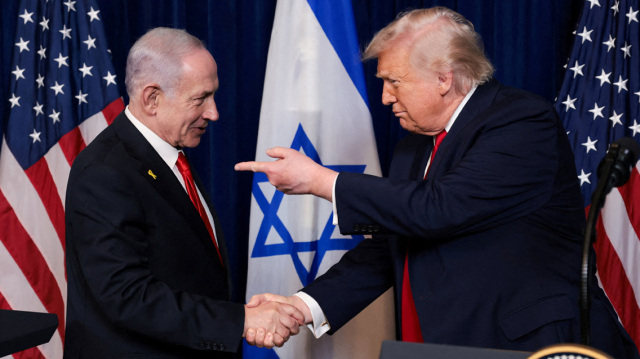
Israeli Prime Minister Benjamin Netanyahu has openly distanced himself from Donald Trump by rejecting a US 15-point roadmap for the Gaza Strip. The proposal has been accepted by Hamas, but Netanyahu insists that Israeli troops will not pull out without a genuine and complete disarmament of the Palestinian movement.
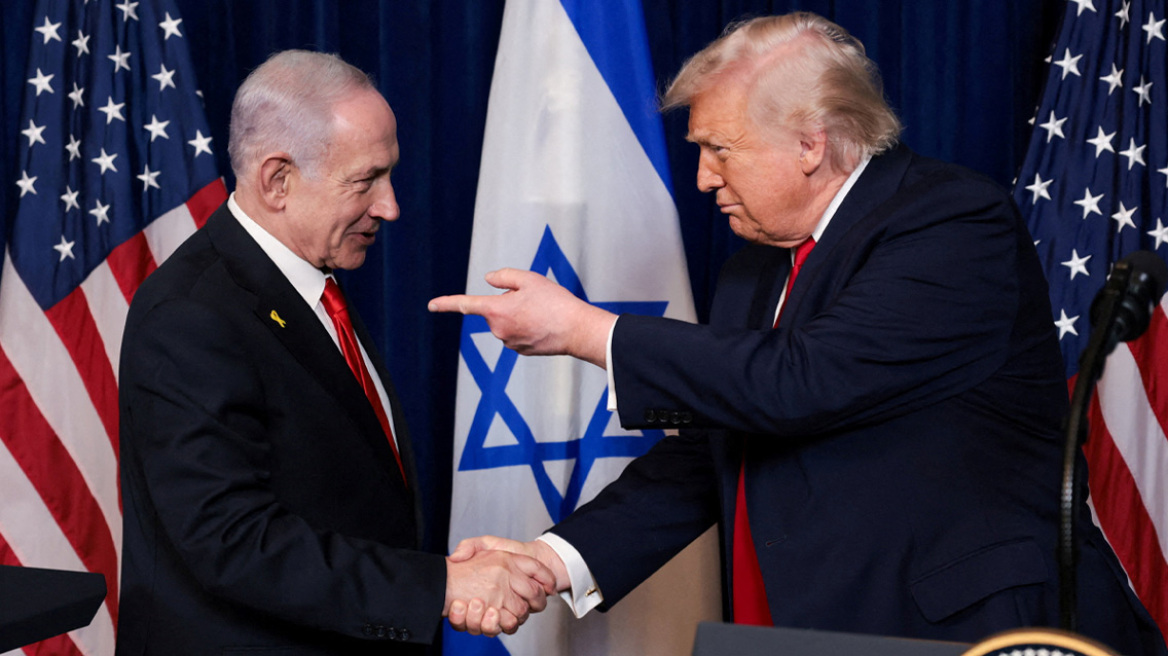
Netanyahu had previously raised concerns over the document, which is designed to pave the way for the second phase of the Trump plan. He established the full disarmament of Hamas as an absolute requirement before any Israeli army withdrawal from Gaza.
During a cabinet meeting on Sunday, the prime minister reinforced his stance. He told ministers that the army would make no withdrawal as long as Hamas was not truly disarmed, adding that Israel did not accept the 15-point document.

Disagreements and Strained Relations With Washington
Despite his public rejection of the American proposal, Netanyahu described Trump as Israel's greatest friend in the White House. However, he clarified that his administration would not automatically endorse every idea originating from Washington.
Netanyahu noted that Americans offer various ideas, some of which are acceptable to Israel while others are not. He emphasized that Israeli leadership knows how to stand firm and defend its positions on such matters.

Tensions between the two leaders had surfaced earlier in April during ceasefire negotiations between the US and Iran. At that time, Trump strongly criticized his Israeli counterpart and accused him of creating obstacles to diplomatic progress.
Nickolay Mladenov, high representative of the US president's Peace Council for Gaza, offered a contrasting view on the proposal. The Bulgarian diplomat told Israeli Channel 12 that the American roadmap represents the only path forward to prevent a recurrence of the October 7, 2023 attack.

Mladenov met with Netanyahu on Monday and sought to address Israeli security concerns. He stated that the Israeli military would only withdraw following the complete disarmament of Hamas.
He added that discussions with Israel are ongoing and expressed hope for a positive resolution for all parties. He maintained that if genuine disarmament takes place, Israel will proceed with its withdrawal.

Hamas Position and Domestic Political Pressure
Hamas, having formally accepted the 15-point text, has urged Washington to exert pressure on the Israeli government to implement the roadmap. The Palestinian group requested that the US ensure the agreement is put into effect without delay.
Bassem Naim, a member of the Hamas political bureau, told Agence France-Presse that Netanyahu and his cabinet must stick to the roadmap. He urged Israeli officials not to block the peace process for internal political or electoral gains.

The Peace Council unveiled the 15-point roadmap in late July, triggering immediate pushback from far-right factions within Israel's ruling coalition. Far-right politicians swiftly rejected the initiative.
The policy dispute unfolds ahead of Israel's parliamentary elections set for October 27. These elections will be the first national vote since the October 7, 2023 Hamas attack on southern Israel, which sparked the ongoing war in Gaza.

Netanyahu, the longest-serving prime minister in modern Israeli history, faces uncertain electoral prospects as opinion polls show his victory is not guaranteed. Public opinion surveys also show that the US plan remains unpopular among a large segment of the Israeli right-wing electorate.
His far-right coalition partners continue to demand that the government abandon the American framework entirely. Netanyahu remains under heavy pressure from these political allies to maintain a hardline stance.

Disarmament Mechanics and Governance Issues
Under the public version of the plan released by Trump's Peace Council, the disarmament of Hamas is directly tied to the phased withdrawal of Israeli forces from controlled zones across Gaza. The timeline depends on verified weapons turnover.
The document mandates that the collection and storage of Hamas's arsenal will be overseen by the National Committee for the Governance of Gaza. This body is a Palestinian technocratic committee designated to manage daily administrative affairs during the transition period.

However, members of the technocratic committee remain stranded in Egypt because Israel refuses to permit their entry into the Gaza Strip. This restriction has created an operational bottleneck for implementing the plan.
Hamas has long maintained that disarmament must occur gradually rather than through an immediate, unilateral surrender of all weaponry. The group has also explicitly stated that it will not hand over arms directly to Israeli forces.
Conversely, the Israeli government insists on the total destruction of the organization's military capability. In discussions with American negotiators, Netanyahu reiterated that Hamas must give up heavy weapons, lighter firearms, and all other armaments, asserting that Israel will never accept virtual disarmament.
Regional Mediation and Military Operations
A fragile ceasefire has remained in place across the Gaza Strip since October 2025. Regional partners continue efforts to prevent a major breakdown of the truce.

Egypt, serving as a key diplomatic mediator, urged all involved parties on Sunday to honor their commitments. Cairo called on stakeholders to refrain from any actions that could undermine recent diplomatic progress, following talks between Egyptian Foreign Minister Badr Abdelatty and Nickolay Mladenov.
On the ground, the Israeli military appears to have scaled back its operations following last week's announcement regarding Hamas disarmament, though military activity has not stopped completely.
Local Civil Defense reported that Israeli fire wounded a child on Sunday, who was subsequently taken to a hospital in Khan Younis in southern Gaza. Incidents of violence continue to cause civilian casualties.
According to the Gaza Health Ministry, whose casualty data is cited as reliable by the United Nations, at least 1,258 Palestinians have been killed in Israeli military operations in Gaza since October 10, 2025. Official Israeli figures report that during the same period, five Israeli soldiers and one civilian contractor have been killed in the enclave.