Spanish singer and songwriter Antonio Flores, son of flamenco star Lola Flores and guitarist Antonio González, known as "El Pescaílla," would have turned 65 on November 15, 2026. The couple were among the most famous entertainers in twentieth-century Spain. Flores died on May 30, 1995, at the family home known as El Lerele in Alcobendas, near Madrid, from an overdose of barbiturates and alcohol. He was 33.
His death came just fifteen days after that of his mother, Lola Flores, nicknamed "La Faraona," one of Spain's most celebrated flamenco and copla performers. He left behind an eight-year-old daughter, Alba Flores, now an actress known for her role in the Netflix series La Casa de Papel, and a catalogue of songs that included "No dudaría" and "Siete vidas."
A documentary to rediscover her father
Alba Flores revisited her father's life last year in the documentary Flores para Antonio, whose title plays on the family's surname, which means "flowers" in Spanish. She set out to uncover the truth about who her father really was. She had stopped singing after losing him, and behind the cameras she set about recovering her own voice and history, questioning relatives and friends about him for the first time.
Presenting the film at the San Sebastián International Film Festival, one of the most important film events in the Spanish-speaking world, Alba Flores said it had marked a huge turning point in her life, adding that she had never done anything so important for herself and her family. She said everyone involved had discovered a great deal about her father, and about themselves too, leaving them with a far fuller portrait of him.
The documentary brought together her mother, Ana Villa, her aunts Lolita and Rosario Flores, and numerous artists who had known Antonio Flores.

His last television interview
Beyond what others have said about him, Antonio Flores spoke about himself and his family in his final television interview, broadcast just months before his unexpected death. The conversation came the same year he recorded Cosas mías, the album that confirmed him as one of the great voices of Spanish music.
The last time Flores appeared on television was with journalist Nieves Herrero, in an interview recorded on the set of Antena 3's program Cita con la vida on December 21, 1994. Antena 3 is one of Spain's main television networks. Herrero opened by asking whether it felt as though he stripped himself bare through his music, a question that drew laughter from the audience.
Flores replied that he felt completely naked, describing the walk from backstage to the stage as a surge of adrenaline comparable to finding himself naked in front of a party. He said it was overwhelming to have seven thousand pairs of eyes looking only at him.
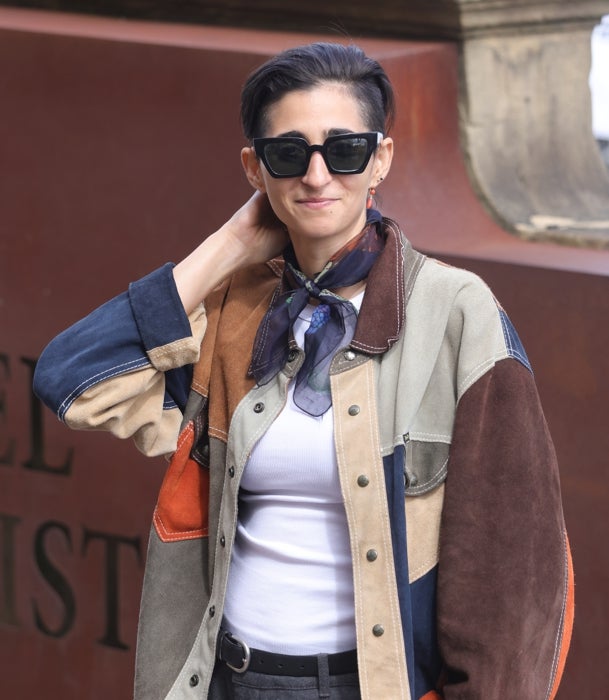
That day he wore a jacket that his daughter Alba later wore to her own press conference at the San Sebastián festival.
Rebellion within the Flores family
Herrero asked Flores whether he considered himself the rebel of the talented Flores clan. He said he wasn't rebellious, but that he was the family member who had evolved the most. As a child, he said, he hadn't wanted to go to church because it bored him, and as an adult he faced other kinds of problems. He said he had always caused problems because he had his own way of thinking, adding that he wasn't claiming it was the absolute truth, only that he didn't like living through certain things he didn't feel.
Burning through seven lives
Herrero also brought up the lyrics of his song "Siete vidas," in which he sang about having already burned through six of his seven lives, and asked whether he felt he had lived at full speed. He said he had lived very fast and had tried to get to know every social class, affording himself the luxury of moving between areas such as Caño Roto and La Moraleja and every kind of society in between, investigating entirely on his own.
Flores admitted that not all of those experiences had been positive, but said he had learned something even from the worst of them. He said the research had sometimes played bad tricks on him but had also led him to conclusions, such as never letting anything control your life, because a person has to manage the tools and feelings in their own life. He said that as soon as someone depends on something, they stop being themselves and become a robot.
Test yourself
How old was Antonio Flores when he died in 1995?
What is the title of the documentary his daughter Alba made about him?
Who conducted Antonio Flores's last television interview?
Where it happened
Madrid, Spain