

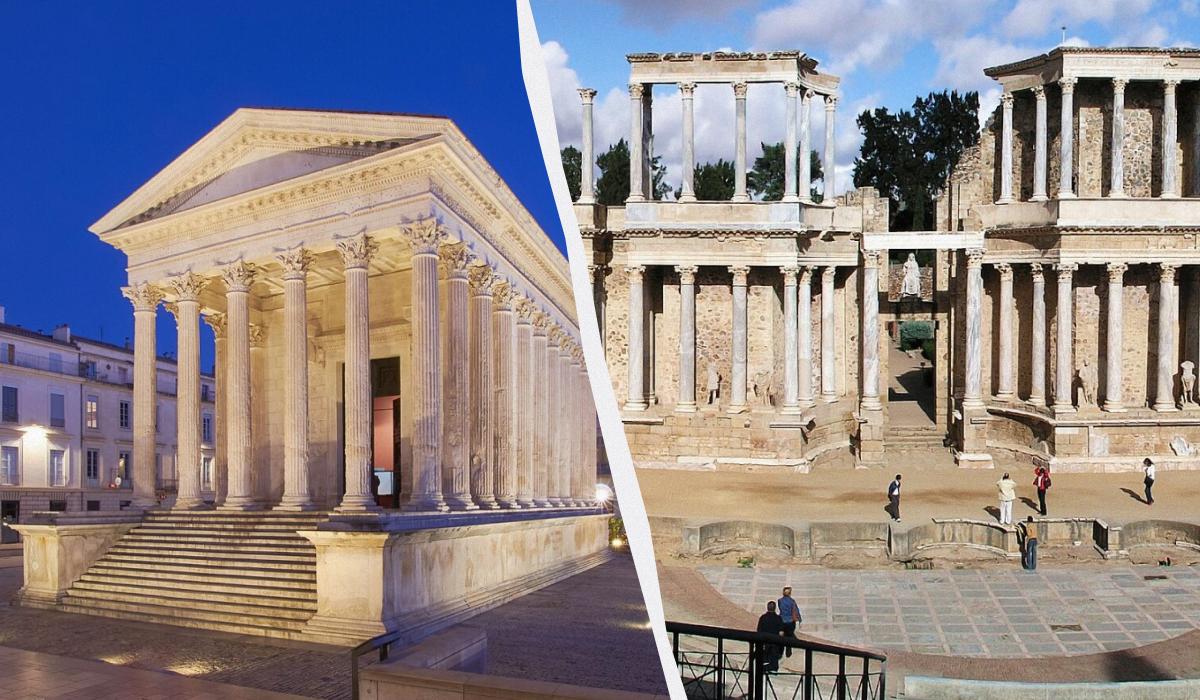
Travel off Path has named four underrated European cities where travelers can see ancient ruins without the crowds that overwhelm Rome and Athens: Nîmes in France, Évora in Portugal, Plovdiv in Bulgaria and Mérida in Spain.
According to the outlet, each of the four destinations holds Roman-era monuments that rival the continent's most famous sites in scale or preservation, yet draw far fewer visitors.
Nîmes, France
Nîmes is described as a dream destination for anyone fascinated by the Roman Empire. The city has a 2,000-year-old arena, an exceptionally well-preserved version of the Colosseum built in the late 1st century, just a few decades after the Colosseum itself opened.
Unlike the Colosseum, the central part of the Nîmes arena is still usable, and world-renowned performers appear there every summer.
Nîmes is also home to the Maison Carrée, an early 1st-century temple that survived almost undamaged. Travel off Path notes that, in terms of preservation, it can rival the Pantheon among ancient Roman temples.
Nearby stands the Pont du Gard, a massive three-tiered aqueduct built by the Romans across the Gardon River, with a pebble beach at its base.
Évora, Portugal
Évora is a compact, mid-sized city at the heart of Portugal's Alentejo region, reachable by train from Lisbon in just 1.5 hours.
Its main attraction is a nearly 2,000-year-old Roman temple, one of the best-preserved ancient Roman monuments in Portugal, still sometimes referred to as the Temple of Diana. Archaeologists link the temple to the imperial cult, possibly to Emperor Augustus, and there is no evidence it was ever dedicated to Diana.
Its monumental granite podium and fluted Corinthian columns still rise in the middle of a living medieval city. Two minutes' walk from the temple stands the cathedral, a Romanesque-Gothic structure built of pink granite, with a Gothic cloister, a high central nave and a rooftop terrace offering views over the city's terracotta roofs.
Plovdiv, Bulgaria
Bulgaria's second-largest city is described as a vast open-air museum, holding Greco-Roman ruins, Byzantine churches, Ottoman mosques and mansions from the Bulgarian National Revival period.
Built on seven hills, much like Rome, Plovdiv is best known for its ancient hillside theatre, with rows of restored marble seating and a reconstructed stage that still hosts performances and concerts.
Another major site is a Roman stadium hidden beneath the city's main street, built in the early 2nd century AD under Emperor Hadrian.
Travel off Path also points to Nebet Tepe, a hill preserving traces of a Chalcolithic settlement and fortifications built and rebuilt by Thracians, Romans, Byzantines and medieval rulers, representing thousands of years of overlapping history.
Mérida, Spain
Tucked into western Spain, closer to Portugal than to Madrid, Mérida was founded in 25 BC under Emperor Augustus to settle veterans of the Cantabrian Wars.
The city holds one of the best-preserved Roman theatres, with a double tier of Corinthian columns rising behind the main stage. Its broad stone seating rows fill again each year during festivals.
Mérida also has the Puente Romano, a half-mile granite bridge spanning the Guadiana River that leads to the Alcazaba, an Islamic fortress built by the Umayyads in 835 using sections of the Roman wall and repurposed Roman-Visigothic masonry.
UNIAN previously reported on the 10 most comfortable cities in the world.


