

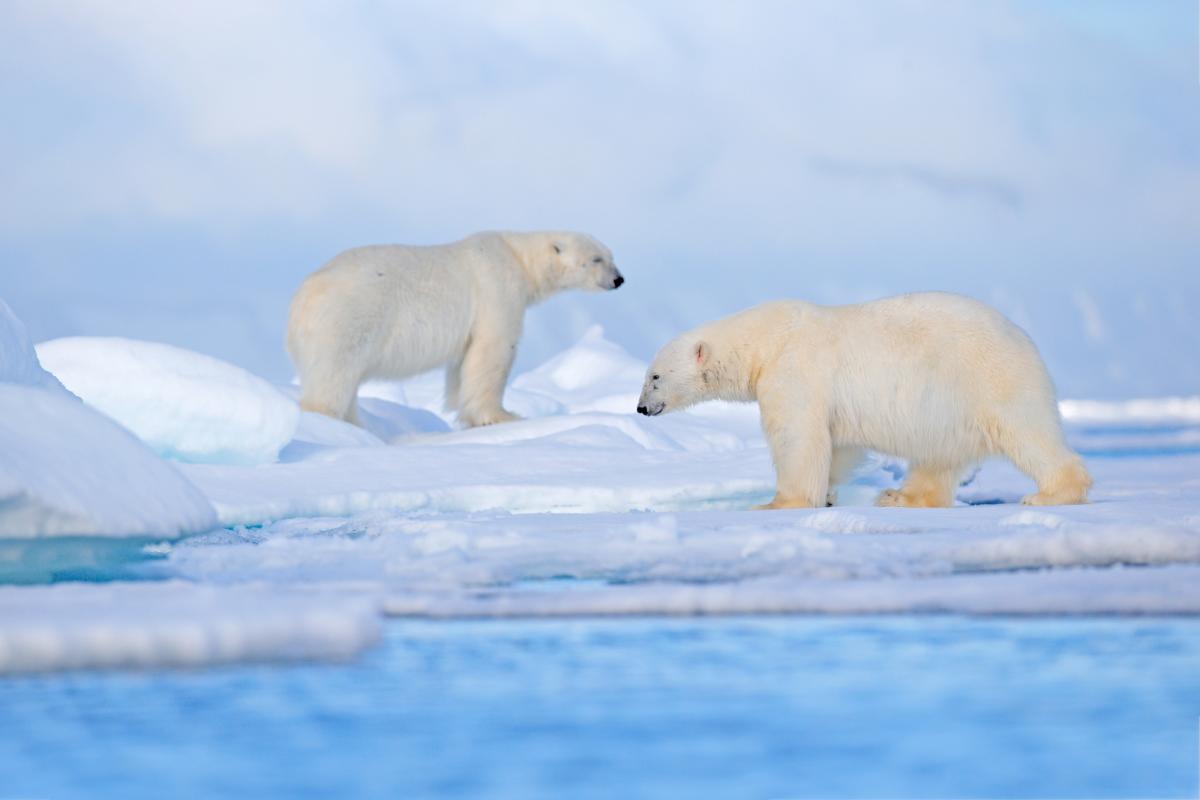
Polar bears cannot be relocated to Antarctica to save them from disappearing Arctic sea ice, according to the publication Discover Wildlife, which warns that such a move would be an ecological disaster rather than a rescue.
Polar bears and penguins are often pictured together as symbols of the same icy world, but the two species live at opposite ends of the planet. Polar bears inhabit the coasts of the Arctic Ocean in the Northern Hemisphere, while penguins live in Antarctica in the south. As Arctic sea ice continues to shrink, some have floated the idea of moving polar bears south to give them a new home. Discover Wildlife said this idea would be catastrophic.
A more varied diet than assumed
The polar bear, known scientifically as Ursus maritimus, is more of an omnivore than commonly believed. Ringed seals remain its main prey, but the predator can also attack reindeer, hunt birds and their eggs, and eat mussels and crabs. Polar bears are also capable of diving to the seabed to feed on seaweed.
At first glance, Antarctica might seem hospitable to the species. The continent has sea ice, and its coastal waters are home to several seal species, including Ross seals, Weddell seals, crabeater seals, leopard seals and elephant seals. Discover Wildlife also pointed to Antarctica's large penguin colonies, which it said could become easy prey for a polar bear.
Discover Wildlife said polar bear behaviour is flexible enough to adapt to somewhat altered circumstances, but that the consequences for Antarctic wildlife would be catastrophic.
No defences against a land predator
It is precisely the polar bear's adaptability that would make its arrival in Antarctica especially dangerous, the publication said. Antarctic animals evolved in the absence of natural land predators and have not developed behaviour for escaping such a threat.
According to the article's author, the polar bear is an exceptionally powerful predator capable of making efficient use of whatever food resources are available. Its introduction could sharply upend the balance of Antarctic ecosystems, leaving animals with no experience of confronting land predators suddenly facing a completely new threat.
Background: Arctic ice loss
Arctic sea ice has been shrinking in recent decades, a trend that has fuelled discussion about the long-term survival of polar bears, which depend on the ice to hunt seals. Discover Wildlife's analysis makes clear that relocating the species to Antarctica is not a viable solution, given the damage it would inflict on an ecosystem with no natural defences against a large land predator.


