Electronics manufacturer TCL has discounted its 75-inch 75RM7L television on Amazon, cutting the price by 40 percent to just over 1,013 euros.
The price reduction lowers the large-format display from its initial launch price of 1,699 euros, saving shoppers nearly 690 euros.
Reporter Benjamín Pelaz detailed the promotion on 11 November 2026, noting that the television differentiates itself from standard retail screens through an unusual backlighting architecture that generates colored light directly behind the panel.
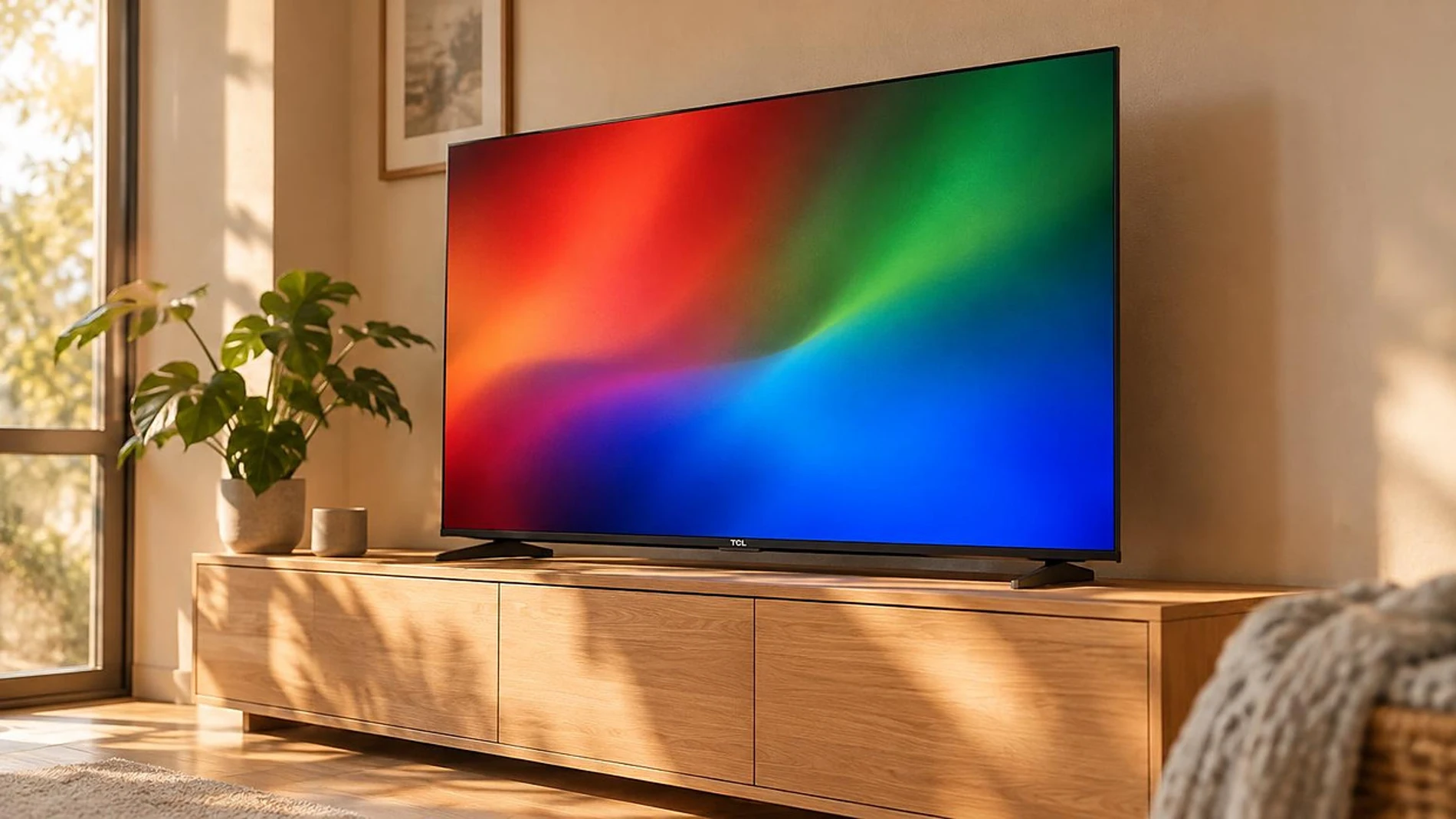
In most traditional LED televisions and standard Mini LED models, backlighting relies on a single white or blue tone. Color is created later in the optical stack, where liquid crystal filters and diffusion layers tint the light before it reaches the viewer.
The 75RM7L reverses that approach. The television uses tiny red, green, and blue diodes in its backlight array, meaning the primary colors originate directly within the light source itself.
RGB Mini LED Backlight Technology
TCL designated this engineering framework as RGB Mini LED. The company highlighted its RGB color control, explaining that illuminating each primary color independently prevents adjacent light from mixing.
The brand marketed the design as a way to curb crosstalk, ensuring cleaner color transitions where contrasting shades meet. Pelaz noted that for home movie viewers, the practical result is a red tone that avoids shifting toward orange and a green tone that avoids looking washed out.
TCL, formally established in Huizhou, China, has grown into one of the world's largest consumer display manufacturers. The company produces its own panels through its display manufacturing division, CSOT, which develops specialised liquid crystal substrates alongside emerging backlight technologies.
The true visual test for this backlight structure arrives during high-contrast scenes, such as a sunset where an orange sky meets a deep blue sea along the horizon without color bleeding across the boundary.
Color Range and Panel Contrast
TCL announced that the 75RM7L covers 100 percent of the BT.2020 color gamut, the widest standard color space referenced in video production.
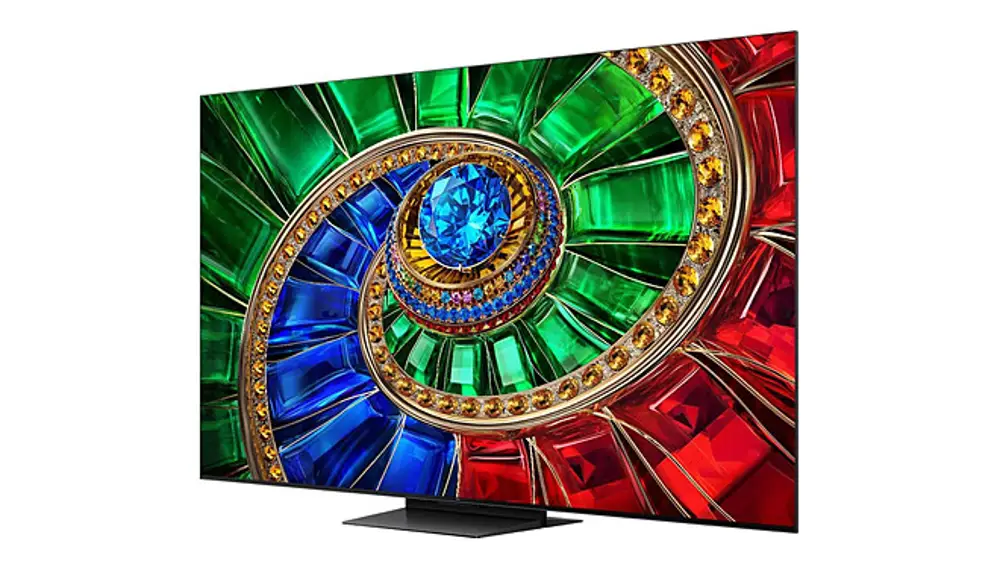
The manufacturer acknowledged that the 100 percent figure is a laboratory measurement. While home viewers do not measure color reproduction with diagnostic equipment, the broader spectrum is designed to appear in high dynamic range films and streaming series.
BT.2020, defined by the International Telecommunication Union for ultra-high-definition broadcasting, encompasses a significantly wider range of visible shades than the older sRGB standard or the DCI-P3 color space used in digital cinema.
Unlike organic light-emitting diode screens, where individual pixels switch off completely to produce absolute black, liquid crystal displays allow a small amount of residual light to pass through.
To compensate, TCL fitted the set with an HVA Pro panel. The brand stated that this panel design delivers higher native contrast, maintaining deeper dark tones while preserving detail across shadowy areas.
Peak Brightness and Gaming Performance
The 75RM7L reaches peak brightness levels of 2,000 nits. TCL stated that this figure refers to maximum highlights, such as the reflection of sunlight off water or car headlights travelling at night.
A nit equals one candela per square metre of luminous intensity. High peak brightness allows high dynamic range imagery to retain impact in bright living rooms with large windows, where glare often overwhelms darker displays.
For video games, the screen features a native variable refresh rate of up to 144 Hz. The variable refresh rate synchronises the television with the output of a connected computer or console, eliminating stutter and screen tearing during rapid movement.
The full 144 Hz rate is utilised primarily by high-end gaming personal computers. Current home video game consoles operate slightly below that threshold, though players still gain smoother gameplay compared to older screens.
Pelaz observed that gamers upgrading from an older 60 Hz television notice the motion fluidity before the color improvements. For buyers moving from a recent 120 Hz Mini LED set, the primary justification for purchasing the screen is the RGB backlighting rather than panel speed.
Living Room Placement and Onkyo Audio
The 75-inch screen measures approximately 190 centimetres along its diagonal. That size requires substantial viewing distance in a living room, alongside wall mounting or a wide media cabinet.
Audiovisual guidelines typically recommend placing seating roughly 2.3 to 3 metres from a 75-inch 4K screen to balance an immersive field of view with comfortable image clarity.
Built-in sound is supplied by Japanese audio equipment specialist Onkyo. The hardware features a 2.1-channel sound system with support for Dolby Atmos spatial audio processing.

Onkyo, founded in Osaka in 1946, built its reputation developing home cinema amplifiers and hi-fi audio components before licensing its acoustic engineering to television manufacturers.
Pelaz reported that the built-in 2.1 system performs adequately for daily news bulletins and television series. However, built-in speakers on a screen of this size offer limited spatial immersion, meaning many buyers eventually install a dedicated soundbar.
The nearly 690 euros saved through the Amazon discount provides ample budget to purchase an external audio soundbar while remaining below the television's original retail price.
Available Screen Sizes and Pricing Breakdown
For buyers who lack the wall space for a 75-inch panel, TCL manufactures the same television series in a smaller 65-inch version.
The brand also offers larger 85-inch and 98-inch options within the same model lineup for shoppers with dedicated home cinema rooms.
The 40 percent reduction on the 75-inch model brings the purchase price on Amazon down from 1,699 euros to just over 1,013 euros, representing one of the deepest recorded discounts on the RGB Mini LED display.