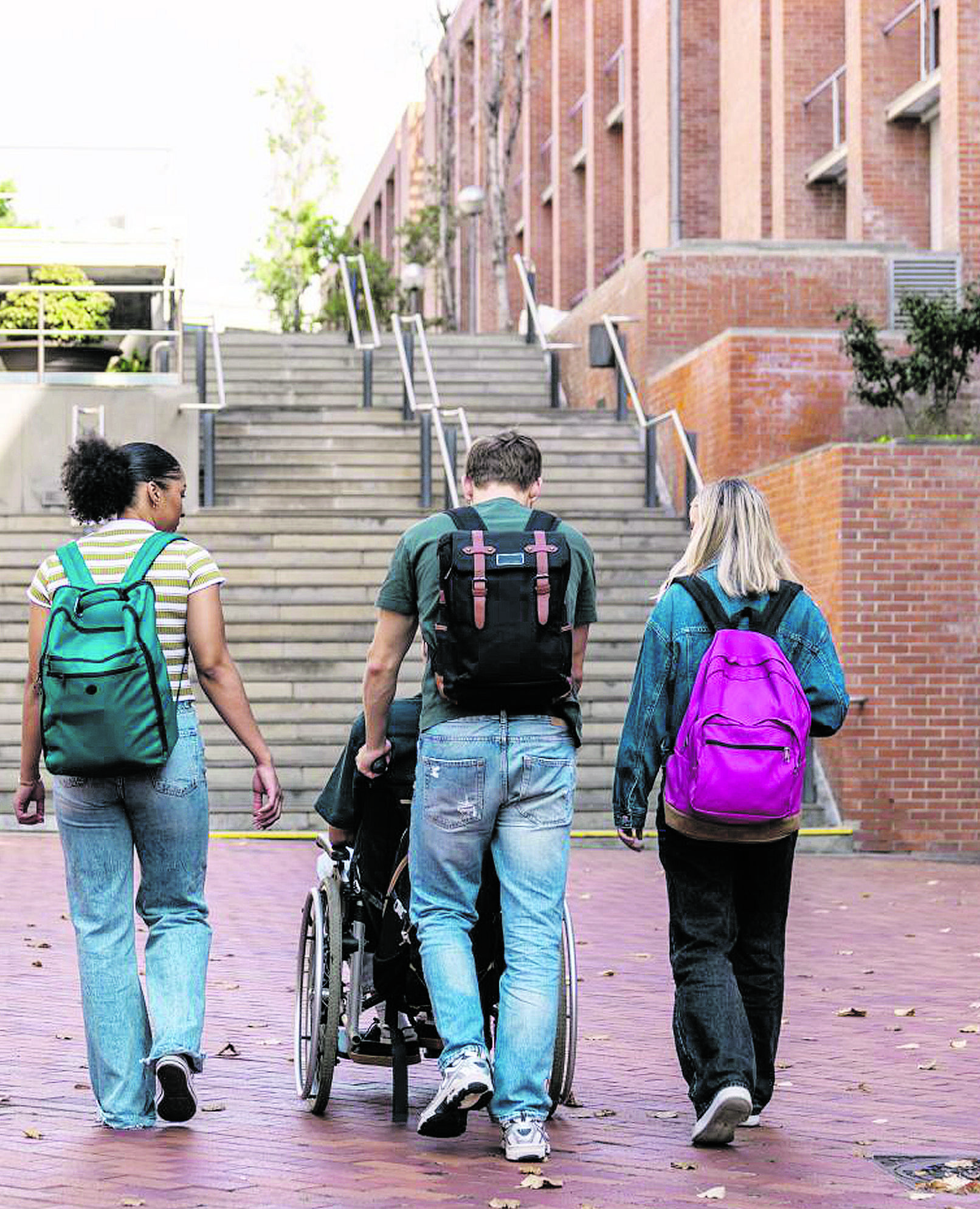
The President of the Republic of Portugal enacted two decrees from the Assembly of the Republic on Monday, addressing accessibility for students with special educational needs.

In June, opposition lawmakers in parliament approved a new legal regime for students with specific educational needs in higher education. The measure was rejected only by the Social Democratic Party (PSD) and the CDS-PP. At the same time, lawmakers passed an amendment to the Basic Law of the Educational System, proposed by the Chega party, aimed at ensuring accessibility for students with special educational needs at every level of education.
New higher education regime
The new legal regime for higher education, enacted Monday, will not take effect until the 2027/2028 academic year. It sets out a group of rights for students with a disability rating of 60 percent or higher, proven by a multipurpose certificate known in Portugal as an atestado multiúso.
Students who meet that threshold can be included in a priority quota for disabled candidates seeking access to higher education and to student housing. They also get adjusted conditions for course attendance and assessment, along with provisions for mobility and accessibility, including digital and technological accessibility to information, communication and orientation.
The regime also covers students with specific difficulties that are duly proven by experts and that, combined with factors in their environment, could limit or hinder their activity and their full participation on equal terms with others. For these students, the rights granted depend on the nature and severity of the disability, assessed case by case.
Reversal of a government rule change
The decree reverses a change introduced this year by the government to the rules for accessing the quota for disabled students, although that earlier change will still apply to admissions for the 2026/2027 academic year. It had excluded students who lacked a multipurpose medical certificate showing a disability rating of 60 percent or higher.
Until now, candidates without that medical certificate could still enter the priority quota through an evaluation by a commission of experts. Contrary to the government's intention, the newly approved regime allows students without the certificate to compete for the quota as well, provided they can show they benefit from adaptations to the teaching and learning process and are admitted through a favorable decision by a technical commission set up for that purpose. That commission must include representatives from the education, health and social sectors, as well as representatives of organizations representing people with disabilities.
The decree also sets up a priority quota for disabled candidates seeking access to higher technical professional courses, master's degrees and doctoral programs, and creates a financial mechanism to support inclusion.

Changes to the Basic Law of Education
The Assembly of the Republic also approved the Chega-proposed amendment to the Basic Law of the Educational System, intended to ensure accessibility for students with special educational needs at all levels of education.
Among the changes, the law now provides for full access to higher education and the subsequent entry into the labor market for young people with specific educational needs.
Higher education is now also covered in the article on the organization of special education, which states that curricular paths for young people with disabilities attending study cycles at higher education institutions should be adapted to the characteristics of each type and degree of disability, along with evaluation methods suited to their specific difficulties.