


Juan Abarca Cidón, president of hospital group HM Hospitales, has published a book reconstructing the Covid pandemic and warning that authorities remain dangerously unprepared.
The Spanish healthcare executive stated that while hospitals absorbed vital lessons from the outbreak, political and administrative leadership has made almost no progress since 2020. His account appears in the book Cuando todo se tambalea, published by Deusto six years after the virus brought everyday life to a standstill.
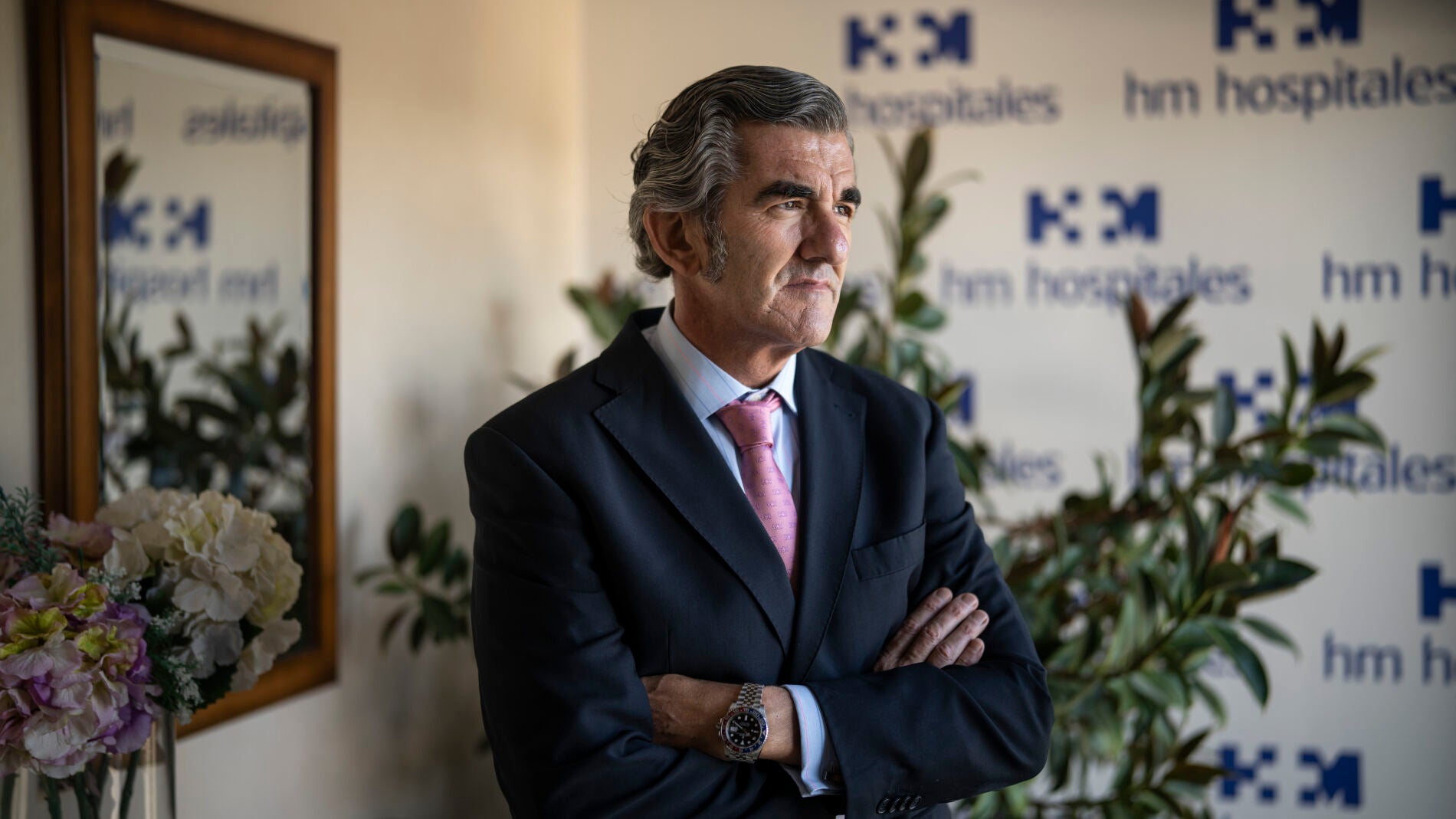
Abarca explained that waiting six years allowed him sufficient distance to evaluate the crisis objectively. He noted that while citizens retain personal memories shaped by their individual experiences, a clear record was needed to show how the health emergency unfolded from inside medical centres and administrative offices.
Looking back at the initial emergency, Abarca pointed to the dedication of hospital workers as his most enduring personal memory. He said that people only reveal how they will react when subjected to extreme circumstances, noting that staff members from doctors to cleaners devoted themselves entirely to caring for patients.
However, the executive recalled the deep pain of seeing patients die in isolation during the crisis. He also pointed to administrative chaos, an absence of institutional coordination, and what he described as the pettiness of certain politicians and news outlets, remarking that the arrival of the first wave felt as though the sky had collapsed on them.
Early Management Failures
Abarca identified a severe lack of foresight as the most critical error during the opening weeks of the health emergency. He stated that official decisions were almost always taken too late, arguing that the outcome would have differed substantially if authorities had planned ahead and purchased essential equipment earlier.
While acknowledging that public officials found it difficult to accept that a full population lockdown was required, Abarca argued that leaders should at least have procured mechanical ventilators and personal protective equipment. Instead, he said, patients lost their lives while healthcare professionals were forced to hold the line with whatever means they could muster.
Spain became one of the hardest hit European nations during the initial surge in early 2020, prompting the central government to declare a nationwide state of alarm and enforce one of the continent's most stringent lockdowns. Intensive care wards quickly filled beyond official capacity, compelling healthcare networks across major cities like Madrid to convert routine wards into emergency critical care units.
Tragedy in Care Homes
The book also examines the widespread loss of life in elderly care residences, which Abarca described as a true catastrophe. He recalled that elderly residents died alone, with some succumbing because care facilities lacked sufficient personnel even to feed them during the height of the crisis.
Abarca criticised what he termed an absurd division between the conventional healthcare system and the social care sector. He stressed that both services should have operated under unified coordination from the very beginning of the emergency.
Asked whether Spain has learned from that failure, Abarca answered that it has not. He stressed that half of all residents in care homes suffer from illnesses that require dedicated medical assistance, warning that governments cannot simply promise to medicalise care homes during the next emergency and must instead provide them with permanent healthcare resources.
Hospital Readiness and Public Coordination
While political management has stalled, Abarca maintained that hospitals have implemented structural reforms to prepare for future contagions. Within HM Hospitales, managers have built strategic emergency reserves and designed physical structures that can immediately adapt to treat critically ill patients, ensuring that all of the company's day centres can automatically convert into intensive care units.
Abarca stressed that individual hospital groups cannot resolve national security risks on their own. He argued that effective pandemic management requires decisive leadership from above, backed by a dedicated health authority possessing the resources and legal capacity to direct a coordinated response.
For that reason, Abarca underscored the critical importance of establishing the State Public Health Agency. The planned institution was designed to centralise epidemiological surveillance and standardise healthcare protocols across Spain's regional health services, which operate under devolved powers across seventeen autonomous communities.
Public and Private Sector Cooperation
Abarca attributed the survival of the Spanish health system to the resilience of its workforce rather than bureaucratic foresight. He explained that hospital teams reorganised entire facilities and learned to treat an unfamiliar disease within just two weeks of the initial outbreak.
A decisive element in containing the crisis was direct collaboration between public and private healthcare organisations, which Abarca said operated together as a single unified system. Hospital administrators were forced to solve operational crises they had never previously encountered, including unprecedented spikes in medical oxygen consumption.
He stressed that hospital leaders had to make operational choices with extreme speed, as any hesitation or administrative delay meant that patients would die.
Lessons for Future Governance
Reflecting on the broader meaning of the pandemic, Abarca stated that public health must always take precedence over all other considerations. He argued that the crisis proved that an economy cannot exist without health, observing that when authorities are warned that a tsunami is approaching, they cannot prepare as though they are facing light rain.
Turning to the future, Abarca urged the next government to focus on people before they become patients by implementing robust prevention and healthcare support policies. He pointed out that Spain already possesses a viable roadmap in the parliamentary reconstruction agreement for economic and social recovery approved in 2020.
Abarca concluded by calling on political leaders to normalise cooperation between public and private healthcare providers to meet patient demand, rather than treating public-private partnerships as a political controversy, urging authorities to focus their energy on strengthening the overall health system.


