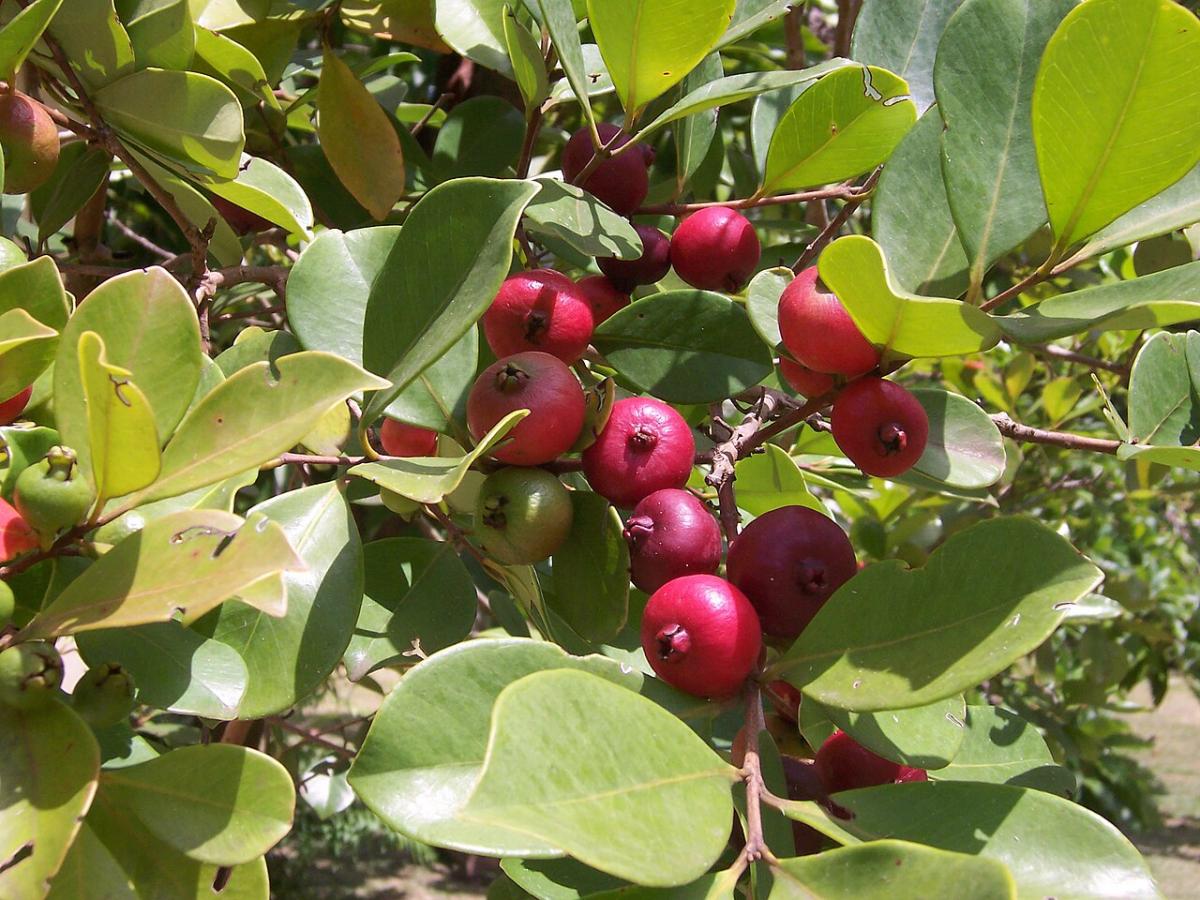
Scientists in Hawaii are using drones to spread a tiny insect called Tectococcus ovatus across the islands' forests, in an effort to slow the spread of strawberry guava, an invasive tree that has overrun native tropical forest for nearly 200 years.
Strawberry guava, also known as Cattley guava, was brought to Hawaii from Brazil in 1825. Since then it has formed dense, almost impenetrable thickets that crowd out native plants. In 2012, Hawaiian authorities approved the release of Tectococcus ovatus to control it. The insect is also native to Brazil and can only survive on this one species of tree.
Researchers Ryan Perroy and Olivia Jarvis of the University of Hawaii at Hilo described a new way of spreading the insect in a paper published in the Journal of Economic Entomology in the summer of 2025. Instead of carrying infested leaves through the forest on foot, the team used drones and a helicopter, the first time this method has been tried in Hawaii. The aim of the experiment is to slow the spread of strawberry guava, and while the results are still preliminary, researchers say they are encouraging.
How the insects attack the tree
Female insects settle on young guava leaves, causing small growths called galls to form, inside which their offspring develop. Each gall draws energy away from the tree, slowing its growth and reducing the amount of fruit it produces.
On an experimental plot where the insect was first released in 2017, galls were found on 23.1% of trees by 2021. Three years later, every guava tree in the area was affected. However, the insect's spread was limited to areas that could be reached by road or trail.
Drones versus traditional methods
In remote areas, forestry workers had been placing infested leaves on trees using a long pole, a method that took 12 minutes per tree. During a trial on 129 guava trees in the Ola'a Forest Reserve, a small drone cut that time to 2.8 minutes. The pole method was more accurate, succeeding 97.6% of the time compared with 86.6% for the drone.
A year later, the picture had reversed. Insects had established themselves on 63% of the drone-treated trees, compared with just 38% of those treated with the pole.
Scaling up across Hawaii
Researchers then compared larger dispersal devices, carrying 16 and 54 insect units, against manually scattering infested leaves from a helicopter. Both methods achieved similar success rates, 71.6% for the drone and 68% for the helicopter. The drone was far more precise, with a maximum deviation of 2.83 metres from its target point, compared with 8.24 metres for the helicopter. A small drone carrying four dispersal units also worked almost five times faster than a team doing the same job on foot.
According to the study's authors, ground teams simply cannot reach the most remote valleys, leaving aerial release as the only option there. Covering all 475,000 hectares of land where strawberry guava has spread, using a grid with one-kilometre spacing, would require roughly 4,750 flights, amounting to about 92.5 hours of helicopter flying time in total.
Containing, not eradicating, the guava
Entomologist Tracy Johnson of the US Forest Service cautioned that the insect will not be able to destroy all guava trees. Hawaii's forest service is not aiming to wipe out the invasive plant entirely but to contain its spread.
Weakened trees produce less fruit, meaning their seeds are less likely to reach new areas. Guava seeds are spread by birds, wild pigs and cattle, which carry them in their droppings. Slowing that spread is intended to help protect the parts of Hawaii's native forest that strawberry guava has not yet taken over.
What happens next
Researchers say scaling the method to cover all 475,000 hectares of guava-affected land in Hawaii would require roughly 4,750 flights, totaling about 92.5 hours of helicopter flying time.
Test yourself
What insect are researchers using to combat strawberry guava in Hawaii?
When was strawberry guava first brought to Hawaii?
What was the drone method's advantage over the helicopter in the second trial?
Have your say
Do you support using insects to control invasive plant species?
Where it happened
Hilo, Hawaii, United States