China’s defence ministry announced last weekend that the country’s two most senior generals, Zhang Youxia and Liu Zhenli, have been stripped of their posts and placed under investigation for “serious disciplinary violations”.
Zhang, 73, was the highest-ranking officer in the People’s Liberation Army (PLA) since October 2022. He sat in the Communist Party’s 24-member Politburo and served as first vice-chairman of the Central Military Commission (CMC), the body that runs the armed forces and is chaired by President Xi Jinping.
Liu, 67, had led the army ground troops and was until now chief of the Joint Staff Department under the CMC.
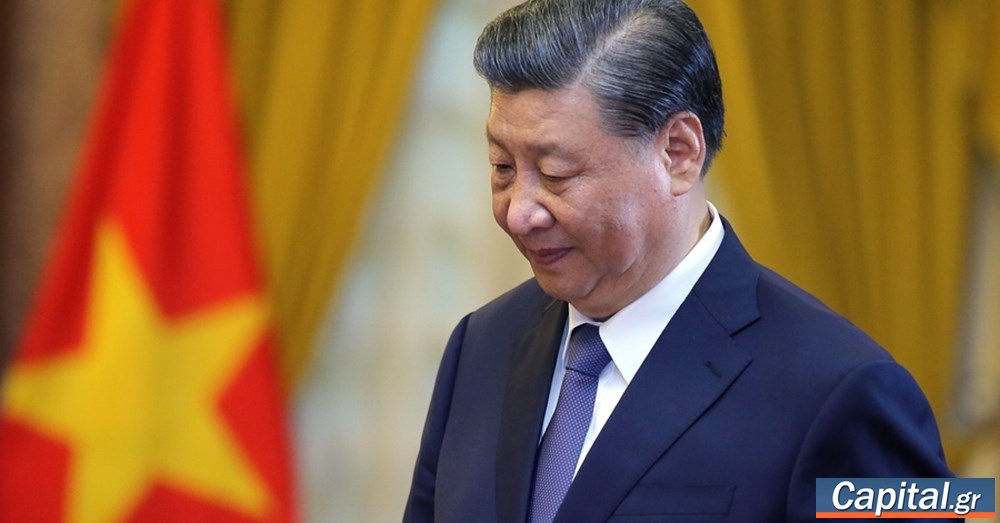
The BBC called the PLA “an army in crisis”, while Australia’s ABC said the purge was “stunning” and leaves Mr Xi “almost alone at the top” of the world’s largest military.
Little is known about how the party leadership really works, so guessing why the men were fired is hard. The PLA belongs to the party, not the state, and Mr Xi already commands it as CMC chairman, party boss and president.
With Zhang and Liu gone, only Mr Xi and one remaining CMC vice-chairman, General Zhang Shengmin, hold the highest posts. Three other CMC members have also lost their jobs since 2024 and have not been replaced.
The army has faced discipline trouble for years, mostly over corruption in high-tech procurement. About two dozen senior officers have been sacked or probed since 2022.
Both Zhang and Liu were new in their roles and were seen as Xi loyalists. Zhang’s father and Xi’s father were close friends in the 1930s, long before the People’s Republic was founded in 1949.
The two men were removed faster than other top officers in recent years and showed few warning signs; they appeared in public only a month ago.
The Wall Street Journal reported that Zhang is accused of passing secrets about China’s nuclear weapons programme to the United States, taking bribes and building “political cliques”.
The Politburo has seen fierce inner fights before, though details usually stay hidden for decades. A famous case was the 1971 death of Lin Biao, the then-defence chief and Mao Zedong’s chosen successor, in a mysterious plane crash after an alleged coup plot.
Professor David Goodman, director of the China Studies Centre at the University of Sydney, wrote in Asia Times that two broad explanations fit the facts.
First, the generals may have taken kickbacks themselves, perhaps to promote officers or steer contracts to suppliers. Second, they may simply be blamed for corruption that happened on their watch.
There could also be disagreement inside the CMC and Politburo over how hard to fight graft inside the forces.
Since becoming party leader in 2012 Mr Xi has repeatedly vowed to crush corruption. In recent weeks, as he prepares to launch a new five-year economic plan, he has started another anti-graft drive.
On 12 January he told the party’s top discipline body that fighting corruption is “a major struggle”.
“We must maintain high-pressure stance without hesitation, resolutely punishing corruption wherever it exists, eliminating all forms of corruption and leaving no room for corrupt elements to hide,” he said.
To meet China’s development goals, the party “must cultivate officials who are truly loyal, reliable, consistent and responsible,” he added.
Goodman argues it is hard to imagine Zhang, Liu or anyone else trying to challenge Mr Xi, so the leader’s own power is neither greater nor weaker after the purge.
Other analysts say the turmoil could erode trust between Mr Xi and the military. Some even claim the chance of an invasion of Taiwan has now dropped.
Removing so many leaders may signal that the PLA is being pushed to change its culture. At the same time, experts say it is too early to tell whether the force’s overall ability, especially regarding Taiwan, has risen or fallen.
The PLA has not named replacements for Zhang or Liu. State media have given no court date and have not said if the men are under house arrest or in detention.
Foreign diplomats in Beijing say the move shows Mr Xi is ready to remove even long-time allies if he smells disloyalty or graft. Yet the same diplomats warn that constant purges may scare talented officers into staying quiet or taking fewer risks, a problem if China faces a real conflict.
Taiwan’s defence ministry said it is watching the shake-up closely but sees no immediate change in PLA deployments near the island. The ministry added that morale and training are internal Chinese issues that Taipei cannot judge from outside.
Inside China, social-media censors have blocked most comments about the generals. A few posts that slipped through praised Mr Xi for “cleaning house”, while others asked why such senior heroes were removed so quietly.
The party congress due in 2027 will choose a new Central Military Commission. Until then, Mr Xi can pick new generals loyal to him, but each new face will know that the two previous chiefs were cast aside in a single weekend.
For now, the world is left guessing whether the purge was about nuclear leaks, Taiwan policy, a coup plot or simple graft. What is clear is that the world’s largest army just lost two of its most powerful leaders overnight, and President Xi is standing alone at the very top.

Leave a Reply